Tag: Cherelle L. Parker

  • Mice, graffiti, and broken bathrooms: Teachers and parents sound an alarm about building conditions at this Philly school

    Mice, graffiti, and broken bathrooms: Teachers and parents sound an alarm about building conditions at this Philly school

    The Philadelphia School District is poised to announce soon which of its aging buildings it will fix up and which it might close, or consolidate, or reimagine in the coming years.

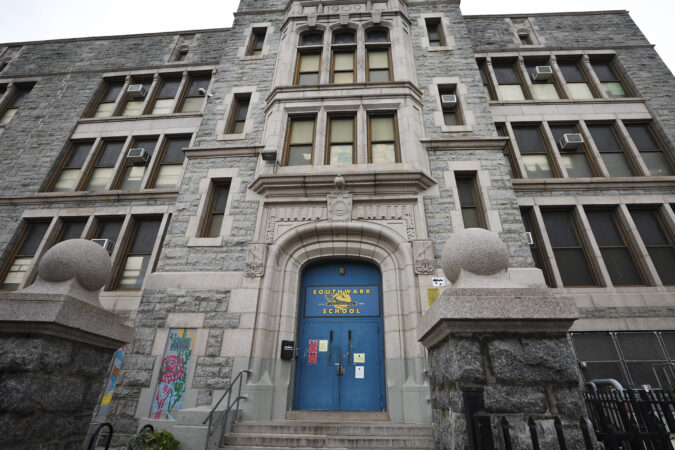
    But teachers and parents at one South Philadelphia elementary school say they cannot wait for help and have appealed to Superintendent Tony B. Watlington Sr., Mayor Cherelle L. Parker, and others.

    “Southwark School is desperately in need of changes,” a letter signed by 300 people and sent to Watlington and Parker on Friday read. “Our children are learning in an unhealthy environment that no child should have to experience.”

    In many ways, Southwark, a K-8 facility constructed in 1905, is a thriving school — it has strong academics, a diverse student body of about 900, a dual language immersion program, and a robust complement of activities. Southwark is a community school, with city-paid resources including free before- and after-school care.

    Mayor Cherelle Parker and Superintendent Tony B. Watlington Sr. visit a classroom at Southwark Elementary to discuss the city’s extended day extended year programming in this 2024 file photo.

    But it also has issues including bathrooms that “break down nearly every day,” the letter said. “The plumbing has gotten so bad that sewage comes dripping down from the ceiling into classrooms.”

    The letter outlined other issues including a rampant bug and rodent problem, a stairwell covered in graffiti and trash, dank hallways, a lack of adequate ventilation, and more.

    “Our children tell us that classrooms feel like prisons because the windows can’t be opened fully and they have opaque coverings,” the letter read.

    Nyera Parks, a Southwark second-grade teacher, said she doesn’t think the community is asking for too much.

    “These conditions are affecting the children’s health, their focus, their sense of safety,” Parks said. “It’s the bare minimum — we’re asking for a clean and safe school.”

    Responding to teacher and parent concerns, district chief operating officer Teresa Fleming said in a letter sent Monday the school system “has already taken concrete action to address conditions at Southwark while continuing to plan for sustained improvement.”

    Fixes Fleming cited include “mass” trapping, plaster and plumbing work, and adjustments to the cleaning staff.

    Some staff have reported “visible improvement in cleanliness and operational response,” Fleming wrote in the letter to State Rep. Elizabeth Fiedler (D., Philadelphia). “At the same time, we recognize that some of Southwark’s challenges are rooted in aging infrastructure and require longer-term planning. My team is developing an actionable plan that includes feasibility reviews of plumbing systems, HVAC needs, and cafeteria kitchen capacity, with attention to major shared spaces, including the gymnasium, cafeteria, and auditorium.”

    Southwark, according to data released by the district this summer, is in “poor” building condition. It is also operating at 104% of its building capacity.

    Fleming said the school “will likely receive facility enhancements” through the forthcoming facilities master planning process.

    ‘It shouldn’t have to be like this’

    The first thing Jennifer O’Shaughnessy, a teacher and part of the morning care staff, does when she gets to Southwark early is pick up trash. Then, when she gets to the cafeteria, where kids will eat breakfast, she grabs wipes to clear the mouse droppings that have accumulated overnight.

    At least once a week, O’Shaughnessy said, “the kids are eating breakfast and we see a mouse come out, and then they’re standing up, screaming. We tell them it’s going to be OK, but it shouldn’t have to be like this.”

    O’Shaughnessy has worked at Southwark for 15 years and is now the upper school coordinator, teaching writing and a elective and supporting other educators. She loves the school so much she sends her own daughter to Southwark.

    But it troubles her that because of the old heating system, the school’s classrooms are either freezing or so hot students sometimes get nosebleeds.

    “I’ve had teachers take their kids into the hallway because it’s too hot in their classrooms,” O’Shaughnessy said. “It’s 80, 90 degrees in there, and you can’t think. And when the heat is not on, it’s freezing and you have students with winter jackets on.”

    City demographics and Southwark’s burgeoning popularity have brought new life to the school, but have also strained the building.

    Bathrooms are a particular issue. The restrooms that get the most use are in the basement, near the cafeteria. But those bathrooms are frequently closed because of plumbing issues and other problems.

    Last month, a student told O’Shaughnessy they couldn’t use the bathroom because no toilets were working. There had been no news of a closure, so O’Shaughnessy went in to investigate.

    “Every toilet was running over,” she said. “I went in there and almost lost my lunch. They had taped off half the stalls because flood water was running over. The other toilets were clogged.”

    O’Shaughnessy had the bathroom shut down, leaving a common problem — there are a few other bathrooms, but not enough to accommodate the large student population’s needs.

    ‘It’s still a mess’

    Appealing to the superintendent and mayor was not the teachers’ and parents’ first move. They worked within the system, staff said, putting in countless work orders and making more direct appeals to district officials.

    Southwark recently got a permanent building engineer — that has helped some, said Justin Guida, the school’s STEM teacher, but the problems can never be rectified by one employee.

    “We get a little Band-Aid here and there, it looks like they helped, but it’s still a mess,” said Guida, who lives in the neighborhood and has worked at Southwark for 10 years. “When the kids complain because of the bathrooms or the food or the bugs or mice, it breaks my heart. The kids say, ‘I love Southwark, but it’s dirty.’”

    Southwark teachers say that school material often get ruined by rodents.

    “We’re growing plants as a science experiment, and the plants get destroyed because they’re getting eaten by the mice,” Guida said.

    Guida knows the district has billions in unmet facilities needs, but the changes Southwark needs are not all costly, he said.

    “Can the windows get uncovered so we can see out them and have natural light come in? Can we clean the fire towers that our kids have to walk through?” he asked.

    Parks, the second-grade teacher, is frustrated by air filters that do not get changed, especially given the high rates of asthma among Southwark children.

    In 2023, Southwark was temporarily closed because of damaged asbestos, with the school split between South Philadelphia High and Childs Elementary. The damaged asbestos was removed, but Parks and others worry about the asbestos that remains in the building.

    Parks attended Southwark as a child and is dismayed that her second graders may not be having the same experience she had as a student. She never had sewage leaking from bathrooms into her classroom, or had lessons interrupted by a mouse scurrying across the floor.

    “I remember feeling safe there,” she said. “Some of the things that I’m seeing in the building now are not how I saw and experienced it when I was there. How are they able to learn and feel comfortable in these types of conditions?”

    Parks and others who signed the letter to Watlington and Parker have asked for fixes including repainting hallways, ensuring every classroom has a working lock, and guaranteeing that stairways and outdoor areas will be regularly cleaned, that every room has air-conditioning and regular air filter changes, and that there are specific plans for long-term bathroom repairs.

    Fiedler said that she appreciated Fleming’s response, but that Southwark’s conditions generally “are a major concern.”

    “We know that there’s many years of deferred maintenance in the School District of Philadelphia and across the commonwealth,” Fiedler said. “I think this is a really good, really sad, and scary example of a place where more needs to be invested.”
  • Philadelphia building trades unions will loan $50M to help redevelop the dilapidated Brith Sholom House

    Philadelphia building trades unions will loan $50M to help redevelop the dilapidated Brith Sholom House

    A coalition of building trades unions will lend the Philadelphia Housing Authority $50 million out of its pension fund to help finance the redevelopment of Brith Sholom House, a dilapidated senior apartment complex in West Philadelphia.

    Mayor Cherelle L. Parker and her longtime political ally Ryan N. Boyer, the business manager of the Philadelphia Building and Construction Trades Council, announced the arrangement Tuesday and framed it as a first-of-its-kind approach to expanding the city’s affordable housing stock.

    Under the terms of the deal, PHA will repay the building trades over 15 years at a 4.5% interest rate. PHA President and CEO Kelvin Jeremiah called it a good deal for taxpayers as banks and traditional financing institutions are lending at higher rates.

    The city is guaranteeing the loan. Parker said the outcome will be 336 units of affordable housing for seniors on fixed incomes. Members of the building trades unions will perform the work at the site.

    “This isn’t an investment for the building trades,” Boyer said. “It’s a down payment on our city’s future.”

    Boyer, one of the most powerful nonelected political figures in the state, has been a longtime ally to Parker and much of City Council. The trades unions poured millions into Parker’s run for mayor in 2023 and have remained largely in lockstep with her. Boyer led the mayor’s transition team and has been a key voice on her signature housing plan, which stands to generate thousands of construction jobs.

    The trades’ $50 million investment comes in addition to the $99.6 million that the housing authority is spending on a gut rehabilitation of the Wynnefield apartment complex, bringing the total cost of the project to $150 million.

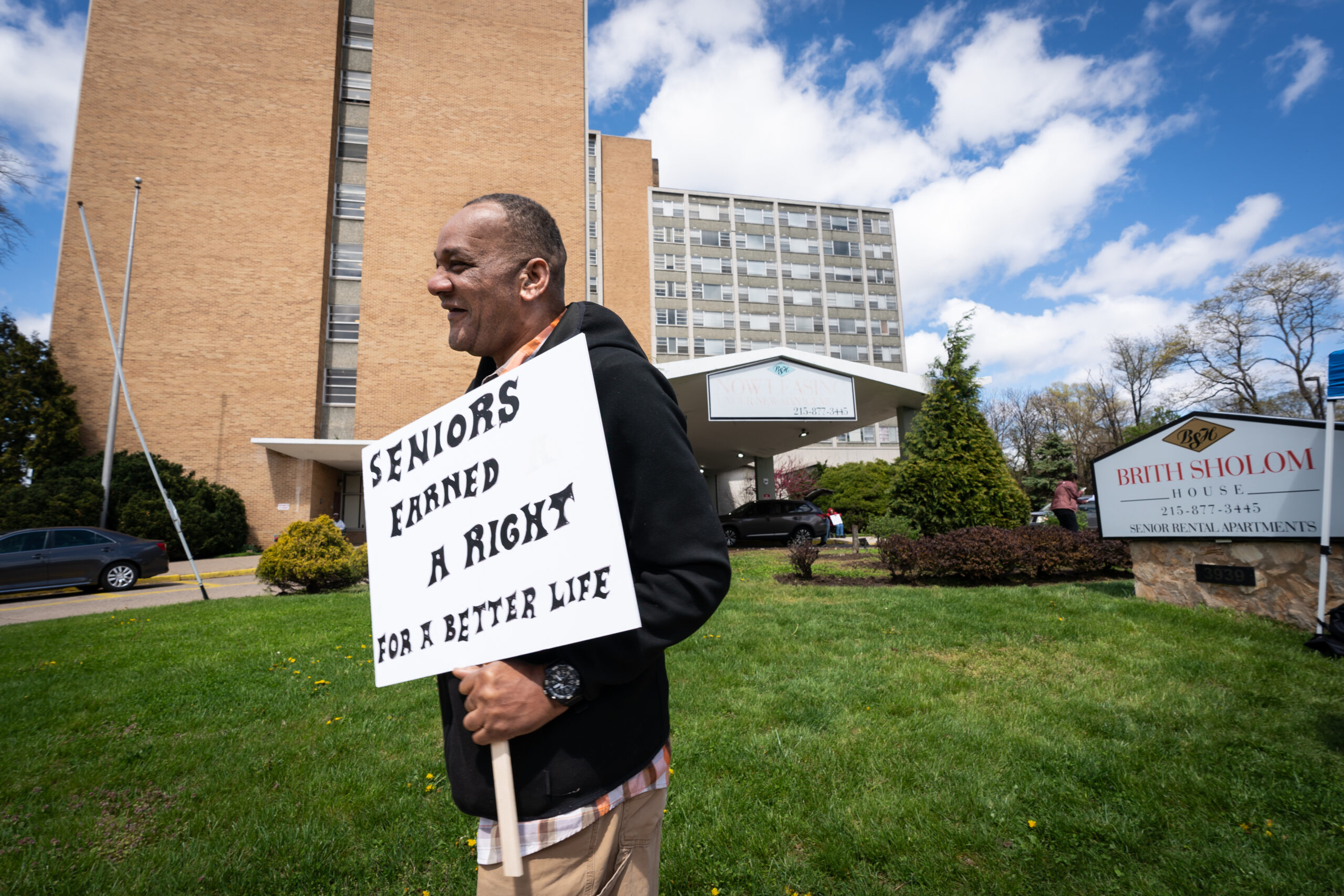
    A protestor carries a sign to protest the living conditions at Brith Sholom House apartments, in Philadelphia, on Friday, April 12, 2024.

    Jeremiah said he has been “shocked and dismayed” by the conditions at Brith Sholom, which was so neglected under its previous owners that tenants were forced to move out.

    Work will begin late this year and is expected to take about 20 months to complete, Jeremiah said, meaning tenants may not be able to move back in until 2028. He had previously estimated a timeline that would have allowed residents to return this year.

    Brith Sholom fell into disrepair under its previous owners, the New Jersey-based Puretz family. A 2024 Inquirer investigation found that members of the family became one of the nation’s largest affordable housing purveyors by buying up old buildings, saddling them with debt, and then defaulting on loans.

    At Brith Sholom, the Puretz family profited while defaulting on a $36 million mortgage and amassing dozens of code violations. Residents — who organized to save their homes — complained of deteriorating infrastructure, threats of utility shutoffs, squatters, and severe pest infestations.

    In a bid to preserve the building and reuse it in part as subsidized housing, PHA acquired Brith Sholom House in August 2024 for $24 million.

    In addition to the price of the acquisition, Jeremiah estimated in 2024 that the cost of rehabilitating the building would be an additional $30 million to $40 million. PHA said then that the remaining 111 elderly residents in the 360-unit building would be able to remain in place.

    Three months later, Jeremiah informed the tenants that Brith Sholom was in such ragged shape that they would have to be moved out to repair the building. Some units were so badly damaged that PHA could not fix them.

    Following the acquisition of Brith Sholom, PHA has embarked on an ambitious $6.3 billion, 10-year plan that includes the purchase of 4,000 other privately held apartments. In the face of a glut of market-rate multifamily properties, many developers have struggled to charge the rents they need to pay back their loans — and the housing authority has been able to purchase buildings from such companies across the city.

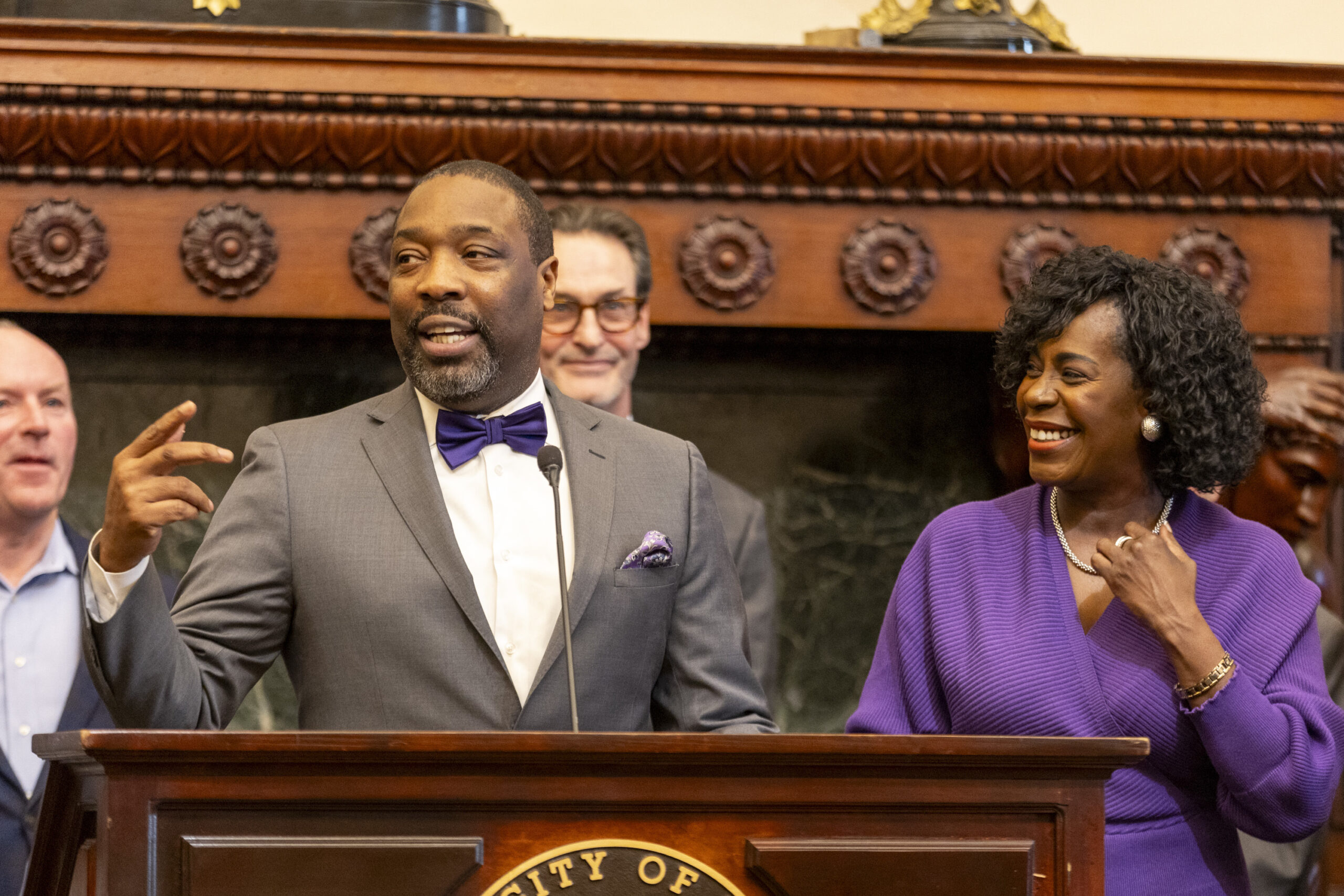
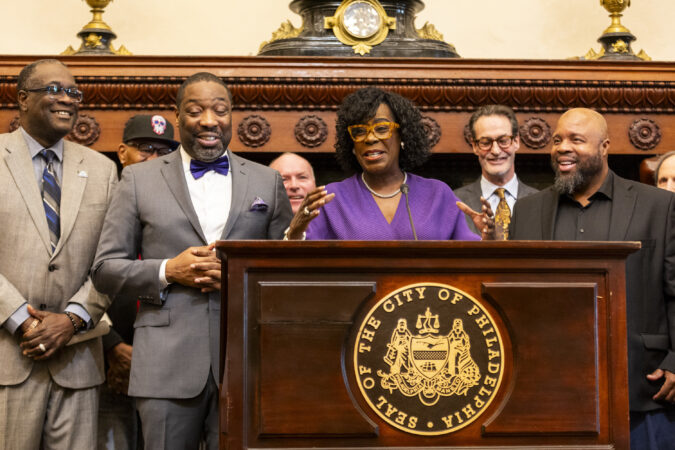
    City Council President Kenyatta Johnson speaks during a news conference about the plan to redevelop Brith Sholom. At right is Mayor Cherelle L. Parker.

    Parker also said the investment at Brith Sholom is part of her signature housing initiative, called Housing Opportunities Made Easy, or H.O.M.E. The mayor — who has promised to build, redevelop, and preserve more than 30,000 units of housing — is in the midst of continued negotiations with City Council over H.O.M.E.’s first-year budget.

    Council in December gave initial approval to changes to legislation related to Parker’s housing initiative, which set income eligibility thresholds for two housing programs funded by H.O.M.E.’s bond proceeds. Parker wanted a higher threshold so middle-class residents could access the programs, while Council’s version aims to prioritize poorer Philadelphians.

    Council could take a final vote on the related legislation as early as Thursday, when lawmakers return to session following their winter break.

    Throughout the contentious process, Parker has said her administration is committed to affordable housing for lower-income Philadelphians. The collaboration with PHA to remake Brith Sholom, she said, is part of that effort.

    “It’s not just for one particular constituency,” Parker said Tuesday about her overarching housing plan. “I’m personally on a mission to save Philly rowhomes. We’re trying to address our housing crisis and doing it for Philadelphians from all walks of life.”

    Parker was joined at the news conference Tuesday by Council President Kenyatta Johnson, despite the two being at odds over the H.O.M.E. legislation in recent months. Johnson praised the mayor’s leadership and said the financing arrangement for Brith Sholom is remedying a “miscarriage of justice.”

    “This is the type of work that helps those most in need,” Johnson said, “which is our seniors, who deserve to live out the twilight of their lives in dignity.”

  • Americans take their heroes where they can get them, but they should look past Philly’s sheriff | Shackamaxon

    Americans take their heroes where they can get them, but they should look past Philly’s sheriff | Shackamaxon

    This week’s column talks about heroes with feet of clay, SEPTA’s starts and stops, and America’s 250th birthday celebrations.

    No one’s hero

    Philadelphia Sheriff Rochelle Bilal is having her 15 minutes of fame this week, with her comments at a news conference alongside District Attorney Larry Krasner spreading across social media. After the killing of Renee Good by U.S. Immigration and Customs Enforcement agent Jonathan Ross in Minneapolis, Krasner stated that he would hold federal officers accountable for any violation of the law. Bilal warned that the feds “don’t want that smoke” and called ICE “fake wannabe law enforcement.” She even scored an interview with CNN’s Erin Burnett.

    That’s all well and good, but there’s one big problem with Bilal’s position: The sheriff ultimately has no ability to protect Philadelphians from ICE.

    Despite her title and natty uniform, it is Police Commissioner Kevin J. Bethel who serves as the city’s top law enforcement official, not Bilal. This is a good thing because the sheriff’s track record is disastrous.

    Despite running for the office in 2019 as a reformer, Bilal began her tenure by firing Brett Mandel, her chief financial officer, just five weeks into his tenure. Mandel had flagged her use of what he described as a slush fund. A longtime good government advocate, Mandel objected to using city funds to pay for things like parking tickets and six-figure media consulting contracts.

    Things haven’t improved in the years since. Bilal was publicly criticized by the city’s judges for her failure to protect courtrooms, turning over foreclosure sales to an online operator with little notice, covering up the theft of a department-issued vehicle, one of her deputies was caught selling guns illegally, and her office wasted nearly $10,000 on a new mascot no one asked for. The list goes on, yet city officials have mostly steered clear of criticizing the sheriff for her missteps.

    While Bilal was basking in the media spotlight of talking tough against ICE, Bethel was not amused. Given Mayor Cherelle L. Parker’s clear strategy to avoid poking the orange bear, Bilal’s comments forced the commissioner to make clear in a statement that it is the Philadelphia Police Department that runs law enforcement in the city, not the sheriff.

    If people are looking for a genuine local hero in the national crisis over immigration enforcement, why not opt for Keisha Hudson instead? Hudson, who leads the local Defenders Association, has put together a new unit specializing in immigration cases. An immigrant from Jamaica herself, Hudson has both the right job and the right life experience to help residents who have been mistreated by ICE.

    Bilal, on the other hand, can’t even keep ICE from turning the courts she’s responsible for into a hunting ground for the feds.

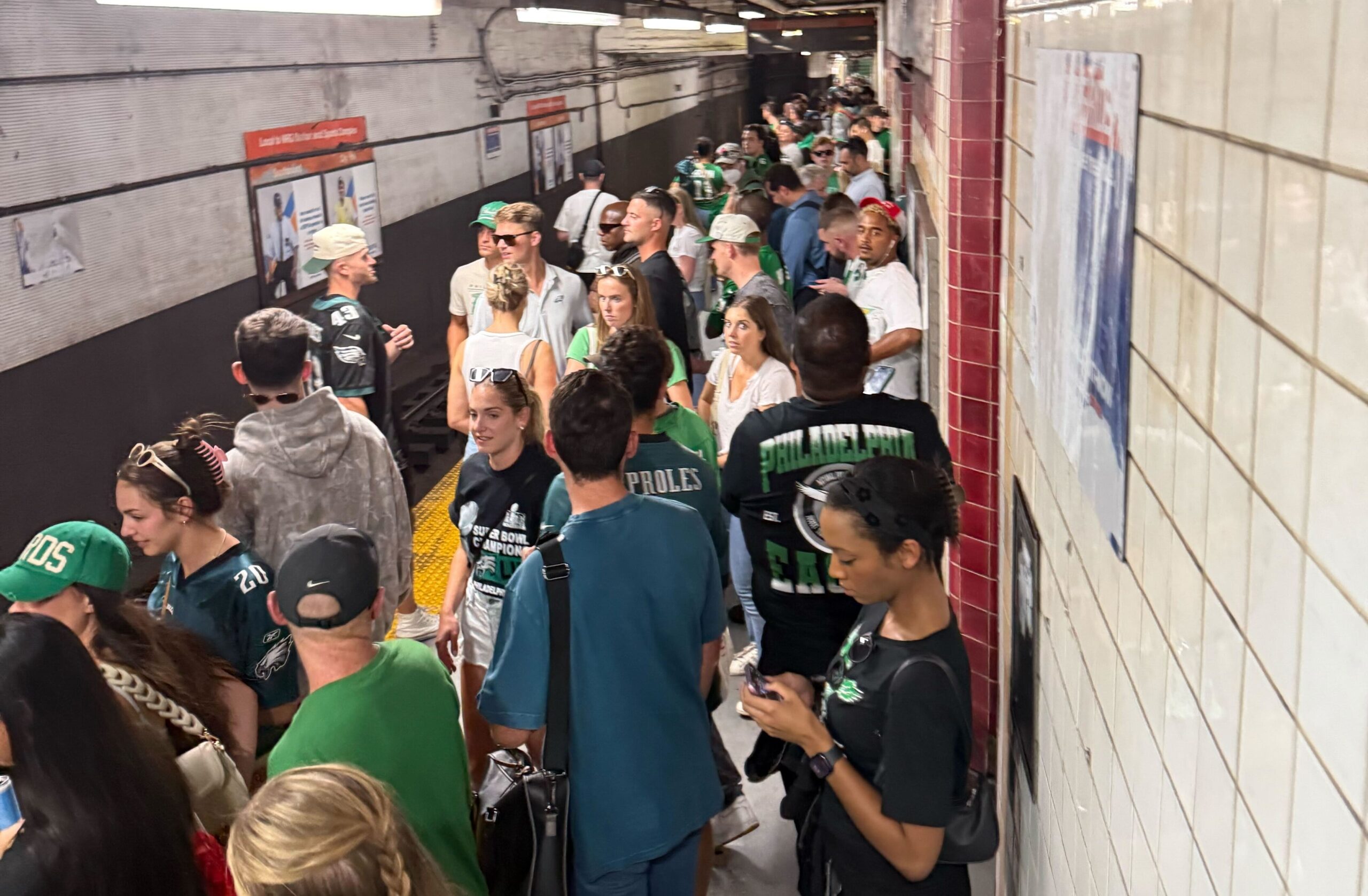
    Eagles fans wait for a Broad Street Line train at City Hall station.

    The wheels on the bus

    During the yearslong debate over transit funding in Pennsylvania, one consistent drumbeat is that SEPTA needed to become more efficient if it wanted to get more support.

    Of course, SEPTA already does more with less when compared with other major agencies, with cost-per-ride lower than in Boston and Washington, D.C. Additionally, trying to save money can sometimes cost agencies in the long run, or at the very least cost scarce political capital.

    In fact, most of the current crises SEPTA faces are the result of trying to save money or insufficient political will. For example, better capitalized agencies would have replaced the Regional Rail fleet a decade or so ago. Meanwhile, the weekslong closure of the trolley tunnel happened because the agency tried using a new part — in the hope that it would be replaced less frequently and cost less.

    Perhaps the Broad Street Line felt left out of the chaos because operations there have become a new pain point for riders. The 1980s Kawasaki trains are well-built. They are also nearly 45 years old. When I first started at The Inquirer five years ago, then-SEPTA General Manager Leslie Richards told me she hoped to avoid replacing the trains until the 2040s. Recent issues on that line make me question that timeline.

    For weeks, the trains have struggled with mechanical issues. Riders have reported jam-packed trains that have been forced to skip stops, line adjustments, and other delays. According to a spokesperson, door faults and general vehicle malfunctions have contributed to the problems.

    It all came to a head at the end of Sunday’s Eagles game.

    After a door issue disabled a train near Snyder Station, already dejected fans were forced to wait until 9 p.m. to catch a ride home. SEPTA is spending $5 million to upgrade the traction motors, which should help. What’s really needed, however, are new trains.

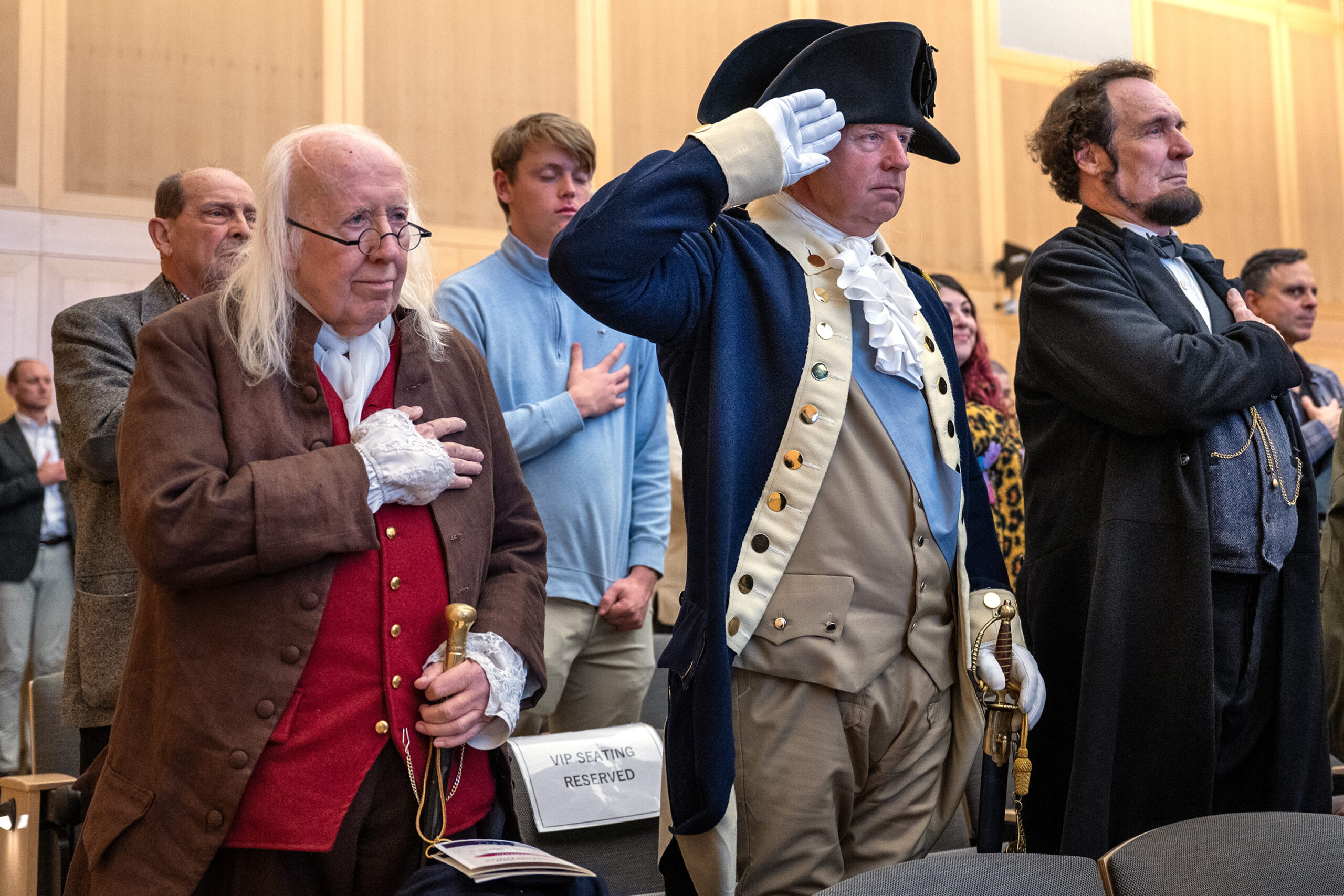
    Historical interpreters (from left) Benjamin Franklin, Gen. George Washington, and President Abraham Lincoln stand with other audience members for the Presentation of the Colors, as the U.S. Mint unveils new coins for the Semiquincentennial at the National Constitution Center in Philadelphia in December.

    Let’s get this party started

    The United States is celebrating a big one this year. America’s big 250th birthday party is here … can you tell?

    I can’t. While big events like the World Cup are planned for later this year, there is currently little to indicate that 2026 is any different from 2025. The patriotic bunting that sprouted all over Philadelphia during the Civil War and the Centennial has yet to appear.

    Still, help is on the way. City and state officials announced an $11.5 million initiative to remove graffiti, plant flowers, and otherwise beautify the city.

    At that price, we should probably do it every year.

  • Philly’s small businesses can get free tax prep services through a new program by Mayor Cherelle Parker’s administration

    Philly’s small businesses can get free tax prep services through a new program by Mayor Cherelle Parker’s administration

    Philadelphia small businesses making less than $250,000 can access free tax preparation services through a new city program.

    Mayor Cherelle L. Parker on Thursday announced the launch of the Philadelphia Free Business Tax Preparation program, which will cost the city $7.5 million per year and is expected to last at least five years.

    Business owners can learn more at phila.gov/businesstaxprep/.

    The new service is aimed at helping the estimated 50,000 firms this year that will need to start paying Philadelphia’s business income and receipts tax, or BIRT, following the elimination of a popular exemption that primarily benefited small companies.

    BIRT returns are due April 15.

    How does the Philadelphia Free Business Tax Preparation program work?

    Under the new program, the city will connect eligible business owners with private tax professionals who will be reimbursed by the city for each client they assist.

    There will be no cost to the businesses. Only firms based in Philadelphia that made less than $250,000 in 2024 are eligible.

    The tax professionals will help firms file city, state, and federal tax returns — not just BIRT.

    “We want you to be ready,” acting Commerce Director Karen Fegley said Thursday. “Let’s be ready for growth.”

    The city so far has contracted with 19 tax preparation companies to participate in the program, and more may join, Fegley said. Together, they offer services in 13 languages, including English, Spanish, Mandarin, Cantonese, Arabic, Italian, Russian, Japanese, and French.

    Why did the BIRT exemption end?

    For about a decade, firms with less than $100,000 in revenue from transactions in Philadelphia were exempt from paying the BIRT.

    That policy, championed by former City Councilmembers Maria Quiñones Sánchez and William J. Green IV, effectively allowed the tens of thousands of companies making less than that amount to forgo paying the tax at all. During the COVID-19 pandemic, former Mayor Jim Kenney’s administration waived the requirement for those firms to file local business tax returns, providing administrative relief for business owners.

    But Parker last year convinced Council to eliminate the tax break after a Massachusetts-based medical device manufacturer that does business in Philly sued the city, saying the policy violated the Pennsylvania Constitution’s uniformity clause.

    The policy change will place a significant burden on Philadelphia’s smallest businesses, both financially and administratively, given the complexity of BIRT. The tax includes two levies: Firms must pay 5.71% of their net income, or profits, made in Philadelphia, as well as 0.141% of their gross receipts, or total income, in the city.

    Council last year approved a Parker plan to gradually lower the tax rates over 13 years and eventually eliminate the gross receipts levy, but the most significant cuts are years away.

    Parker reiterated Thursday that she supported the $100,000 exemption. But she said her administration settled the lawsuit after determining the city would likely lose in court, potentially risking a ruling that City Solicitor Renee Garcia has said could require the city to repay past tax revenue.

    Critics of the mayor’s decision to settle the case last year questioned why she didn’t fight harder to preserve the tax break. Parker said Thursday that would have been irresponsible.

    “I said, ‘That’s why I’m the mayor and you’re not,’ because we can’t just do that and put the fiscal stability of the city at risk,” Parker said Thursday at a City Hall news conference.

    To help ease the transition, Parker last year proposed using the money the city expected to gain as a result of more firms paying the BIRT — about $30 million — to fund business assistance programs. Council increased that total to about $47 million before approving the city budget in June.

    Most of the money will go to existing programs that provide direct grants for businesses, such as the Philadelphia Catalyst Fund, Fegley said. But Parker is also using the funds to launch the tax preparation service.

    “Small businesses are the backbone of Philadelphia, I don’t care what neighborhood you live in,” Parker said.

    What else is being done to help small businesses?

    In response to the elimination of the $100,000 BIRT exemption, Councilmember Mike Driscoll last year introduced a bill to exclude certain types of businesses — entrepreneurs, sole proprietorships, and businesses with one employee — from the tax.

    Many of Philadelphia’s smallest companies are one-person operations, and Driscoll said he aimed to relieve them of the cost and burden of filing a BIRT return.

    Parker on Thursday said her administration is still evaluating the proposal, noting that it would cost the city revenue and could potentially run up against the same legal hurdle as the $100,000 BIRT exemption: the uniformity clause, which requires Pennsylvania businesses, property owners, and individuals of the same “class” to be taxed at the same rate.

    “We will work through that with his team, and do the cost analysis,” Parker said, adding that, “more importantly,” the city’s law department will work “to make sure we are not in violation of the Commonwealth of Pennsylvania’s uniformity clause.”

    Council is expected to consider the measure in a committee hearing in the first half of the year.

  • Hahnemann redevelopment may be another victim of councilmanic prerogative | Editorial

    Hahnemann redevelopment may be another victim of councilmanic prerogative | Editorial

    Since his 2023 election, 5th District Councilmember Jeffery “Jay” Young has earned a reputation as City Council’s quarrelsome contrarian. His penchant for swooping in and obstructing projects at the last minute has upset everyone from progressive community activists to affected developers.

    Young is a single vote on Philadelphia’s 17-member legislative body, but thanks to the tradition of councilmanic prerogative — where the rest of Council yields to district representatives regarding land-use decisions — he wields absolute power over an area that includes Rittenhouse Square and City Hall to the south, Strawberry Mansion to the west, part of Northern Liberties and Fishtown to the east, and Hunting Park to the north.

    Projects impacted by his objections include a long-standing proposal to build senior housing in Strawberry Mansion, a plan to protect students with speed cameras in school zones, and the renovation of the Cecil B. Moore Library.

    Young’s latest disruptive gambit — ill-conceived and misguided — is a bill that targets the proposed redevelopment of the former Hahnemann University Hospital patient towers in Center City into hundreds of apartments.

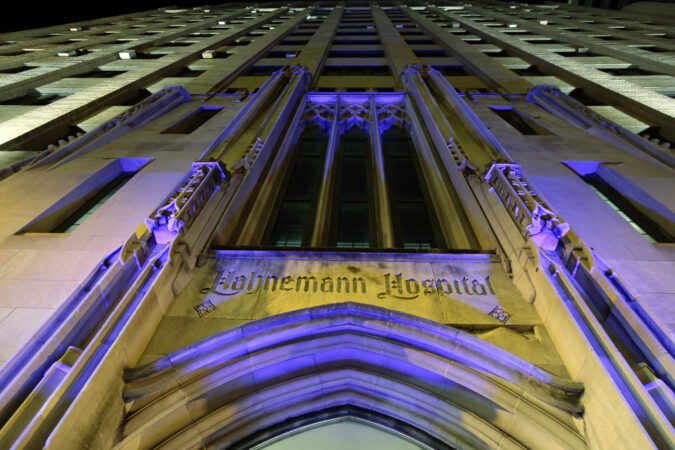
    Established in 1885, the hospital healed generations of Philadelphians, and its south tower was the first skyscraper teaching hospital in America. Beyond the loss of medical services, when Hahnemann closed six years ago, it left a gaping hole in the heart of the city.

    Located along a stretch of North Broad Street that is heavily underutilized, the vacant buildings are begging for a new lease. Dwight City Group has proposed refilling the campus with housing. The plan would add hundreds of new residents right next to Center City and the Broad Street Line, and within walking distance of Suburban Station.

    To most housing, development, and planning experts, the idea is perfectly sound. Philadelphia would add workforce housing (around 1% of Mayor Cherelle L. Parker’s goal) in a location that already has the infrastructure and amenities residents require, and the city would not have to spend any taxpayer money to make it happen.

    And yet, Young is opposed.

    Jeffery “Jay” Young represents Philadelphia’s 5th District.

    In a statement to the Editorial Board last year, Young defended the move as being motivated by a desire to grow jobs in the city by limiting development in the area to commercial use. That’s an admirable goal. But who is going to buy the goods and services these hypothetical new businesses would offer? The redevelopment of Hahnemann into an apartment building would only increase local entrepreneurial opportunities.

    Thankfully, in this case, it looks like Young’s obstructive desires may be a moot point — at least when it comes to his proposed legislation.

    Because Council adjourned for its winter break without voting Young’s bill out of committee, the developer was able to secure zoning permits to build 361 apartments, with space for commercial use in the building’s ground floor.

    While the Dwight City Group did not want to comment, CEO Judah Angster earlier told Inquirer reporter Jake Blumgart they remain in negotiations with Young. Given the fact that the developer may have to deal with the councilmember in the future, there is a chance the Hahnemann project may be curtailed to avoid Young’s ire elsewhere.

    Were that to happen, it would mark another missed opportunity for positive growth in the city, thanks to councilmanic prerogative.

    For decades, Philadelphia has trailed peer cities in job growth and economic activity. While high business taxes, deep poverty, and other factors play a role, prerogative stands out as an impediment that is entirely self-inflicted.

    The practice — no matter how strongly it is defended by Young and his colleagues — is a constant detriment to the city. While there is merit in giving district representatives a strong voice to protect their constituents from unwanted development, councilmanic prerogative too often allows the whims of a single person to override the will of the people.

    The only thing Philadelphia would lose by eliminating councilmanic prerogative is the opportunity for Council members to grandstand and feed their egos.

  • More Philadelphia police live outside the city than ever before

    More Philadelphia police live outside the city than ever before

    When Cherelle L. Parker was a City Council member, she championed a strict residency rule that required city employees to live in Philadelphia for at least a year before being hired.

    Amid protest movements for criminal justice reform in 2020, Parker said stricter residency requirements would diversify a police force that has long been whiter than the makeup of the city, and ensure that officers contribute to the tax base.

    “It makes good common sense and good economic sense for the police policing Philadelphia to be Philadelphians,” she said then.

    But today, under now-Mayor Parker, more police live outside Philadelphia than ever before.

    About one-third of the police department’s 6,363 full-time staffers live elsewhere. That share — more than 2,000 employees — has roughly doubled since 2017, the last time The Inquirer conducted a similar analysis.

    (function() {
    var l2 = function() {
    new pym.Parent(‘ppd_zips’,
    ‘https://media.inquirer.com/storage/inquirer/projects/innovation/arcgis_iframe/ppd_zips.html’);
    };
    if (typeof(pym) === ‘undefined’) {
    var h = document.getElementsByTagName(‘head’)[0],
    s = document.createElement(‘script’);
    s.type = ‘text/javascript’;
    s.src = ‘https://pym.nprapps.org/pym.v1.min.js’;
    s.onload = l2;
    h.appendChild(s);
    } else {
    l2();
    }
    })();

    Today, the percentage of nonresidents is even higher among the top brass: Nearly half of all captains, lieutenants, and inspectors live outside the city, according to a review of the most recent available city payroll data.

    Even Commissioner Kevin Bethel keeps a home in Montgomery County, despite officially residing in a smaller Northwest Philadelphia house that he owns with his daughter.

    Most municipal employees are still required to live within city limits. Across the city’s 28,000-strong workforce, nearly 3,200 full-time employees listed home addresses elsewhere as of last fall. Most of them — more than 2,500 — are members of the police or fire departments, whose unions secured relaxed residency rules for their workers in contract negotiations. About a quarter of the fire department now lives outside the city.

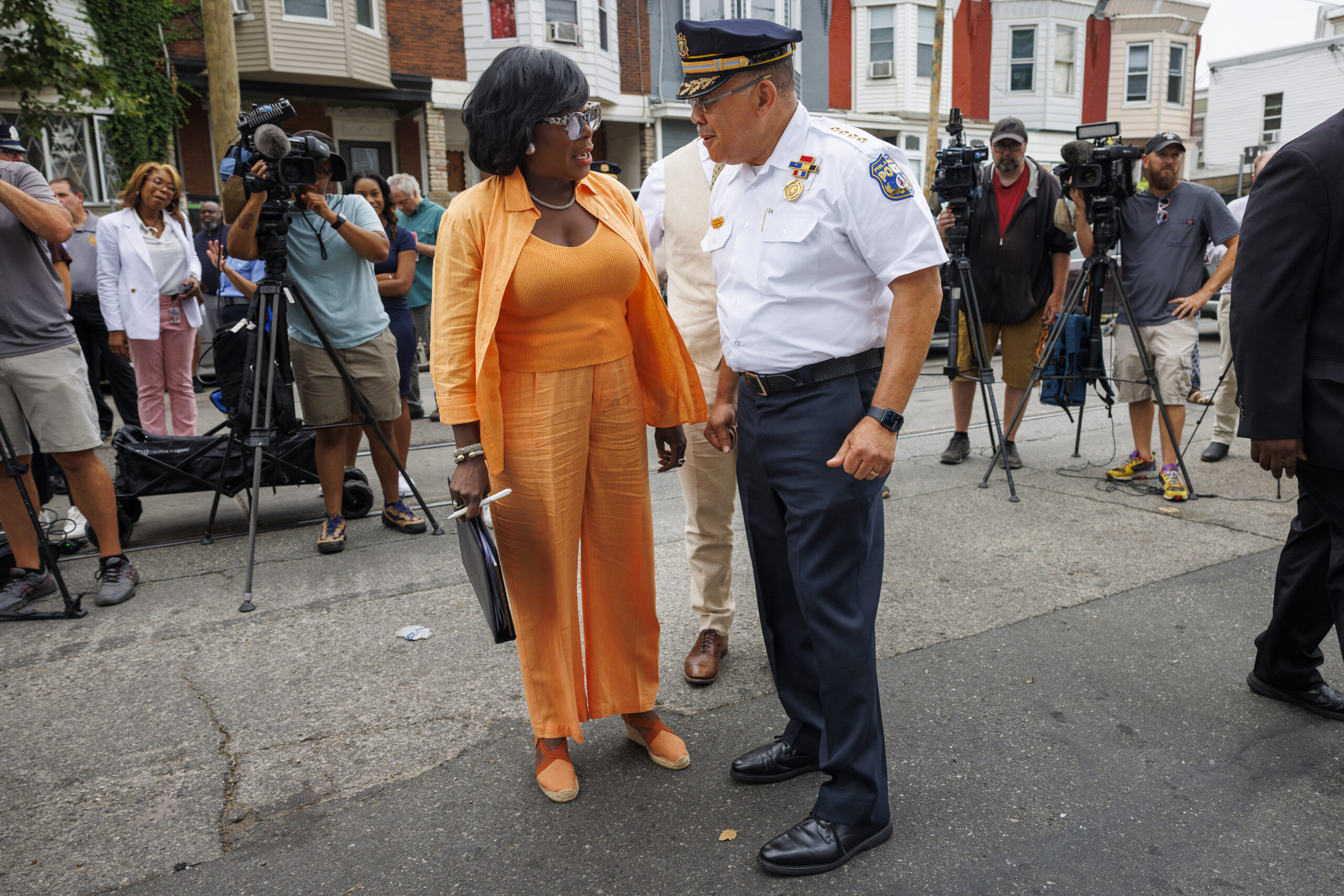
    Philadelphia Mayor Cherelle L. Parker and Police Commissioner Kevin Bethel speak before the start of a news conference.

    Proponents of residency rules in City Hall have long argued they improve rapport between law enforcement and the communities they serve, because officers who have a stake in the city may engage in more respectful policing.

    But experts who study public safety say there is little evidence that residency requirements improve policing or trust. Some say the rules can backfire, resulting in lesser quality recruits because the department must hire from a smaller applicant pool.

    A survey of 800 municipalities last year found that residency requirements only modestly improved diversity and had no measurable effect on police performance or crime rates.

    “It’s a simple solution thrown at a complex problem,” said Fritz Umbach, an associate professor at John Jay College of Criminal Justice. “It doesn’t have the impact people think it will.”

    Parker, a Philadelphia native who lives in the East Mount Airy neighborhood, says she would still prefer all municipal employees live in the city.

    “When I grew up in Philadelphia, it was a badge of honor to have police officers and firefighters and paramedics who were from our neighborhood,” she said in a statement. “They were part of the fabric of our community. I don’t apologize for wanting that to be the standard for our city.”

    ‘Where they lay their heads at night’

    What qualifies as “residency” can be a little pliable.

    Along with his wife, Bethel purchased a 3,600-square-foot home in Montgomery County in 2017 for over a half-million dollars. Although he initially satisfied the residency rule by leasing a downtown apartment after being named commissioner by Parker in late 2023, he would not have met the pre-residency requirement the mayor championed for other city employees while she was on Council.

    Today, voter registration and payroll data shows that Bethel resides in a modest, 1,800-square-foot rowhouse in Northwest Philadelphia, which he purchased with his daughter last year. While police sources said it was common for Bethel to sleep in the city given his long work hours, his wife is still listed as a voter in Montgomery County.

    Police Commissioner Kevin Bethel speaks during the 22nd District community meeting at the Honickman Learning Center on Dec. 2, 2025.

    Sgt. Eric Gripp, a spokesperson for the department, said in a statement that Bethel is a full-time resident of Philadelphia, and that while he owns a property outside the city, his “main residence” is the home in Northwest Philly.

    Although sources say it was not unheard of for rank-and-file officers to use leased apartments to satisfy the requirement on paper, Gripp said “only a small number” of residency violations had required formal disciplinary action following an investigation by the department’s Internal Affairs Division.

    That likely owes to officers’ increasing ability to reside elsewhere legally. The Fraternal Order of Police Lodge 5, which represents thousands of active and retired Philadelphia Police officers, won a contract provision in 2009 allowing officers to live outside the city after serving on the force for at least five years.

    The union didn’t respond to a request for comment.

    Few of the cops who left the city went very far.

    While Northeast Philly and Roxborough remain the choice neighborhoods for city police, the top destinations for recent transplants were three zip codes covering Southampton, and Bensalem and Warminster Townships, according to city payroll data.

    A few officers went much farther than the collar counties.

    Robert McDonnell Jr., a police officer in West Philadelphia’s 19th district with 33 years on the force, has an official address at a home in rural Osceola Mills, Pa., about 45 minutes north of Altoona in Centre County.

    A person who answered a phone number associated with McDonnell — who earned $124,000 last year between his salary, overtime, and bonus pay — declined to speak to a reporter.

    Asked about the seven-hour round-trip commute McDonnell’s nominal residence could entail, Gripp said the department doesn’t regulate the manner in which employees travel to and from work.

    “Our members serve this city with dedication every day,” he said, “regardless of where they lay their heads at night.”

    A long and winding history

    Versions of residency rules can be found as far back as the 19th century, when police recruits were required to live in the districts they sought to work in.

    But when Mayor Joseph S. Clark pushed to reform the city charter in the 1950s, he sought to abolish the rules as an impediment to hiring, saying “there should be no tariff on brains or ability.”

    Instead, City Council successfully fought to expand the restrictions. And, for more than five decades, the city required most of its potential employees to have lived in Philadelphia for a year — or obtain special waivers that, in practice, were reserved for the most highly specialized city jobs, like medical staff.

    Many other big cities enacted similar measures either to curb middle-class flight following World War II or to prioritize the hiring of local residents. But the restrictions were frequently blamed for causing chronic staff shortages of certain hard-to-fill city jobs.

    Officers Azieme Lindsey (from left), Charles T. Jackson, and Dalisa M. Carter taking their oaths in 2023.

    Citing a police recruit shortage in 2008, former Mayor Michael A. Nutter successfully stripped out the prehiring residency requirement for cadets. Recruits were required only to move into the city once they joined the force.

    A year later, the police union attempted to have the residency requirement struck from its contract entirely.

    Nutter’s administration objected. But an arbitration panel approved a compromise policy to allow officers to live elsewhere in Pennsylvania after five years on the job. By 2016, firefighters and sheriff’s deputies secured similar concessions.

    Then, in 2020, Parker and then-Council President Darrell L. Clarke successfully fought to have the one-year, prehire residency requirement reinstated. They said it would result in a more diverse force and an improved internal culture.

    But experts say there’s little research showing that to be true.

    “I am unsure if requiring officers to reside in the city is a requirement supported by evidence,” said Anjelica Hendricks, an assistant law professor at the University of Pennsylvania who worked for the city’s Police Advisory Commission. “Especially if that rule requires a city to sacrifice something else during contract negotiations.”

    Residency requirements have been a point of contention for organized labor over decades.

    FOP leaders have long opposed the rule and said it was partly to blame for the department’s unprecedented recruitment crisis and a yearslong short-staffing problem that peaked in the aftermath of the COVID-19 pandemic.

    In 2022, facing nearly 1,500 unfilled police jobs, former Mayor Jim Kenney loosened the prehire residency rule for the police department again, allowing the force to take on cadets who lived outside the city, so long as they moved into Philadelphia within a year-and-a-half of being hired.

    Since then, recruiting has rebounded somewhat, which police officials attribute to a variety of tactics, including both the eased residency rules and hiring bonuses. The force is still short 20% of its budgeted staffing and operating with 1,200 fewer officers than it did 10 years ago.

    Umbach, the John Jay professor, said the impact on recruiting is obvious: Requiring officers to live in a city where the cost of living may be higher than elsewhere amounts to a pay cut, which shrinks candidate pools.

    “Whenever you lower the standards or lower the appeal of the job, you’re going to end up with people who cause you problems down the road,” he said. “A pay cut is just that.”

  • Ex-Philly fire deputy says he was framed for sexual harassment after he exposed fraud — and that the city is hiding reports that clear him

    Ex-Philly fire deputy says he was framed for sexual harassment after he exposed fraud — and that the city is hiding reports that clear him

    To hear Anthony Hudgins tell it, overtime fraud at the Philadelphia Fire Department is so brazen that some employees continued abusing the system even after officials started investigating them.

    A paramedic was billing the city for overtime hours last May, Hudgins, the former first deputy fire commissioner, contends. But according to a federal lawsuit Hudgins filed Wednesday, there was one problem: That employee was luxuriating on a Norwegian Cruise at the time, not on the clock as a paramedic.

    The alleged deception took place after The Inquirer reported that the city was investigating overtime abuse within the 2,800-member fire department and, at the same time, investigating Hudgins over a series of sexual harassment complaints made against him — claims Hudgins says were false and made by employees he’d reported for overtime abuse.

    In his complaint filed in the U.S. District Court for the Eastern District of Pennsylvania, Hudgins accuses paramedics, the firefighters union president, and top city officials of defamation, subjecting him to a “bad faith” investigation, and ultimately forcing the department veteran of 31 years to lose his rank and take a $75,000 pay cut.

    The dueling misconduct investigations have roiled the fire department since late 2024, and Mayor Cherelle L. Parker’s administration has declined to release the findings from either probe. Hudgins was demoted last fall.

    Hudgins’ lawsuit claims that findings from the sexual harassment investigation conducted by the law firm Campbell Durrant cleared him of “verbal misconduct” and found that he had “hugged co-workers.” The complaint states that Fire Commissioner Jeffrey Thompson told Hudgins that the investigators found: “You were just being you.”

    The lawsuit did acknowledge that Parker’s administration found that Hudgins had violated the city’s sexual harassment policy and demoted him as a result. Women who lodged complaints against Hudgins said that his conduct included unwanted touching, inappropriate comments, and intimidation tactics, The Inquirer reported last year.

    However, Hudgins contended in his lawsuit that the overtime review conducted by Inspector General Alexander DeSantis concluded that two of the women who’d accused him of misconduct were “proven fraudsters” who also recruited other women to file complaints.

    Hudgins claimed that the overtime probe was completed in September. DeSantis told The Inquirer last month that the investigation is “still ongoing and may be for some time.” DeSantis declined further comment Thursday.

    Because Parker’s administration and DeSantis have continued to decline to release the results of their investigations, it is difficult to confirm Hudgins’ account.

    Parker’s administration declined to comment on the lawsuit.

    According to the complaint, Hudgins called for an overtime review in fall 2024 after hearing that paramedic Jacqulyn Murphy had lodged a disproportionately high number of overtime shifts that year. While her peers averaged about 24 overtime payments, Murphy had accrued 238, more than 80% of them without the necessary approval forms, Hudgins claimed.

    The department’s payroll supervisor, Marian Farris, rubber-stamped the overtime approvals, according to Hudgins’ complaint. Hudgins alerted Fire Commissioner Thompson.

    But before he could finish his review, he asserts, Murphy and Farris retaliated by filing sexual harassment complaints against him and encouraging other female employees to do the same — including Tabitha Boyle, Christina Quinones, and Dana Jackson, who are also named as defendants in the lawsuit. Requests for their comments were not returned Thursday.

    Murphy, now a defendant in the lawsuit, did not respond to requests for comment Thursday. Payroll records show she was the ninth highest overtime earner in the department in 2024, more than doubling her $94,549 base salary.

    The city paid Campbell Durrant $30,000 to conduct interviews and investigate the claims against Hudgins, who was reassigned to remote work and, later, forced to take a leave of absence.

    The city has taken The Inquirer to court to block the release of overtime records related to the overtime investigation, claiming their public disclosure would jeopardize the integrity of the probe led by The Office of the Inspector General, the city’s fraud prevention watchdog.

    Hudgins, in his lawsuit, claims to have seen the results of that investigation. According to his complaint, the OIG produced its findings to the city and found that Murphy and Farris had both conspired to defraud the city.

    According to the complaint, the OIG report stated Murphy had received an undisclosed sum of overtime pay and then “consistently” paid Farris via CashApp. The payments occurred biweekly for at least six months in 2024.

    Farris left the department in March 2025. In a phone interview Thursday, she denied any scheme involving payments with Murphy. Investigators found CashApp receipts on Murphy’s email account, but Farris said those were innocent transactions.

    “It ain’t a good thing to say, but Jackie was somebody I could borrow money from when I was in Atlantic City, or I could babysit her son for her or something like that,” Farris said. “I get CashApps from my mother. I’m not doing anything fraudulent with my mother.”

    Hudgins’ complaint also accused Murphy of continuing to bilk the overtime system even after Farris left the department last year.

    The fire department did not respond to a request for comment on the complaint. Michael Bresnan, president of Local 22 of the International Fire Fighters and Paramedics Union, was also named as a defendant in the suit. He declined to comment Thursday.

    Per the complaint, Hudgins received a phone call from Thompson in July, who told him the law firm found no wrongdoing and that he could return to work, saying, essentially:

    “Good news! You’re coming back to work. You were just being you.”

    Staff writer Samantha Melamed contributed to this article.

  • Hahnemann developer secures permits for apartments in advance of Council housing ban

    Hahnemann developer secures permits for apartments in advance of Council housing ban

    Philadelphia Councilmember Jeffery “Jay” Young introduced a bill at the last City Council meeting of 2025 to ban residential development from the area around former Hahnemann University Hospital.

    The proposal covers properties near Broad and Race Streets with owners that include Drexel University, Iron Stone Real Estate Partners, and Brandywine Realty Trust.

    But only one known residential project slated for the area is covered by the bill: Dwight City Group’s proposal to redevelop the Hahnemann Hospital patient towers into hundreds of apartments.

    If enacted by City Council, which returns on Jan. 22, the bill could have stopped that redevelopment.

    But on Dec. 24, Dwight City Group secured a zoning permit for 222-48 N. Broad St. to build a 361-unit apartment building — far larger than the original plan — with space for commercial use on the first floor.

    With that permit secured, the project could move forward regardless of whether Young’s bill is enacted.

    Dwight City Group, however, says they are concentrating on ongoing conversations with Young.

    “We are working along with Councilman Young and the community to ensure that this project meets the needs and goals of the district,” said Judah Angster, CEO of Dwight City Group.

    The permits show some changes to the original plan. In interviews last year, the developer said the plan contained 288 units and that ground-floor commercial was unlikely.

    Young said the proposed housing ban is about preserving jobs by allowing only commercial development at the former hospital site.

    “As the city continues to look for ways to incentivize development, we need to ensure jobs and economic opportunities are at the forefront, with engagement from all stakeholders,” Young said in an email. “We look forward to working [with] all stakeholders as this legislation moves through the process.”

    Young’s bill confused and outraged many observers as a blatant example of spot zoning, in which legislation is used to help or hurt a particular project.

    But the tradition of “councilmanic prerogative” would likely guarantee its passage because other Council members are unlikely to vote against a bill that affects only one district.

    Nevertheless, the housing and transit advocacy group 5th Square has begun a campaign against the legislation and issued a petition earlier this week calling for its withdrawal.

    “The site on Broad and Race Street lies on top of an express subway stop and benefits from proximity to Center City jobs, shops, and cultural amenities,” the petition reads. “Since the shuttering of Hahnemann in 2019, the site currently provides little value to Philadelphians or tax dollars to the city despite its central location.”

    The proposed housing ban legislation comes after repeated controversies that have pitted Young against a variety of parties, including the Philadelphia Housing Authority, Mayor Cherelle L. Parker, multiple North Philadelphia neighborhood groups, safe streets advocates, and the building trades unions.

  • Two new ‘year-round’ public schools, with a special model and resources, are coming to Philadelphia

    Two new ‘year-round’ public schools, with a special model and resources, are coming to Philadelphia

    Two new schools are coming to the Philadelphia School District.

    Both schools, a K-8 and a high school, district officials said Wednesday, will have resources to help eliminate long-standing achievement and opportunity gaps for kids from underresourced communities.

    They’ll be part of the “North Philadelphia Promise Zone,” Superintendent Tony B. Watlington Sr. announced. Watlington said they would be the first schools in the United States to replicate the success of the acclaimed Harlem Children’s Zone, with the blessing of its founder, Geoffrey Canada,who pioneered a model that takes a birth-to-career approach to tackling generational poverty.

    Watlington said the schools would be “true year-round schools.” They would bring a new approach to the new Philadelphia public schools, where prior attempts to replicate the Harlem Children’s Zone blueprint have shown mixed results.

    Harlem Children’s Zone runs charters in New York City, but the proposed Philadelphia schools will be run by the district using the organization’s educational model, which includes extra resources and a longer school day and school year, as well as extensive social service supports.

    Members of the West Philadelphia Marching Orange & Blue perform before Philadelphia Mayor Cherelle L. Parker speaks on the state of Philadelphia schools during a gathering at Edison High School in Philadelphia, Wednesday, Jan. 7, 2026.

    “We’re going to be partners in opening these two state-of-the-art schools,” Watlington said at his state of the schools address, held Wednesday at Edison High School in North Philadelphia.

    The district has big hopes for the schools, which officials said will be opened in existing Philadelphia school buildings — no new school structures will be involved.

    “Not only will they get better, but get better faster than our district average. We’re going to make sure the school is staffed with the very best, most effective principals,” Watlington said. “We’re going to ensure that these schools are staffed with the very best, most effective teachers.”

    They will be schools of choice, meaning parents can opt into having their children attend rather than basing enrollment on where students live.

    The schools will also pull in Temple University; Watlington said that via the Temple Future Scholars program, “every single one of these graduates from this K-8 and high school” will be college-ready.

    Many details were not clear Wednesday, including when the schools will open, what the year-round model will look like, the exact relationship with Harlem Children’s Zone, how the schools will be funded, and who will staff them. The district said it could not give more details immediately.

    News of the new schools caught an important partner off guard. Arthur Steinberg, president of the Philadelphia Federation of Teachers, said Watlington’s speech was the first he heard of the initiative.

    “Any changes in working conditions must be negotiated with the PFT,” Steinberg said. “We will not agree to anything that requires members to work additional days or hours.”

    Watlington said the K-8 school will open first, and he has tapped Aliya Catanch-Bradley, the respected principal of Bethune Elementary in North Philadelphia, to lead the efforts to open the North Philadelphia Promise Zone schools.

    Catanch-Bradley said it was too soon to discuss the particulars about the schools, which will be built with significant community involvement.

    But, she said, North Philadelphia is a prime location for the cradle-to-career Harlem Children’s Zone model.

    “We know that it’s not a food desert, because food… deserts are natural,” she said of North Philadelphia. “It is food insecure by design, right? And so, we now know that you have a resource drought there, to which it’s going to take an intentional pouring of all types of resources to wrap around a community, to help expand and become a very successful ecosystem.”

    Philadelphia district officials will take time to study Harlem Children’s Zone, “but also to understand the landscape of Philadelphia, what needs to be augmented to echo the needs of this community,” Catanch-Bradley said.

    Mayor Cherelle L. Parker campaigned on the promise of year-round schools, and her administration has put extended-day, extended-year programs into 40 district and charter schools. But those programs are essentially before- and after-care and summer camps, paid for with city funds and offered free to 12,000 students, rather than traditional year-round education.

    Harlem Children’s Zone schools have longer school days and longer school years. It’s not clear what form the proposed North Philadelphia Promise Zone schools might take, and how these efforts would differ from prior attempts around the country to replicate the success of the Harlem Children’s Zone. Former President Barack Obama in 2010 highlighted the model and selected 20 communities, including Philadelphia, to start “Promise Neighborhood” programs that would improve access to housing, jobs, and education. Those efforts were met with varying degrees of success, and no schools opened in Philadelphia.

    Watlington’s new-school announcement capped a two-plus-hour, pep-rally-style event where he and others underscored progress the district has made in the past year — and since the superintendent came to Philadelphia four years ago.

    Philadelphia Mayor Cherelle Parker (left), Superintendent Tony B. Watlington Sr. (center), and school board president Reginald Streater during a ceremony on the state of Philadelphia schools at Edison High School on Wednesday.

    Other news from the state of Philadelphia schools event

    Parker, who led off the event, said she was pleased with the state of schools.

    “The school district has continued to make steady and meaningful progress,” Parker said. “Test scores are rising, attendance is rising. Dropout rates are declining, and those gains are real, and they reflect what happens when we invest in our students.”

    Parker emphasized her desire to have the city take over a list of abandoned district buildings. The school board took the first step in December, voting to authorize Watlington and his administration to begin negotiating with the city to do just that.

    Parker said that some of the buildings have been vacant for as long as 30 years. The district has not yet released a list of buildings to consider transferring, but the mayor said it includes at least 20 former schools.

    “I want you to be clear about what my goal and objective is,” Parker said. “It’s not OK for me to have 20, 21 buildings consistently vacant, red on the school district’s balance sheet, generating no revenue and not at all working at their best and highest use. We’re going to find a way to do what has never been done in the city of Philadelphia before — develop a plan for those persistently vacant buildings.”

    Watlington also ran down a laundry list of accomplishments, including ongoing fiscal stability and improvements on the National Assessment of Educational Progress, known as the nation’s report card.

    He said the district would “retire” its structural deficit completely by 2029-30 though declined to give details.

    He and Reginald Streater, president of the city’s school board, said the district still has a ways to go but has made strides. More than half of all district students still fail to meet grade-level standards in reading and math.

    But, Watlington said, “I can assure you we’re making progress. We’re going to double down. More for our children, not less. More opportunities, more access, more exposure, more good things to come in 2026.”

  • City Controller Christy Brady promises to examine Mayor Cherelle Parker’s H.O.M.E. plan and Philly’s port in new term

    City Controller Christy Brady promises to examine Mayor Cherelle Parker’s H.O.M.E. plan and Philly’s port in new term

    After being sworn in to her first full four-year term, City Controller Christy Brady on Monday vowed to examine spending related to Mayor Cherelle L. Parker’s signature housing program and to probe whether Philadelphia is maximizing economic opportunities at its waterfront and port.

    “In my next term, I will be expanding my oversight of the mayor’s housing program to ensure every dollar borrowed is used as intended and is properly accounted for,” Brady said of Parker’s Housing Opportunities Made Easy, or H.O.M.E., initiative during a swearing-in ceremony at the Kimmel Center for the Performing Arts.

    “And with our waterfront and ports being one of our strongest economic assets, we will be focusing on efforts to ensure they can deliver the greatest financial impact,” Brady said.

    The Port of Philadelphia, or PhilaPort, recently launched an ambitious expansion plan, but its terminal operator Holt Logistics has faced questions about whether it has prioritized profits over maximizing growth.

    Holt denies that it has engaged in anticompetitive conduct, and a company spokesperson said growth is “vitally important to the future of our business and our region.”

    “Holt Logistics has been a key driver of the Port’s growth over the last decade, as witnessed by the fact that in the last month alone, two new lines of business have chosen to call Philadelphia, largely because of the service they receive,” spokesperson Kevin Feeley said.

    Additionally, Brady promised to help prevent fraud in city spending related to this year’s Semiquincentennial festivities. (Parker has pledged to dole out $100 million, focusing on neighborhood-based programming across the city, for major events in 2026, including the nation’s 250th birthday.)

    And in her capacity as chair of the Philadelphia Gas Commission, Brady said she would “conduct a thorough review of PGW’s operations.”

    Brady also sits on the city Board of Pensions and Retirement and said she would “collaborate with [City] Council to adjust benefit structures.”

    The controller’s office audits city agencies and investigates allegations of fraud, waste, and abuse.

    Brady was appointed by former Mayor Jim Kenney to serve as acting controller in late 2022 when Rebecca Rhynhart resigned to run for mayor. Brady in 2023 won a special election to serve the remaining two years of Rhynhart’s term.

    Seeking her first four-year term, Brady ran unopposed in the May 2024 Democratic primary and easily defeated Republican Ari Patrinos in the November general election. She was sworn in Monday with District Attorney Larry Krasner, who is beginning his third term, and city judges who were on the ballot last year.

    Philadelphia Common Pleas Court Judge Natasha Taylor-Smith introduced Brady and administered her oath of office.

    Many past controllers have had less-than-friendly relationships with the mayors they served alongside, a natural dynamic for an office tasked with investigating the executive branch. The post has also served as a springboard for many politicians with higher aspirations.

    Rhynhart, for instance, repeatedly clashed with Kenney by publishing critical reports on city accounting practices and a lack of accountability in spending on anti-violence groups. She touted those probes to brand herself as a reformer while running in the 2023 mayor‘s race, finishing second behind Parker in the Democratic primary.

    Brady’s background and leadership style are different. She has spent three decades rising through the ranks in the controller’s office and was deputy controller in charge of the audit division before being appointed to the top job. And since becoming controller, she has made a point of working collaboratively with Parker’s administration.

    Dignitaries and elected officers before start of 2026 Inaugural Ceremony at the Kimmel Center Performing Arts on Monday.

    On the campaign trail last year, Brady said she adopted that approach to ensure that her office’s relationship with the administration wouldn’t deteriorate to the point where the city ignored the findings and recommendations included in the controller‘s reports.

    “As promised, I hit the ground running. We’ve achieved far more than many thought was possible,” Brady said. “A key to that success has been collaboration with Mayor Parker and Council President [Kenyatta] Johnson to ensure that our recommendations resulting from the findings in each report, review, and audit that we issue are implemented.”

    Parker acknowledged their collaboration in her remarks during Monday’s ceremony.

    “Controller Brady, thank you for not being wrapped up in politics and staying focused on the work of the controller’s office,” Parker said. “You do it by communicating with our office. No ‘gotcha’ moments.”

    In her relatively short political career, Brady has received strong support from influential groups in local politics, especially the building trades unions and the Democratic City Committee. On Monday, she gave shout-outs to numerous politicos, including former U.S. Rep. Bob Brady, who chairs the city’s Democratic Party and is not related to her.

    “I want to thank the people who have made this possible, including my friends in labor, Congressman Bob Brady, my friends in the Democratic Party, the business community, and all the voters who put their trust in me,” Christy Brady said.

    Her term ends in January 2030.