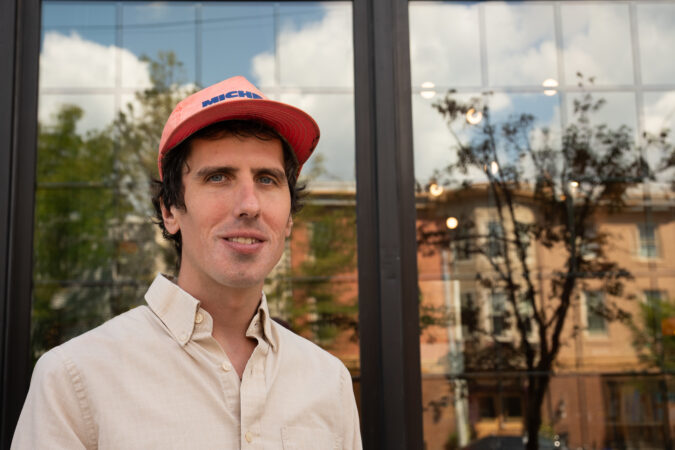
Russell Edling has been in Philly long enough to remember when Fishtown was quiet — “pretty sleepy,” he said. That was more than a decade ago, when he was a fresh Temple grad.
Things have changed a lot since then, both for Fishtown and Edling. A musician who records under the name Golden Apples, Edling just released his fourth album, Shooting Star, in September. It’s a “record of songs about writing songs,” he said — and about trusting your creative instincts.
Edling’s own instincts extend beyond music. He also dabbles in design and helps run Freehand Supply, the art shop he and a friend opened in the neighborhood earlier this year.
“When I first moved here for college in 2008, there was nothing like that in Fishtown,” he said. “I used to bike up to Temple just to get art supplies. It feels good to be able to offer that to people now.”
Here’s how Russell Edling would spend a perfect day in Philadelphia.
7 a.m.
I get up around 7 and I like to go running. I do a casual jog through the neighborhood and loop through Penn Treaty Park, then run around the casino and come home. It feels special to wake up and, in like 15 minutes, be running by a river through a park.
9 a.m.
My wife and I have a favorite spot to get breakfast. It’s this place in South Philly called Comfort Floyd. It’s wonderful. I think it’s the best pancake I’ve ever had. All their food is so good. The ambience is very chill and pleasant, too. We will ride our bikes down there and hang out as long as we want.
After that, we will bop around South Philly a little bit. I really like Brickbat Books. It’s a great spot. They have a lot of art books, a lot of used books, a really great curated selection. They also have some records.
We will probably go to Retrospect on South Street, too. My partner, Mimi, really loves thrifting. I have less of an appetite for it. I get exhausted by the experience sometimes and have to dissociate.
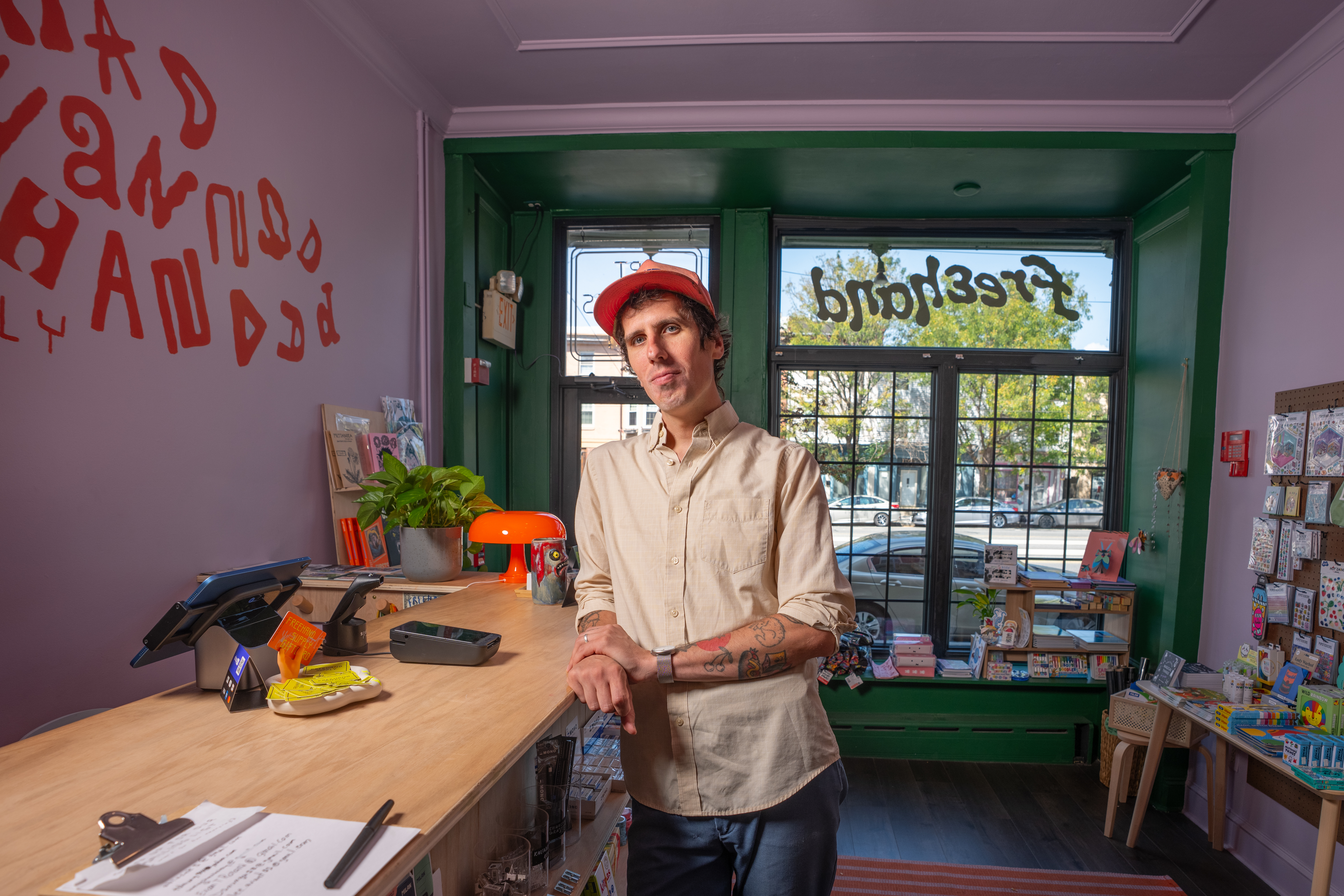
Russell Edling, a musician who goes by the moniker Golden Apples, in his art supply store, Freehand, in Fishtown.
2 p.m.
On our way back up to the neighborhood, we might stop at Freehand just to make sure everything’s going all right there. Then we’ll head home to walk the dog. We have a wonderful black German short hair–pointer–lab mix. We live right by a soccer/baseball field that he loves to run around. You’re not supposed to bring your dogs in there, but everybody does anyway.
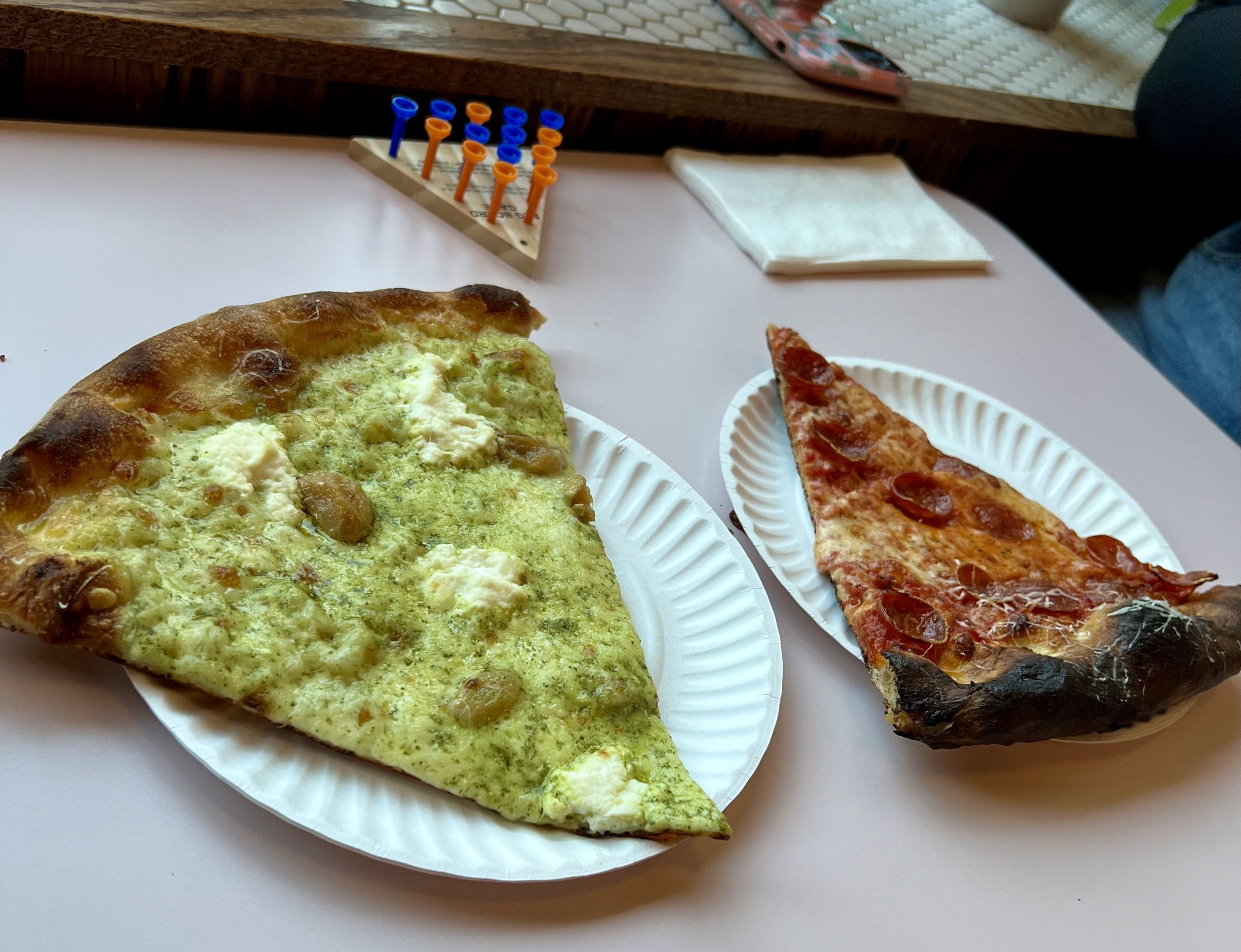
Basil cream, confit garlic, ricotta, fontina, and mozzarella atop a white pizza at Pizza Richmond.
3:30 p.m.
If it happens to be a weekend when the Richmond Street Flea is happening, we’ll definitely go to that.
There are a bunch of little shops on Richmond Street, and they all open their doors. Everybody’s out on the street. They have vendors, food, and pop-ups. Even live music.
We’ll end up popping into different shops. There’s a vintage store called Big Top. There’s Launderette Records, which is an incredible record store. There’s a jewelry store called Tshatshke, where my partner and I got our wedding bands. And there’s a great pizza spot — Pizza Richmond. They also have soft-serve ice cream. We’ll hang out at the flea market for a while. Maybe see some music, talk to some friends, and just hang out.
6:30 p.m.
If we’re still out for the day after the flea market, we’re going to see a show. Our favorite venue is Khyber Pass Pub. It’s been around for a really long time. I think Nirvana played there. Guided By Voices played there. So many legendary people have played there over the years. It’s a small, intimate space, but they have great shows all the time, and they have an incredible menu.
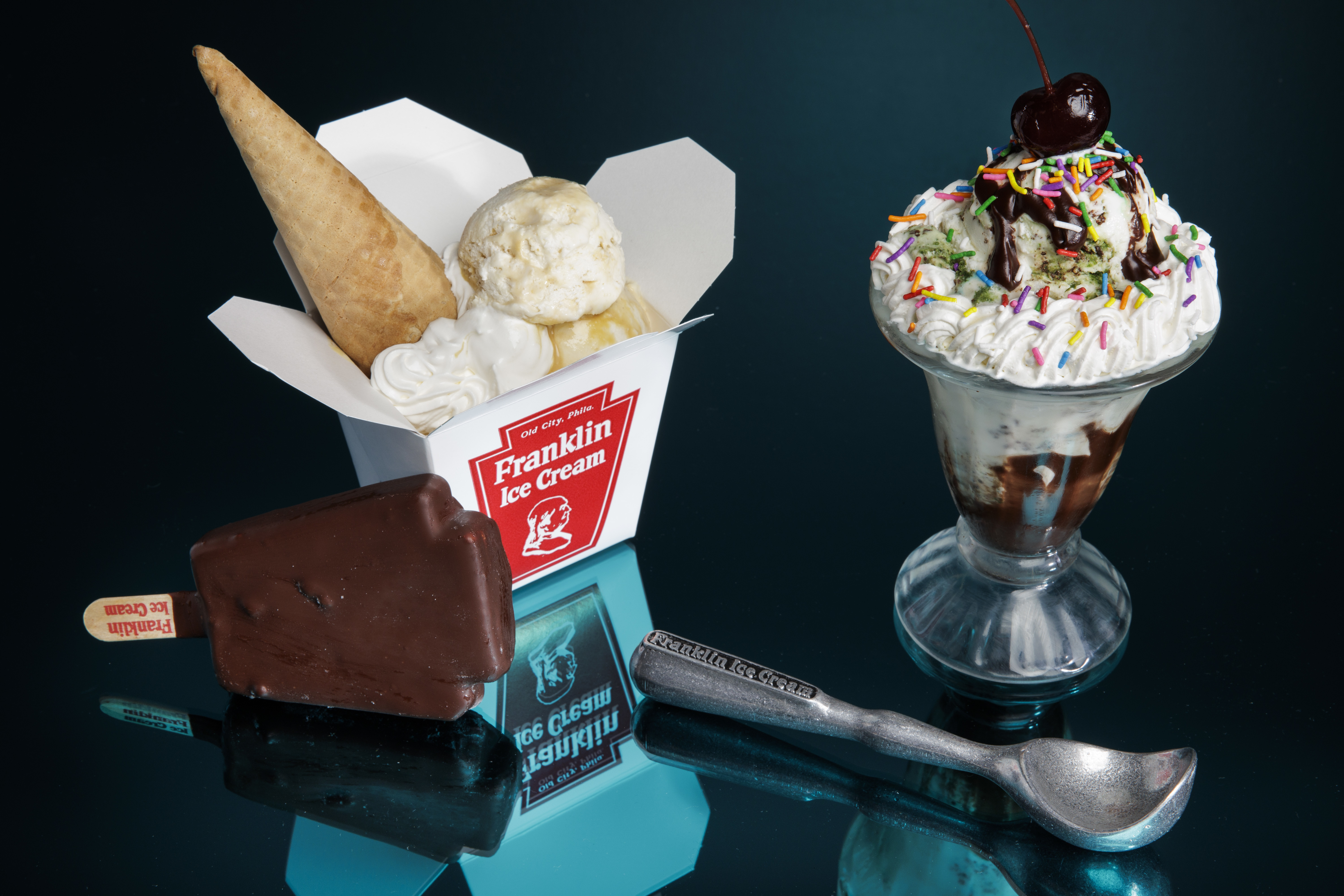
Franklin Fountain ice cream: “Our equivalent of a nightcap.”
11 p.m.
Our equivalent of a nightcap is ice cream at Franklin Fountain because they are open until midnight.
There are two Franklin Fountains in the same building. One is 1920s style. The other is 1950s style. No one goes to the 1950s one for some reason, so we go to that one to skip the line. I know it’s very touristy, but I have worked in ice cream throughout my life, and I think it’s the best ice cream in the city.
The Phillies resigning Kyle Schwarber (and extending Rob Thomson): B-
Look, we love Kyle Schwarber. The city loves Kyle Schwarber. Dogs wearing tiny Schwarber jerseys love Kyle Schwarber. The man hits baseballs into orbit, leads the clubhouse, and has basically willed this team to look alive some Septembers when vibes were bleak. Him staying in Philly always felt inevitable.
But here’s the uncomfortable truth we’re all circling: We’ve seen this movie before.
Schwarber is now locked in through age 37. Harper, Turner, Nola — all extended into their late 30s too. The Phillies are doubling (and tripling) down on the same aging core that keeps putting up big regular seasons and then… evaporating in October.
Yes, Schwarber smashed 56 homers in 2025. Yes, he’s historically elite. Yes, Rob Thomson deserved his extension, four straight postseasons don’t grow on trees. But also: This team has repeatedly stalled in the playoffs, and running it back with the same core isn’t exactly a bold correction.
Dombrowski insists they’re “not just bringing the band back,” but right now it feels a lot like the band tuning up the same setlist and we already know how ends: a killer eighth-inning rally in June, a heartbreaking NLDS in October.
If the Phillies really want a different result, they still need a third true power bat behind Schwarber and Harper — the Rhys Hoskins void has been haunting them for three seasons. Until they fill it, this roster is basically an expensive version of “just try that again.”
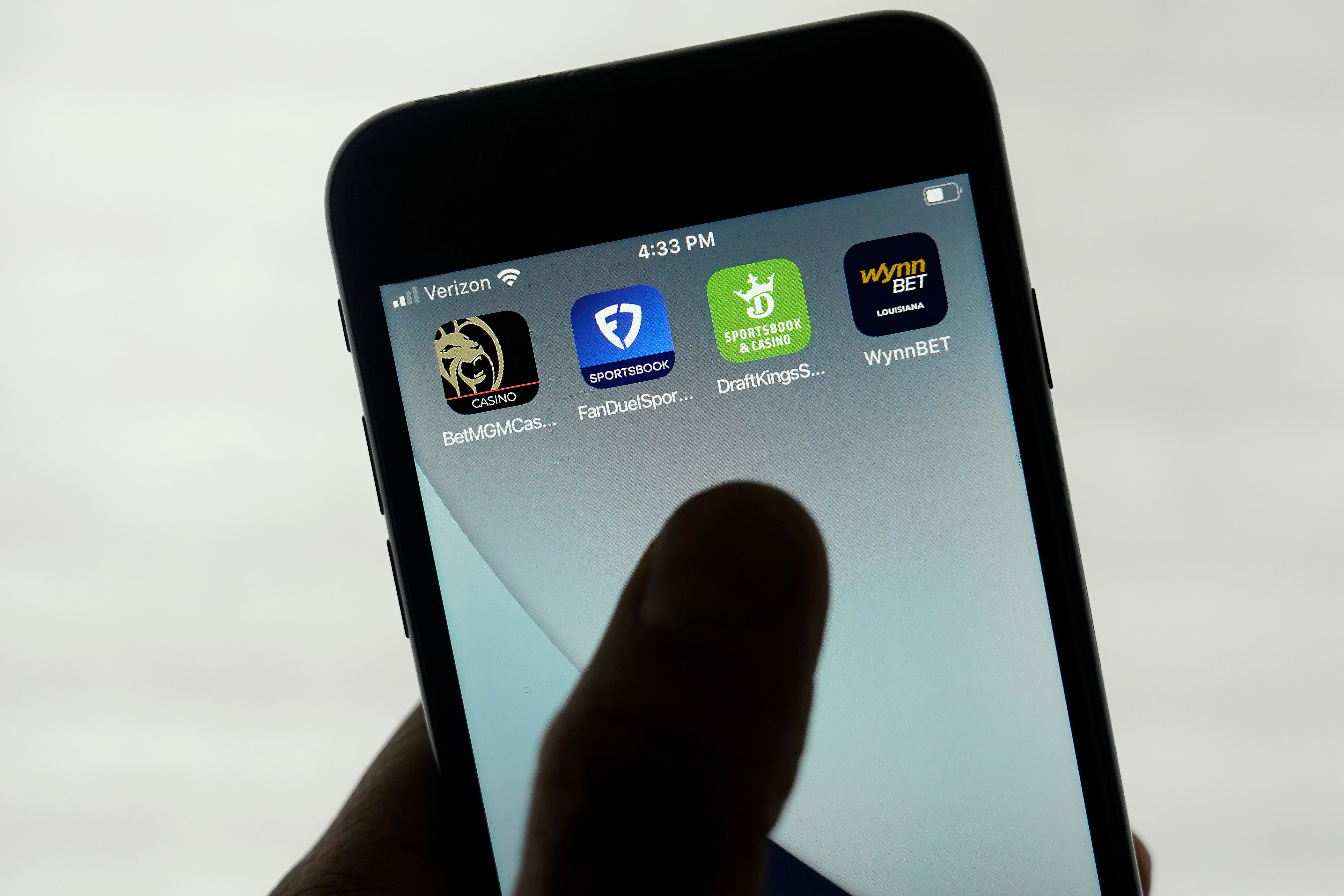
FanDuel, DraftKings, and other online gambling apps are displayed on a phone in San Francisco, Sept. 26, 2022.
Philly is the No. 1 market for online gambling: D-
Philly finally beat New York and Vegas at something — unfortunately, it’s being the top target for online gambling ads. Companies dropped $37 million this year convincing us that our phones are tiny casinos that fit in our pockets and aren’t ruining our credit scores.
And guess what? It worked! Calls to 1-800-GAMBLER about online betting have nearly tripled since 2021. Penn State says 30% of Pennsylvanians now bet regularly, and about 785,000 people in our commonwealth of 13 millionare estimated to be problem gamblers, which, coincidentally, is also the number of people who think the Sixers will “definitely cover tonight.”
The hotline stories are brutal: drained retirements, missed mortgages, broken marriages, people betting on Russian table tennis at 3 a.m.
Yes, Harrisburg pockets tax money. No, that does not offset the fact that some folks are blowing entire paychecks faster than a Broad Street Line train skips your station.
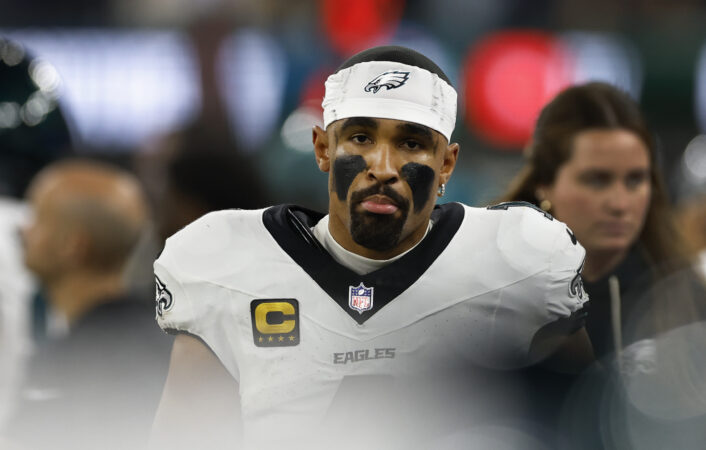
The Eagles have installed the “positivity rabbit” into the locker room
It showed up today and the offensive line stressed to me they are not sad they just wanted a good vibes bunny 👍 pic.twitter.com/zJi0M93SEr
The Eagles’ positivity rabbit: B for bunny (but trending toward D if they keep losing)
Only in Philadelphia could a three-game skid lead to the installation of a giant inflatable “positivity rabbit” in the Eagles’ locker room, the kind of holiday décor your aunt buys at Lowe’s, except this one is supposed to fix the offense.
According to NBC Sports Philly, the O-line wanted “good vibes.” So the Eagles brought in a five-foot inflatable bunny. Reddit immediately turned it into a full-blown prophecy, a meme, and possibly a new religion. Some fans think it’s the 2025 answer to the underdog masks; others think it looks like the guy who egged Patullo’s house finally got caught.
And then Jason Kelce stepped in with the dagger: “To be honest, I don’t really like the rabbit. It’s a little hokey… It didn’t work. You have to ditch the rabbit.”
The vibes bunny now sits at a dangerous crossroads. If the Birds win out: parade float. Philly embraces it forever. Etsy shops explode. If they don’t: that thing gets thrown on I-95 like HitchBOT.
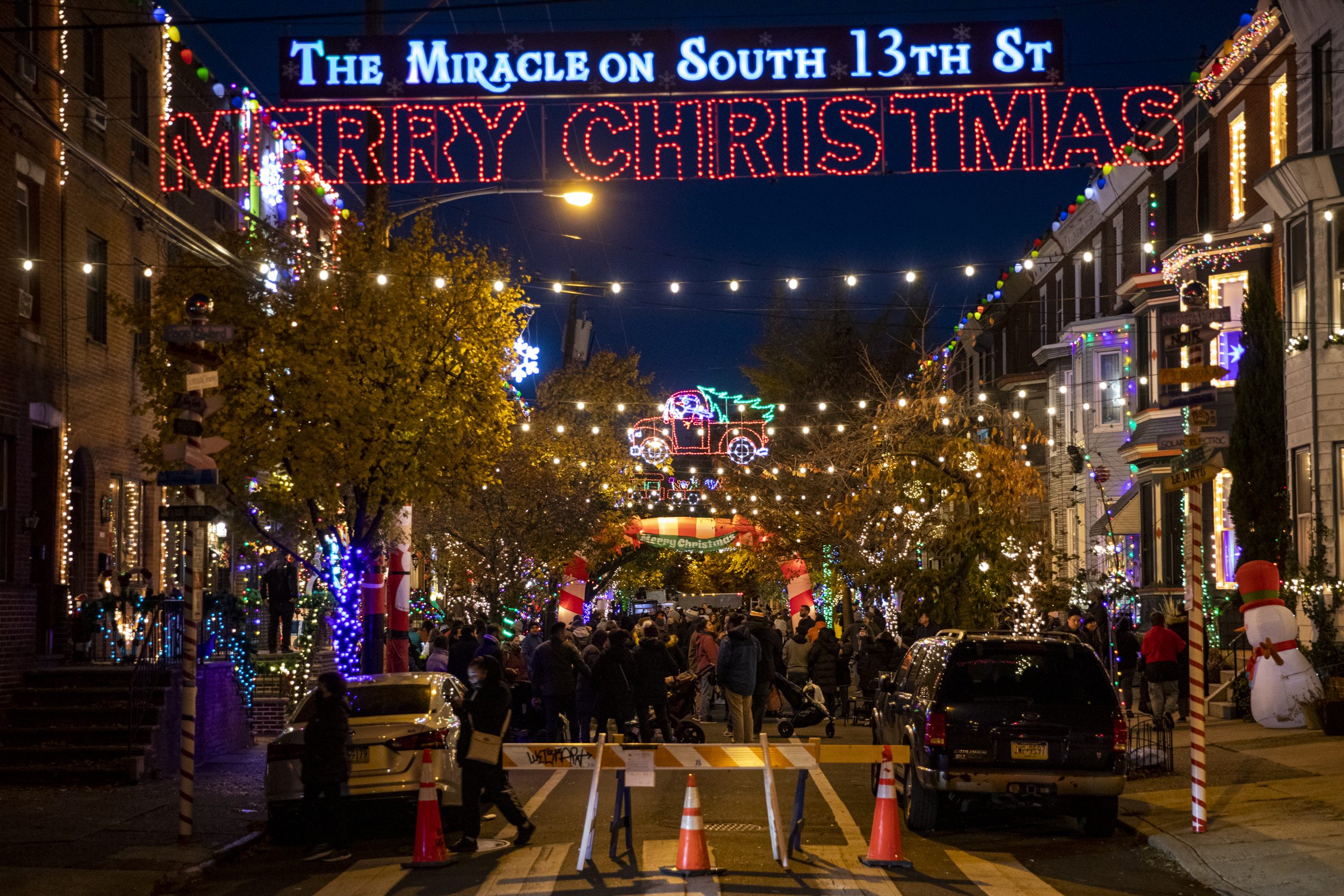
The Miracle on South 13th Street block party is filled with Christmas lights and decorations in 2021.
Miracle on South 13th Street traffic chaos: C+
South Philly’s favorite holiday tradition is back — and so is the gridlock, horn-honking, and pure, uncut neighborhood rage that comes with funneling half the region down a street roughly the width of a rowhouse hallway.
This year, 6abc reported that Morris Street briefly closed and pushed even more cars onto 13th, turning a beloved Christmas display into a live reenactment of Uncle Frank screaming “Look what you did, you little jerk!” Residents are understandably asking the city the obvious South Philly question: How exactly is an ambulance supposed to get through when Karen from Cherry Hill parks her Highlander on a diagonal to get the perfect photo?
Neighbors want more open-street hours, as in let people walk, let cars chill. Councilmember Squilla says he’s willing to talk about it, which is Philly for “maybe… if everyone stops yelling.”
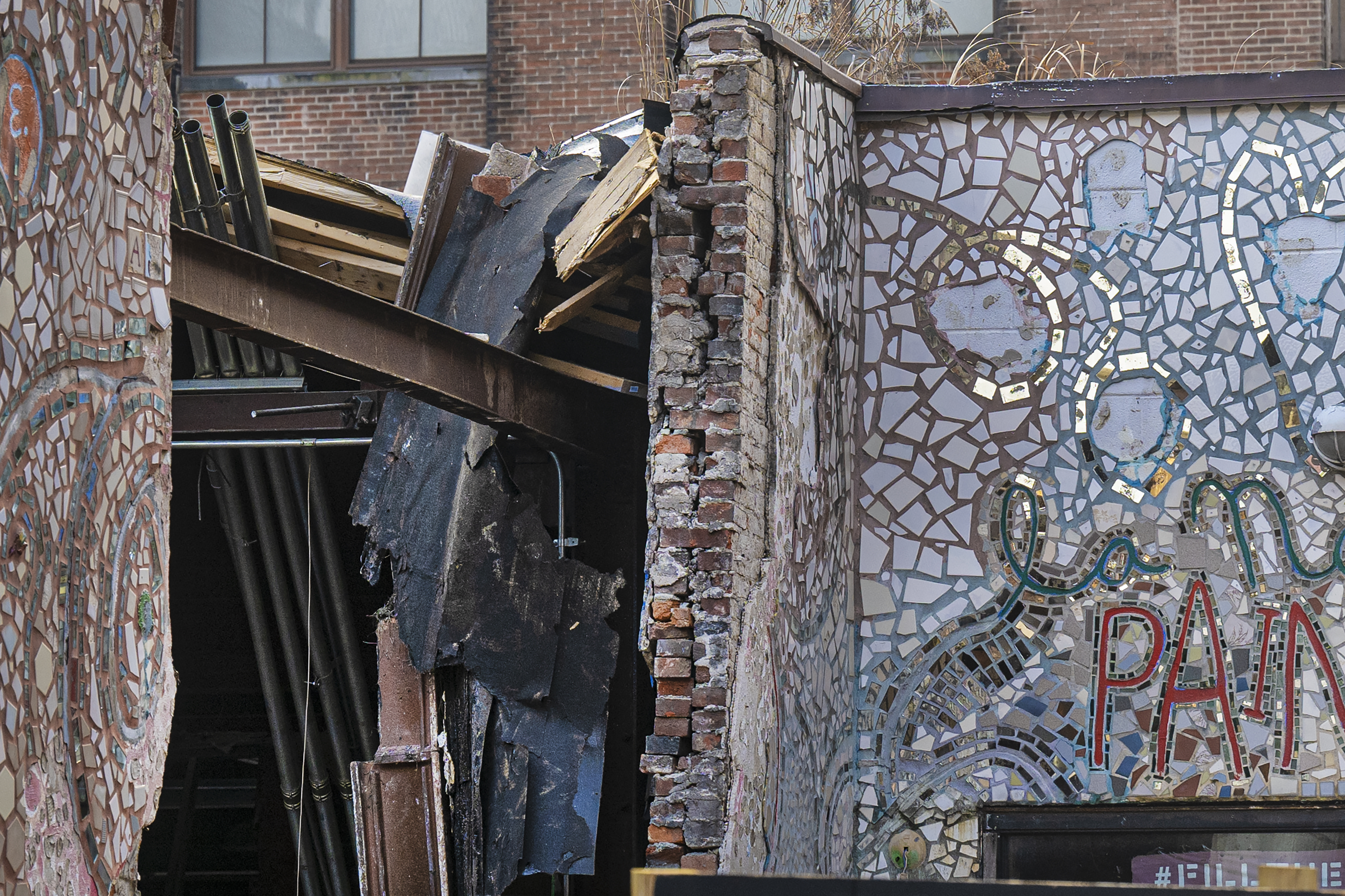
The former Painted Bride Art Center at 230 Vine St. is shown Thursday, Dec. 11, 2025, during demolition to make way for new apartments and commercial space.
The Painted Bride’s long fall: D
The demolition of the Painted Bride isn’t just another development story. It’s the slow, painful end of something that felt uniquely, defiantly Philadelphia. After nearly six years of lawsuits, appeals, zoning wars, neighbor fights, preservation pleas, and enough public testimony to qualify as its own Fringe Festival show, the Old City building that once held Isaiah Zagar’s 7,000-square-foot mosaic is officially coming down.
If you grew up here, walked past it, or just have a pulse, the loss hits hard. The Painted Bride wasn’t a blank canvas waiting for a luxury building. It was already the art. It was the kind of place tourists would stumble upon, go “What is this?” and locals would answer, “Oh, that’s just Philly being weird and beautiful.” Now it’ll be dust, plywood fencing, and a future apartment building trying its best to pretend a few salvaged tiles can replace an entire iconic facade.
Neighbors didn’t want height. The Bride didn’t want the building. The city didn’t want to officially call it historic. The developer wanted to preserve it until a court told him he couldn’t.
This is the kind of loss that feels bigger than one building. Philly’s magic is fragile. Sometimes it’s protected (hello, Wanamaker Organ), and sometimes it’s chipped away, boxed up, and repurposed as lobby decor.
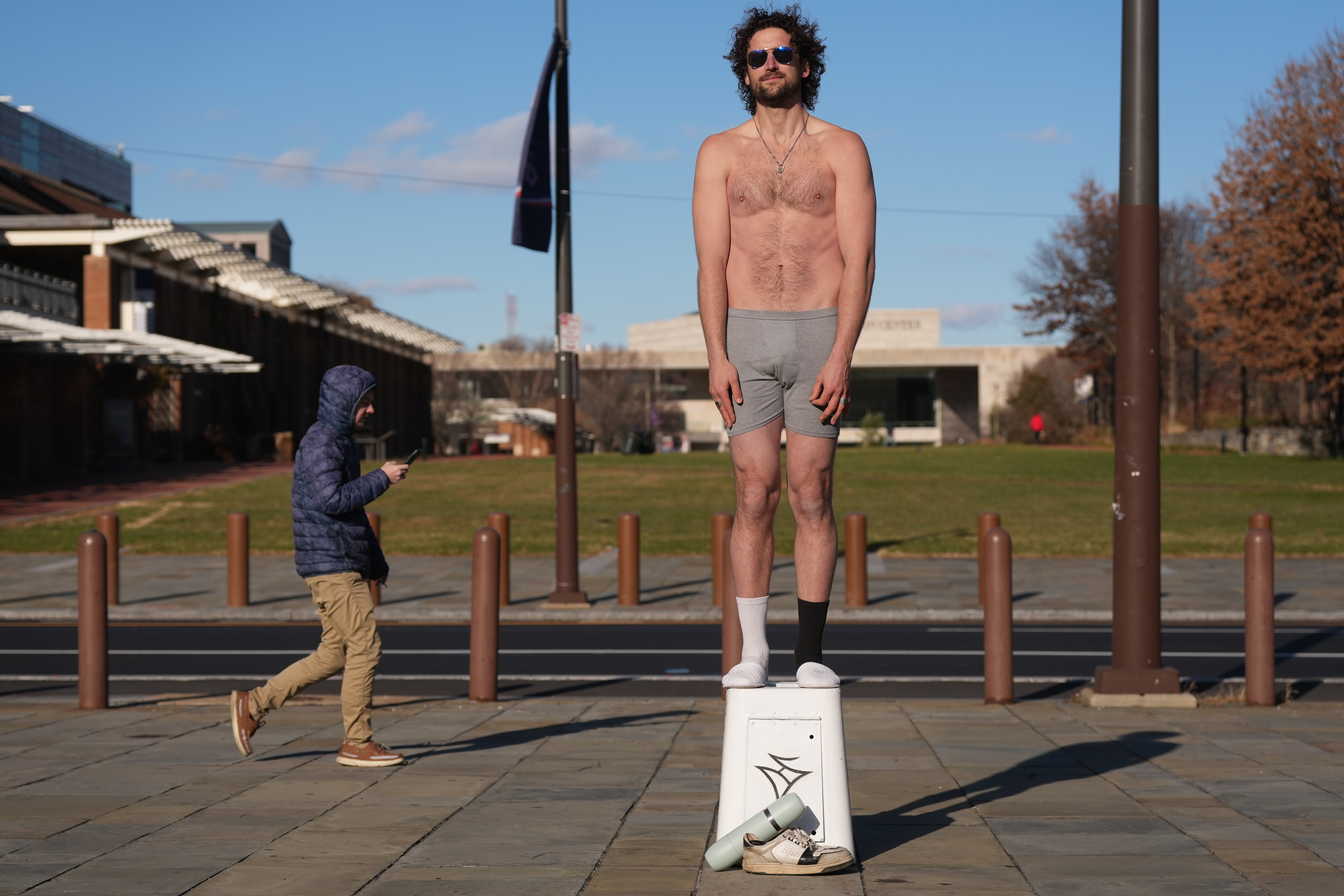
An artist named Ham, the architect of this cold weather performance piece, in Philadelphia, December 11, 2025.
A nearly-naked man standing on a box by the Liberty Bell: A+
Tourists stared. Rangers grew concerned. Locals did what locals always do — tried to figure out if this was art, a bet, or a fantasy-football punishment gone horribly wrong.
Turns out it was art. The man, an artist from Baltimore named Ham (“like the sandwich”), calls the whole thing a commentary on social media. Instead of posting content, he becomes the content.
Ham has done this in New York, Berlin, and even a Norwegian village but claimed Philly gave him the best interactions: confused tourists, National Park rangers offering him clothing, a police officer checking in, and Philadelphians who stopped just long enough to ask, “Buddy… why?”
In a very Philly twist, he’s putting the money people hand him toward an engagement ring, which somehow makes the whole thing feel less like performance art and more like a South Street side quest.
No matter how you interpret it, it’s peak Philadelphia: a nearly naked man shivering by one of America’s most sacred monuments, and the city responding with equal parts curiosity, concern, and “yeah, that tracks.”
Ham planned to stand out there through the weekend — but only until around 4:30 p.m., because even performance artists know better than to be half-naked in Center City after dark.
The buyer: Lulu Tunis, 39, communication specialist
The house: A 1,060-square-foot rowhouse in Brewerytown, with three bedrooms and one bathroom, built in 1925
The price: Listed for $270,000; purchased for $240,000
The agent: Rachel Shaw, Philly Home Girls
The ask: For Lulu Tunis, it was simply time to buy a house. She had been living in Brewerytown for a decade. Her one-bedroom apartment on Girard Avenue was fine, but she wanted more space. More importantly, she felt financially prepared to buy. “I think I was just ready,” Tunis said.
Her needs included three bedrooms, easy street parking, and a backyard large enough for the dogs she often pet sits. Proximity to Girard Avenue was also important. “I didn’t want to be too far off where I normally hang out,” Tunis said. She was OK with only one bathroom and also a fixer-upper. “I’m pretty handy,” she said.
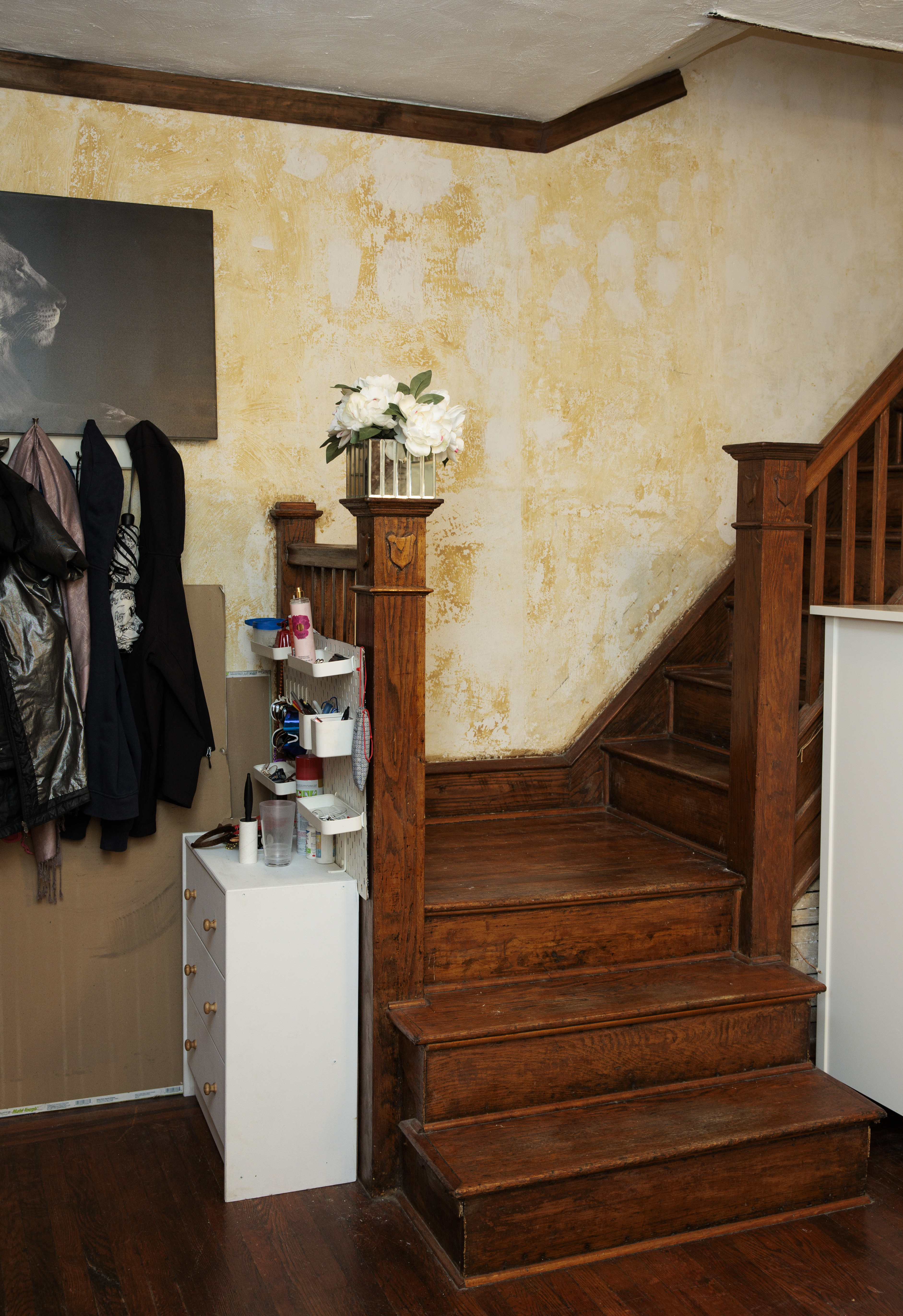
The hardwood staircase leads to three large bedrooms upstairs.
The search: Tunis began looking in April 2024 and narrowed her search to a four-block radius. “There were actually a lot of options,” she said. Her budget was $250,000.
In the 10 homes she saw, she ran into all kinds of strange layouts. Some of the third bedrooms were the size of a closet. Others didn’t have closets. Neither situation would do. Nor would the house with the extra narrow hallways upstairs, or the one that smelled like cat pee. She considered a couple of duplexes in case her family moves in with her down the road, but they needed too much work.
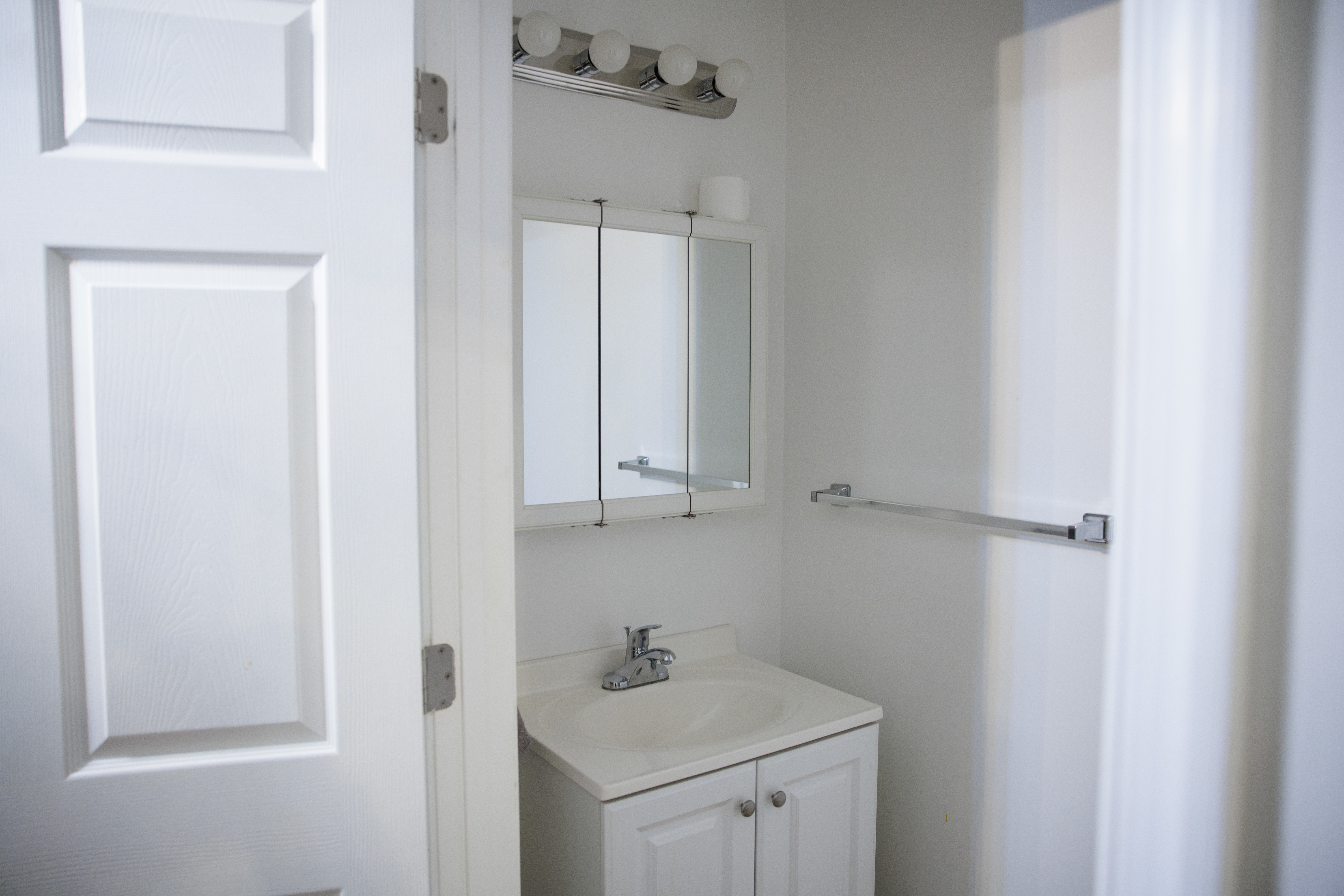
Tunis was OK with just one bathroom but has enjoyed having a remodeled half bath on the first floor.
She fell in love with a house on a corner lot that had great light and tried to make an offer, but someone beat her to it. “I still walk by it all the time,” said Tunis, “and I get a little jealous.”
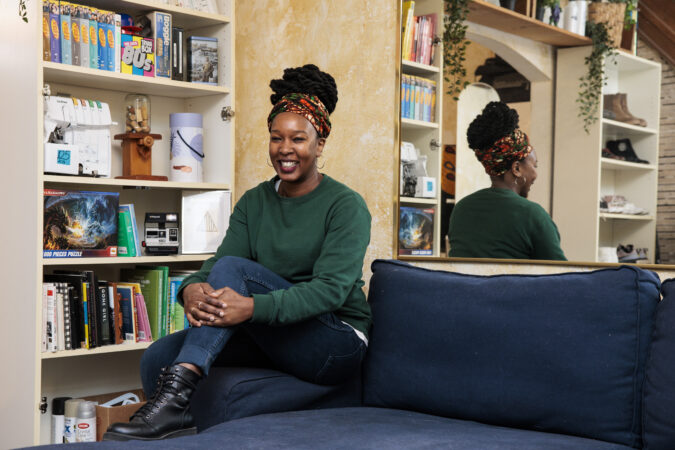
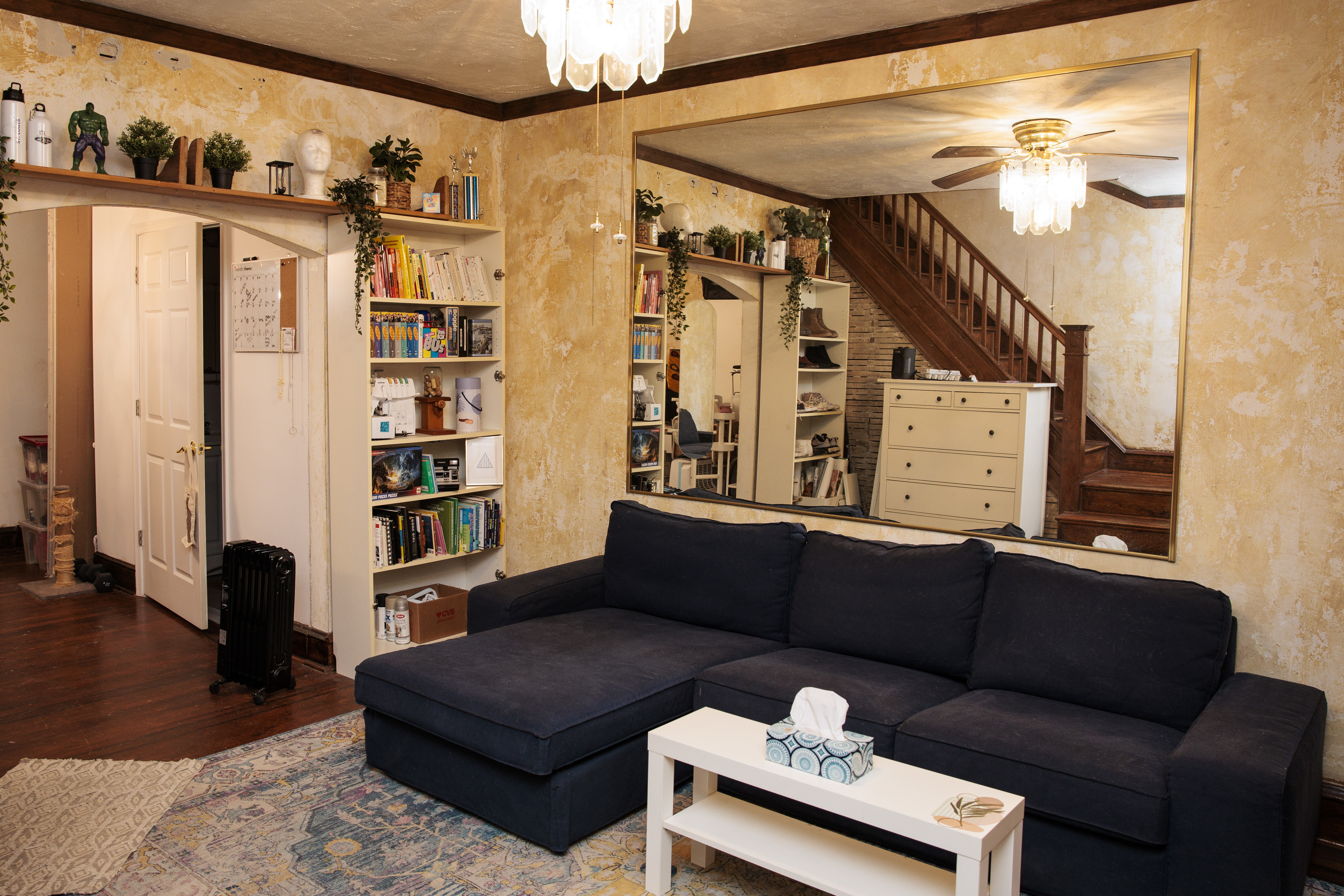
The appeal: The house Tunis bought charmed her immediately. There was a large, golden mirror near the entrance. “It’s great for ‘fit shots,’” Tunis said. She liked how open the downstairs was and that the laundry was right off the kitchen. The unfinished basement needed some work, but it had plenty of room for storage. Upstairs, Tunis was delighted to find three relatively large bedrooms (each one can easily fit a bed and a desk) and recently redone hardwood floors. It also has 1½ bathrooms.
The large gold mirror that Tunis immediately fell in love with when she stepped inside the house for the first time.
The downstairs floors weren’t in great condition, but Tunis liked that they were original to the home. Despite being dated, the house was full of great features. “I could see the potential,” said Tunis.
The deal: The house was above Tunis’ $250,000 budget, but it had been on the market for 80 days, so her real estate agent suggested they submit a bid under the asking price. Tunis offered $240,000 and the seller accepted immediately.
During negotiations, Tunis asked the seller to pay for termite treatment and a home warranty, which covers the cost of repairing or replacing major appliances and systems. The inspector warned Tunis that the heater would probably have to be replaced within the year. Everything else looked good.
The money: Tunis had a little under $5,000 saved for her home purchase. Her aunt gave her another $5,000. She also received a Keys to Equity grant for $20,000 and a Philly First Home grant for $10,000. She used $17,000 for the down payment and shelled out $16,000 for closing costs. With a 6.375% interest rate, her monthly mortgage payment is $1,392.
The move: Tunis officially closed on Nov. 15 but waited until the end of December to move in. She wanted to tear down the wallpaper in the living room. The process took longer than she expected and forced her to abandon her other pre-move-in home-improvement plans. “I just lost motivation,” Tunis said.
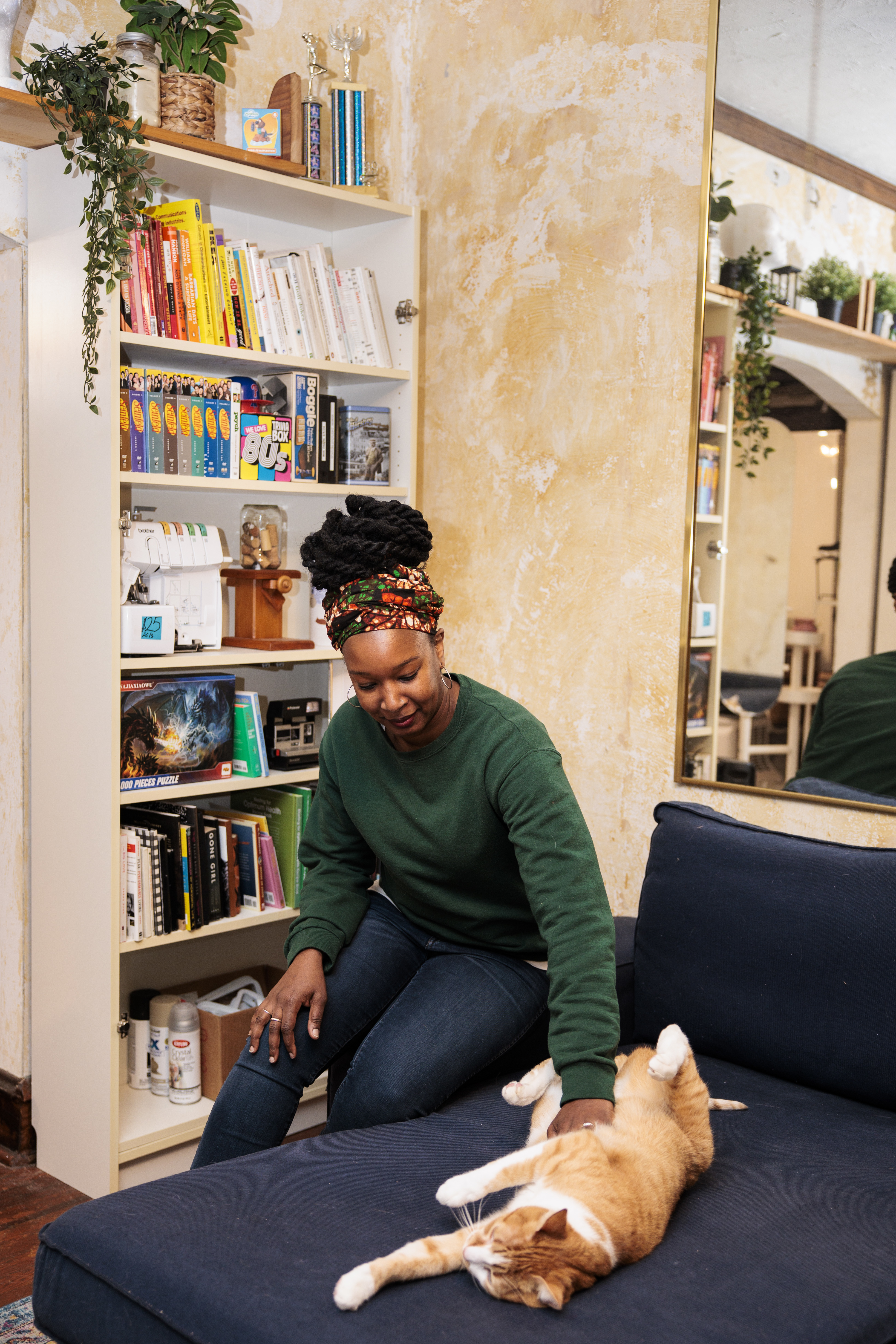
The house has plenty of places for Tunis’ cat, Huey, to nap.
Because Tunis’ new house was only a block from her old apartment, she moved gradually at first, carrying small loads on foot. Her family arrived the day after Christmas to help move bigger stuff. They rented a U-Haul and moved everything in two trips. Tunis’ first night in her new house was Dec. 29. She started a new job the next day.
Any reservations? The biggest disappointment in the house has been the lack of natural light. It’s blocked most of the day by a five-story school across the street. “I only get sun first thing in the morning and then around sunset,” Tunis said. Her plants are suffering.
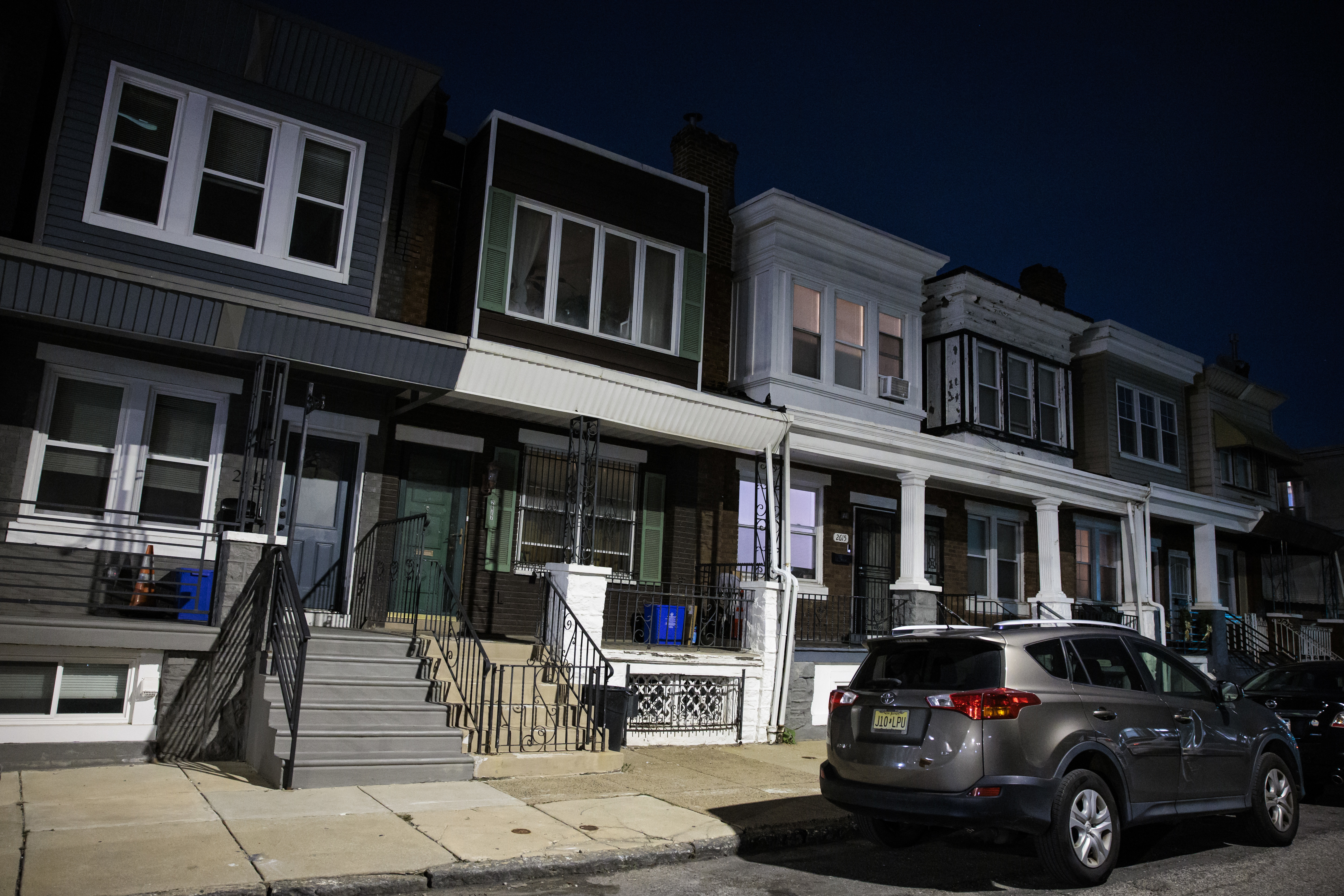
Tunis’ house is in the middle of the block and across the street from a tall building, so it doesn’t a lot of light.
Life after close: So far, Tunis is happy with the way her bedroom looks, and that’s about it. The rest of the house remains a work in progress. “There’s always some half-built furniture somewhere,” she said.
Her next big project will be replacing the drywall in the back room downstairs. She took a class at West Philly Tool Library and plans to do it herself — or at least try. “I’m not ready to pay anyone yet,” she said. Once the walls are complete, she’s going to paint the kitchen, which is currently bright blue. She’d prefer terra-cotta or dark tan.
Tunis says that even though her space is currently a “hot mess,” she likes coming home to it. “Coming to an apartment was fine. But coming to my house? It’s like ‘OK, this is my home.’ I’ve always got little projects to do.”
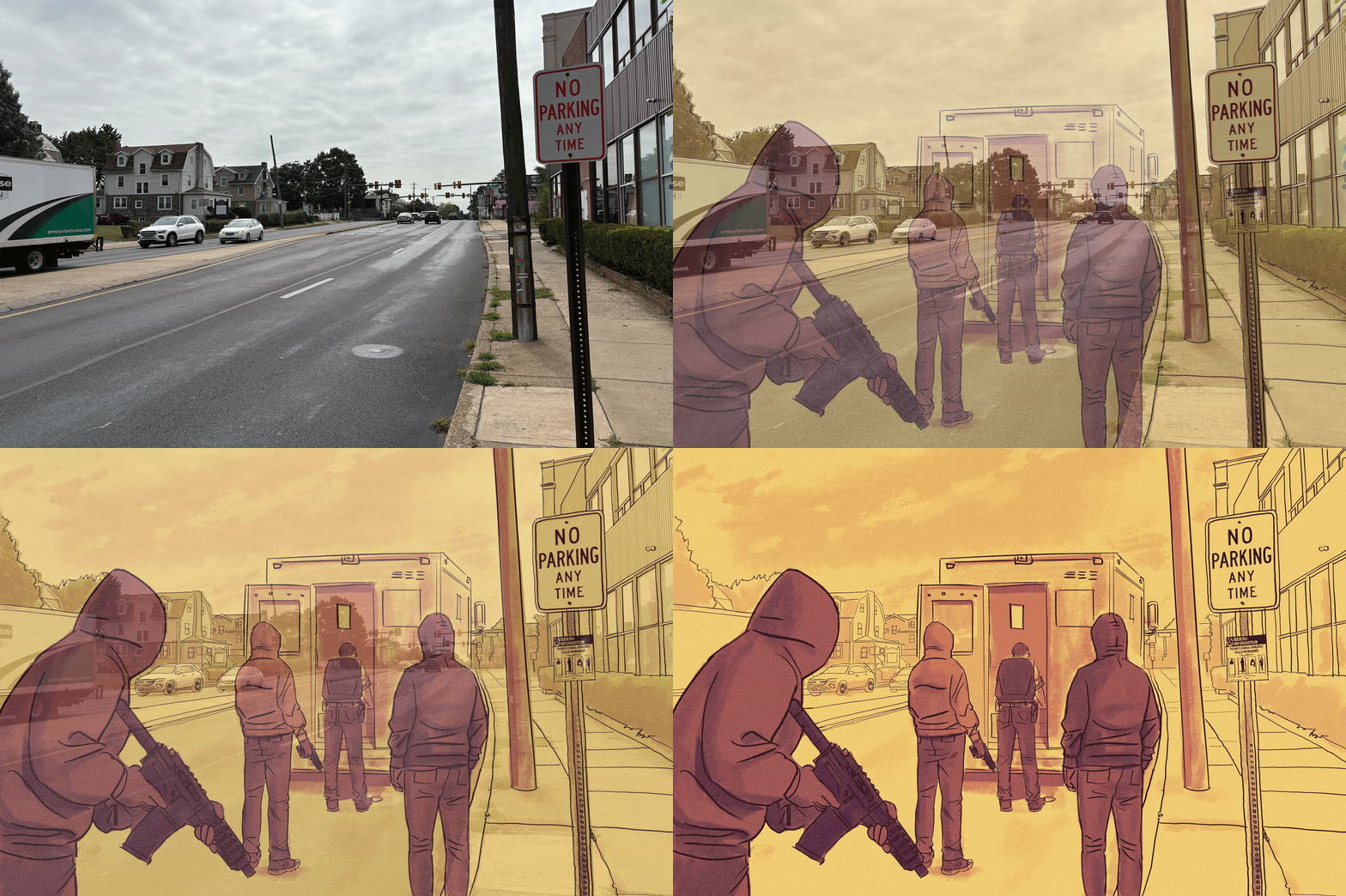
They had moved with surgical precision, the two masked thieves and their getaway driver. Their MO was simple: ambush an armored truck guard, seize his service weapon, grab his delivery bag, then go.
In the space of six early summer days, they executed two robberies, each in broad daylight, in busy Philadelphia shopping centers.
Each heist had taken only a few moments, and no one had been injured. But an unexpected wrinkle — a flinch, a scream, a jumpy truck guard with more bullets than sense — could easily escalate a robbery into a tragedy.
To members of the crew, though, this was all high comedy.
In a group chat after the second stickup, four men — two of whom authorities would later identify as members of the robbery ring — joked about a Fox 29 Instagram post that detailed the heists.
“Don’t say my name lol,” wrote one man.
Another suggested that law enforcement would set a trap for the thieves.
The tone of the group chat is breezy, dotted with laugh-crying emojis.
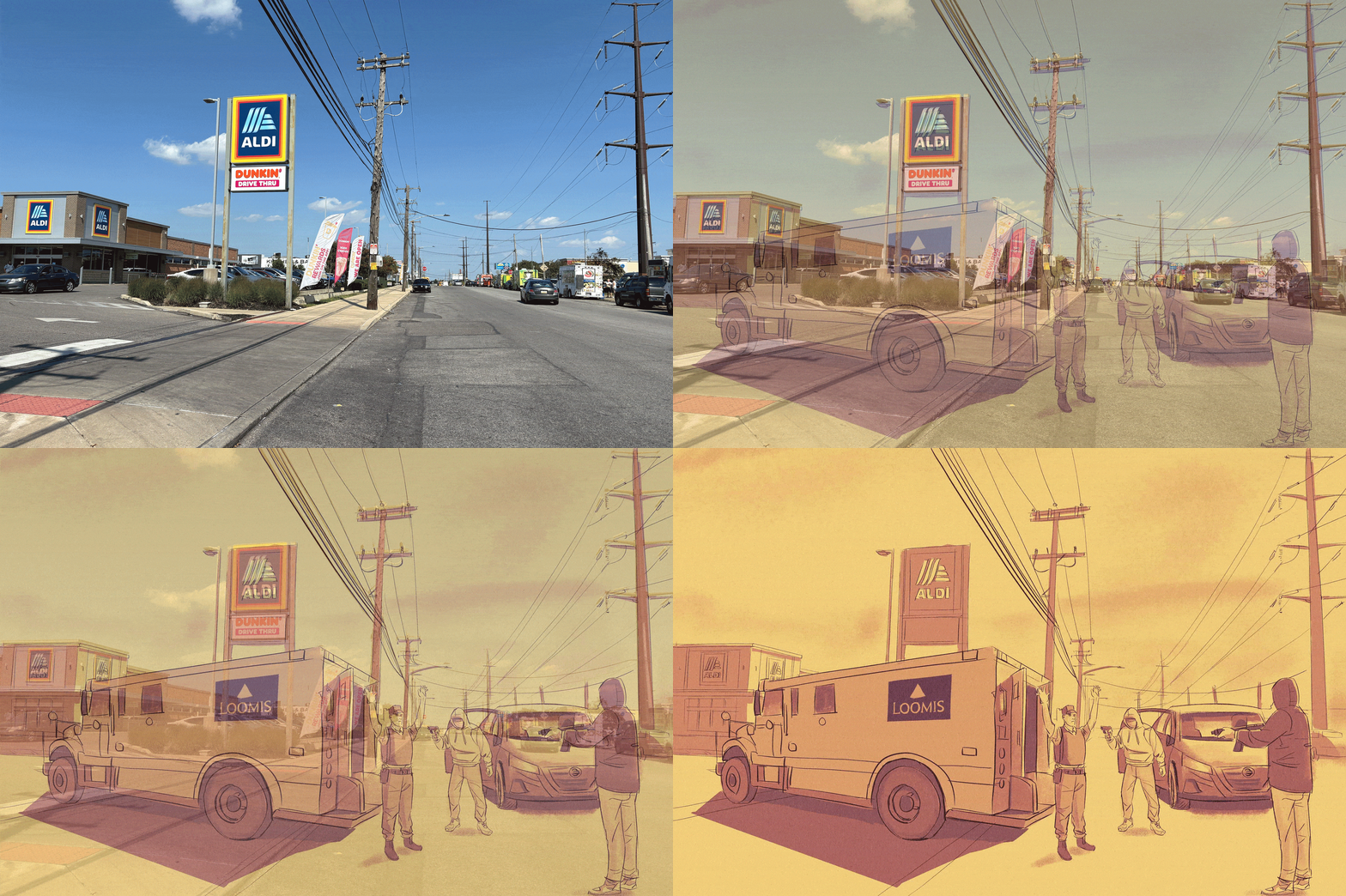
On June 26, as Philadelphia recovered from three consecutive days of 99-degree heat, armed thieves robbed a Loomis driver outside a Crescentville Aldi.
A federal agent would later recount this exchange, and several others, in a 29-page affidavit that details how an alphabet soup of agencies — the FBI’s Violent Crime Task Force, Philadelphia police, Cheltenham police, the District Attorney’s Office, the Bureau of Alcohol, Tobacco, Firearms and Explosives — worked to identify, track, and ultimately arrest members of the crew that allegedly attempted to rob five armored truck drivers between June 26 and Aug. 12.
This was not a simple whodunnit, solved with TV-drama efficiency.
It took a mélange of elements — old-fashioned detective work, high-tech digital surveillance, an anonymous tip, and a seemingly unrelated probe into automobile thefts — to help authorities zero in on the armored truck thieves.
Among the information that investigators collected along the way was the conversation about the Fox 29 post, which was sent to two members of the robbery crew and a third man by Tykee Smith, a Tampa Bay Buccaneers safety.
Smith, 24, grew up in West Philly, but his connection to the crew is unclear. He has not been accused of committing a crime. The FBI did not redact his Instagram handle from the affidavit, but did elect to hide the identities of other figures in the case.
Asked about Smith, an FBI spokesperson wrote in an email: “I would have to defer to the public documents.”
Representatives for Smith and for the Buccaneers declined to comment.
For a while, after their busy summer, the thieves seemingly went underground.
Then, in early fall, investigators learned that the crew had obtained a stolen white Honda Accord with a paper license plate tag.
On Oct. 3, police officers spotted the Accord outside a City Avenue Target — lurking near a Brinks truck.
The Accord peeled off, igniting a heart-thumping chase that spilled into Lower Merion Township, where the driver and his passenger ditched the sedan on a leafy, horseshoe-shaped road.
Police and news helicopters were soon thrumming over the area’s million-dollar properties. Some curious residents ventured outside and were met by teams of rifle-wielding cops who hollered to get back in their homes.
The officers’ radios hissed with speculation: Had the men fled along the nearby Cynwyd Heritage Trail, which leads to Manayunk?
By early afternoon, the suspense — and the manhunt — had drawn to a close.
Officers apprehended one individual, Mujahid Davis, hiding in the basement window well of a house on Colwyn Lane.
His partner managed to evade the dragnet in Lower Merion Township with the help of someone who picked him up in a Dodge Charger.
The escape was short-lived: Police caught up to the Charger soon after in West Philly and arrested the passenger, Dante Shackleford.
On Oct. 16, a federal grand jury charged Shackleford, 26, with one count of Hobbs Act robbery for stealing more than $100,000 from a Brinks driver on Aug. 12, attempted robberies on July 22 and Oct. 3, and brandishing a firearm in relation to a crime of violence.
It was Shackleford who had joked to not say his name when Smith shared the Instagram post about the robberies. Cell tower data showed that his phone was at the scene of some of the summer heists.
If convicted, Shackleford’s sentence could range from seven years to life in prison. He has pleaded not guilty. His attorney, Angela Levy, declined to comment.
Davis, 24, was charged with the Oct. 3 attempted robbery. He has pleaded not guilty.
More indictments might follow in January, when trial dates for Shackleford and Davis will be set, the records show.
Vito Roselli, a retired FBI agent who once worked on bank and armored car robbery investigations in Philadelphia, called the phone evidence in the affidavit “devastating.”
“A lot of robbery crews wise up with cell phones, and just use burner phones. It’s spy tradecraft,” he said. “This crew is not doing that. They’re pretty open about what they’re doing, and they’re running their mouths.”
‘Take all the tracking s— out’
While the FBI tried in early July to generate leads on Philly’s armored truck bandits, other law enforcement agencies were busy in the city with the seemingly unrelated pursuit of an alleged car thief and gun dealer.
Salim Sutton, 31, had been on the run since February. A Common Pleas Court judge had placed Sutton on house arrest while he awaited trial on firearms and theft charges. But Sutton had other plans, and allegedly cut off an ankle bracelet monitor, then absconded.
In June, police officers began investigating a series of complaints about cars having been stolen or broken into near Front and Callowhill Streets. Surveillance footage gave them a look at the alleged culprit: Sutton.
Investigators determined that Sutton had been selling firearms that he’d stolen from vehicles. Given the widening scope of Sutton’s alleged offenses, police and the District Attorney’s Office’s Gun Violence Task Force sought the assistance of the ATF.
The added manpower almost immediately yielded results. On July 10, ATF agents nearly captured Sutton, but he slipped beyond their grasp while riding in a black Nissan Maxima with tinted windows, black rims, and a blacked-out rear emblem.
Afterward, Sutton joked about the encounter on Instagram.
The next day, Sutton traded text messages with a man who wanted to purchase a stolen car.
“I’m bout to hurry up and take all the tracking s— out of it now,” Sutton wrote, according to the records.
“Got you send a cash app,” replied the man, whom the FBI refers to only as “Suspect 1.”
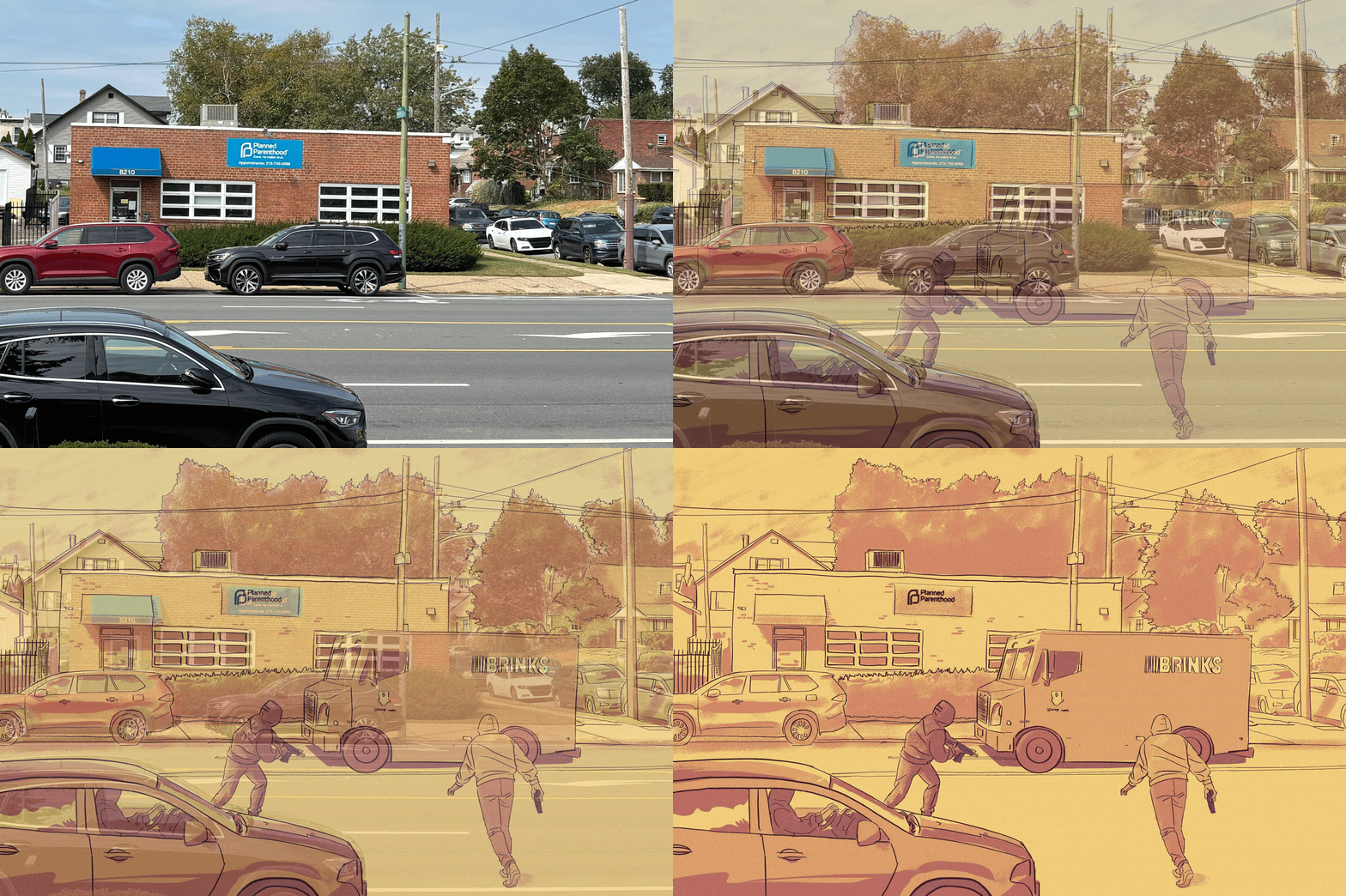
Four days later, on July 15, a Brinks guard parked on Castor Avenue in Rhawnhurst to make a delivery to a Planned Parenthood office.
A Brinks driver opened fired when armed thieves tried to rob him near a Planned Parenthood office on Castor Avenue.
The guard noticed that he was being approached by a man who was wearing a black facemask, a black hoodie, and latex gloves — and brandishing a handgun.
A second man, armed with an AR-style rifle, lurked near the intersection of Castor and Emerson.
The guard drew his service weapon and opened fire, getting off eight shots but not hitting anything.
One of the would-be robbers ran away. Surveillance cameras recorded his partner fleeing in a getaway car: a black Nissan Maxima with tinted windows, black rims, and a blacked-out rear emblem.
Hours after the attempted heist, photos of the getaway began to circulate across social media. Sutton saw one such image on social media, a clear look at the Nissan’s trunk — and its license plate.
He took a screen shot, then messaged the man to whom he had sold the Nissan and asked whether he had switched the car’s license plate.
The two men began discussing more vehicle transactions. Sutton said he had a black 2015 Mercedes-Benz S550 that he could sell for $800.
For the buyer, the price was too steep. He explained that he needed something cheaper, maybe in the $200 to $300 range, just so long as its windows were tinted.
“…we use em for bouncing,” he wrote, “that’s it[,] not to have[.]”
Eyes in the sky
As Philadelphia fell deeper into an uncomfortable, humid summer — punctuated by an eight-day garbage strike — the FBI was still trying to identify the men responsible for the armored truck heists.
They knew that after the first robbery, of a Loomis guard on June 26, two masked thieves and a driver escaped with a meager haul — the guard’s handgun, and a canvas bag that contained $1,000 — in a gray or brown Nissan Altima with tinted windows.
Philadelphia police stopped the Altima on July 2. Its license plate had been stolen from another car.
Officers determined that the driver had nothing to do with the heists. But he did share a valuable piece of information: He had rented the Altima, he said, from someone on Instagram.
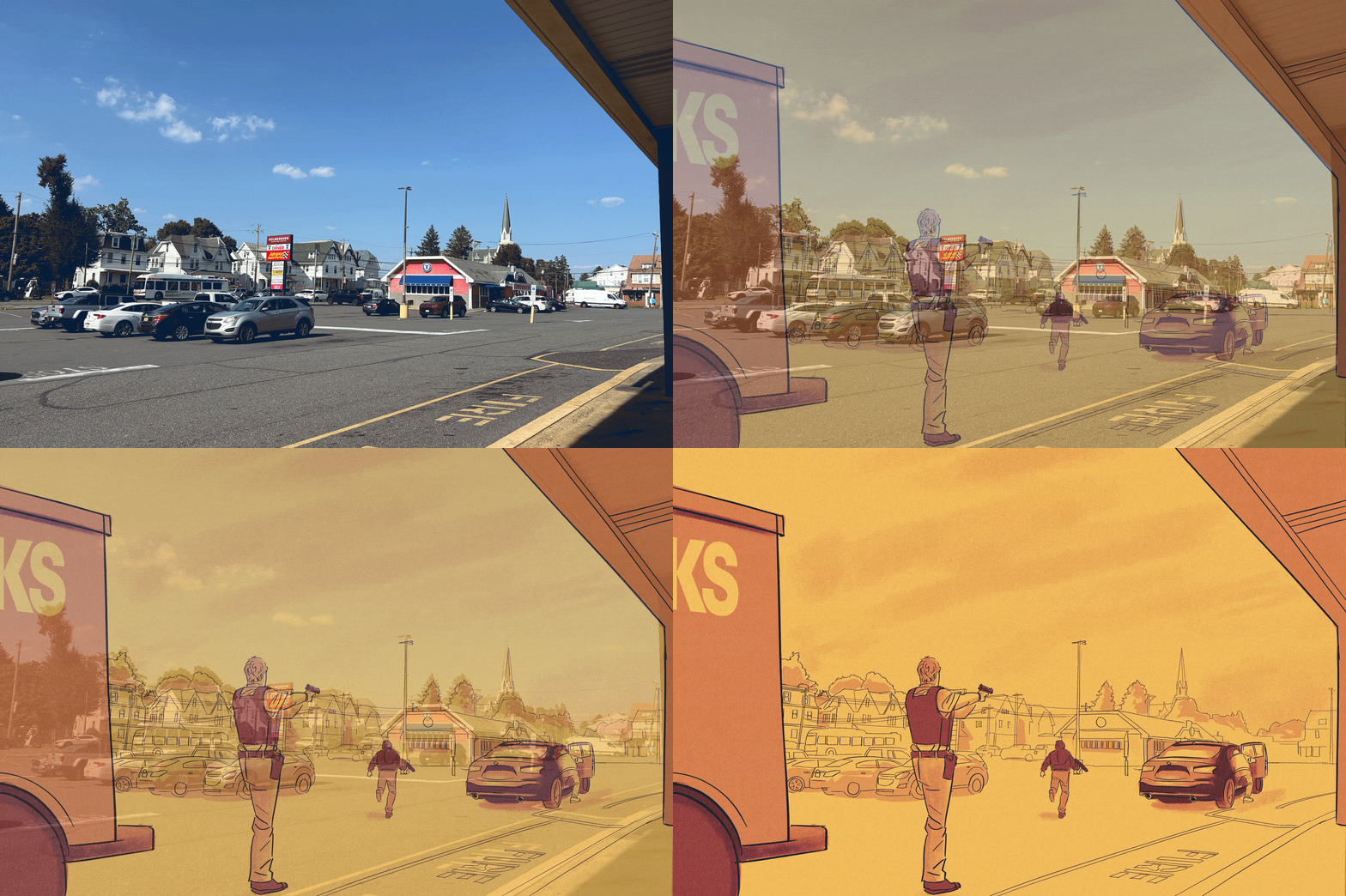
Eyewitnesses watched as three armed men ambushed a Brinks guard outside a Dollar General in Holmesburg on July 2.
On July 22, the stick-up crew struck again.
A Brinks driver climbed out of his truck to make a delivery to an H Mart grocery store in a Cheltenham Township shopping center. He realized he was being watched by three people in a black Dodge Durango.
Each of the occupants was masked. Two appeared armed with what the Brinks driver said he thought was a long gun.
The driver darted into H Mart and called police.
For the crew, there was only one sensible option: they had to drive away before patrol cops could reach the H Mart.
But the getaway was not entirely clean. Surveillance cameras recorded footage of the Durango arriving at the shopping center’s parking lot at 8:57 a.m.
Unbeknownst to the thieves, an automated license plate reader had also captured a clear look that morning at the Durango — and its license plate — riding on North Broad Street.
‘Don’t f— move’
The two parallel investigations — the ATF’s pursuit of a car thief and the FBI’s hunt for the armored truck bandits — would soon dovetail.
On Aug. 5, through a combination of physical and video surveillance, investigators saw Sutton driving a sport utility vehicle: a black Dodge Durango. Its license plate matched the Durango that had stalked a Brinks driver at the More Shopping Center two weeks earlier.
On Aug. 7, the ATF arrested Sutton. Investigators quickly obtained state and federal warrants to begin extracting data from Sutton’s phone.
The DA’s Office filed more than a dozen charges against Sutton, including theft, receiving stolen property, conspiracy, and firearms violations, and set his bail at $6.7 million. His attorney could not be reached for comment.
Authorities now had an extensive record of Sutton’s interactions with members of the armored heist crew, who were about to resurface.
The heist grew ambushed a Brinks driver near an H Mart on Old York Road — and escaped with more than $100,000.
On Aug. 12, at 10:22 a.m., a female Brinks driver carried a delivery satchel towards the same H Mart that the thieves had targeted in July.
When she was mere steps from the store’s entrance, two robbers pounced.
One pressed the barrel of an AR-style rifle against her neck, according to court records.
“Don’t f— move, don’t f— move,” he said. “Give it to me.”
The other assailant pressed a handgun against the woman’s back. They took her service weapon and the satchel, which held $119,100, then fled into a waiting black Acura sedan.
Two days later, a Cheltenham Township police detective opened a letter that had been mailed to the department’s headquarters. The handwritten message claimed that a paralyzed man was responsible for planning the recent H Mart robberies. The writer also divulged the identity of one of the alleged thieves.
His name was Dante Shackleford.
Fresh lead in hand, the FBI began collecting every digital footprint that it could trace to Shackleford: cell phone records, social media activity, a newly opened bank account.
The records showed that Shackleford and the paralyzed man — whom the FBI referred to as “Suspect 1” — were indeed associates and had shared Instagram posts and messages with one another.
Among the exchanges that would be recounted in a later affidavit was the Fox 29 post that Smith — the Tampa Bay Buccaneers defensive back, who attended Imhotep Institute Charter High School in Philadelphia — had sent through Instagram to Shackleford, “Suspect 1,” and another man.
In a bid to gather even more evidence, the FBI on Aug. 26 announced a $10,000 reward for information that could lead to the arrests and convictions of the crew’s members.
Investigators found Shackleford’s number, meanwhile, in Sutton’s phone.
And cell tower data indicated that Shackleford’s phone was at the scene of three of the heist crew’s crimes, during the same window of time that the robberies occurred.
City surveillance cameras and cell phone location data provided another crucial piece of information: As of Oct. 2, Shackleford was likely operating or a passenger in a stolen white Honda Accord.
‘Get back inside!’
A day later, when Philadelphia police chased Shackleford and Mujahid Davis into Lower Merion Township, investigators were tracking Shackleford’s cell phone location data.
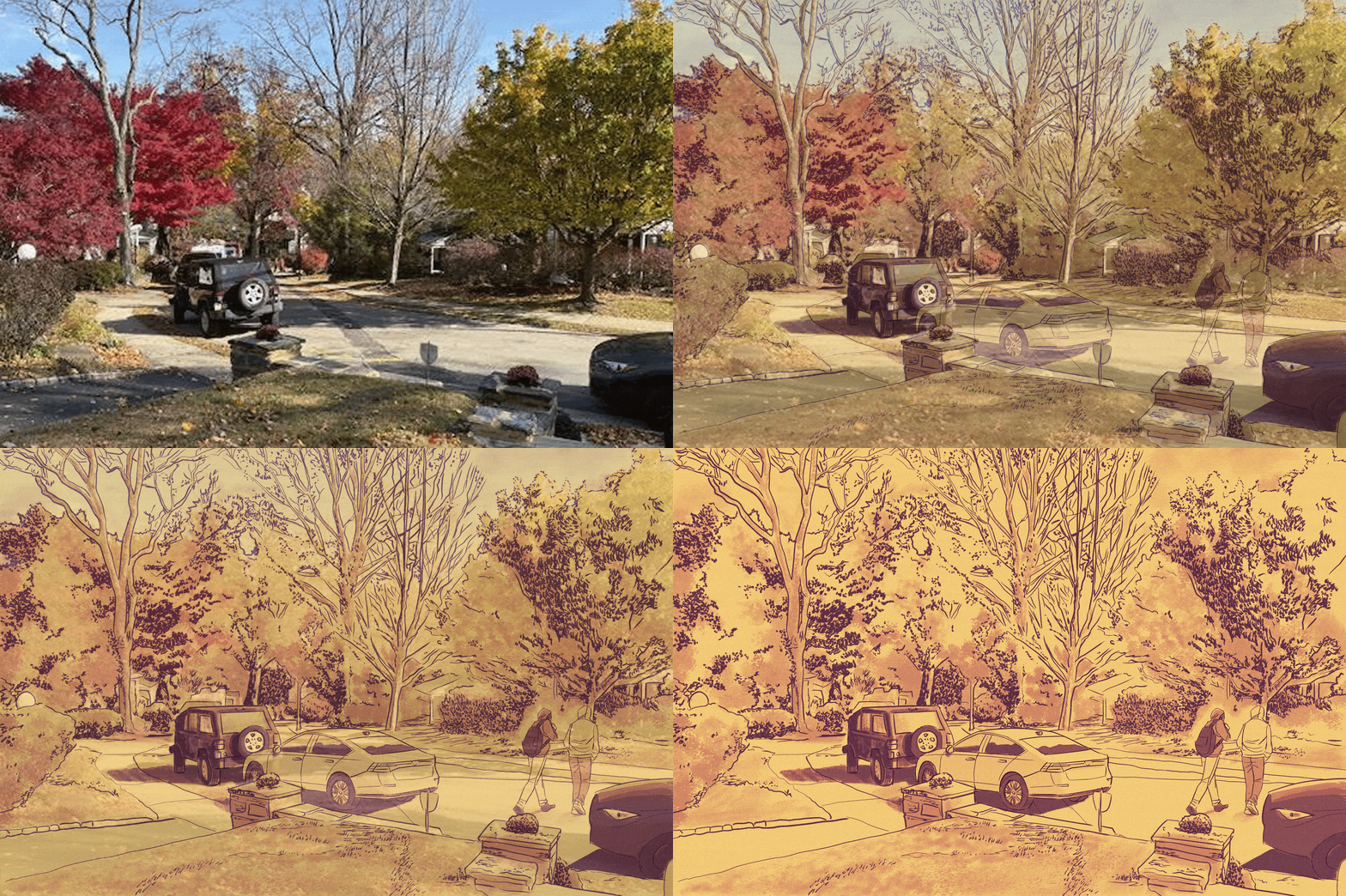
With law enforcement close behind them, Shackleford and Davis ditched the Accord on Snowden Road, a gently curving, tree-lined block in Bala Cynwyd.
Christine Weatherwax was getting ready to make a late morning supermarket trip when she heard helicopters hovering over her house on Snowden.
She stepped outside and saw that someone had parked a sedan — a white Accord — against her husband’s Jeep.
Residents on Snowden Road in Bala Cynwyd found helicopters and scores of police outside their homes on Oct. 3 — and a stolen Honda Accord that had been abandoned by the suspects on their block.
“My husband thought someone had forgotten to put on their parking brake,” said Weatherwax, 51. “He started walking around, looking for the owner.”
Another neighbor, John Wuetig, ventured outside and fixed on an unusual sight: 10 cops, rifles in hand, marching down the street, accompanied by eager police canines.
“The officers yelled, ‘Get back inside!’” Wuetig, 51, recalled.
Later, Wuetig reviewed his Ring camera footage and saw a sequence that he and the officers had missed: two individuals running from the Accord.
As they attempted to flee, the men shed some of their clothes, the Honda’s key fob, and a Glock handgun in neighbors’ yards, according to court records.
In the Accord, police would find an AR-style pistol.
Some residents spotted Davis on Colwyn Lane, a 14-minute walk from Snowden Road.
Police swept down the block, and found a house with an unopened front door.
The property owner, Todd Miselis, 50, had left to run to a store. Inside, a friend of his slept in a guest bedroom.
“I got a text from my friend that said, ‘911. Cops are all over!’”
Miselis wondered if his friend was joking.
He returned home and found his closet doors ajar. It appeared that someone had rummaged under his beds. His friend then explained that five armed cops had barged into Miselis’ house and woken him by pointing flashlights in his face.
Soon after, the officers found Davis hiding in the basement window well of Miselis’ neighbor.
But where was Shackleford?
A day earlier, the FBI had learned through surveillance footage that Shackleford had been riding in a white Dodge Charger.
That information was shared across police radio. Officers soon spotted the Charger in West Philadelphia, where it came to a stop at 52nd and Parrish Streets.
Shackleford and the driver, whose name has not been released, were arrested without incident.
At the scene, one investigator decided to dial a number that had helped unlock a significant portion of the case.
Inside the Dodge Charger, Shackleford’s phone began to ring.
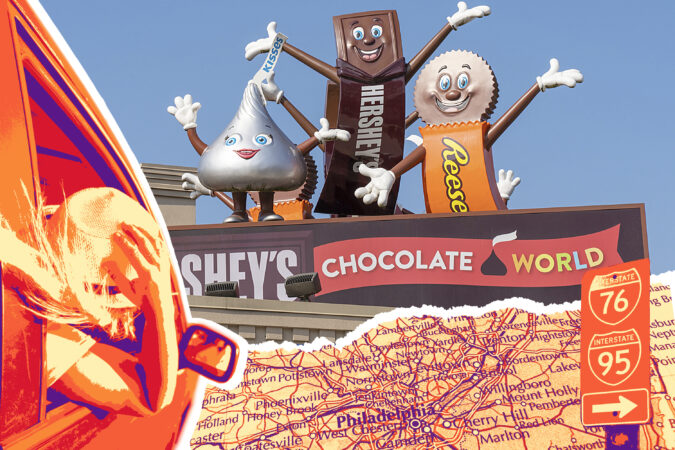
Hershey is not just chocolate. OK, it’s a lot of chocolate. But beyond its famous namesake and the company Milton Hershey founded in 1894, this sweet little town has all the ingredients for an easygoing, with-or-without-kids winter weekend getaway — and it’s less than two hours from Philly.
There are an iconic hotel, interesting breweries, year-round geological wonders, and a full holiday glow-up courtesy of Big Cocoa. The Hallmark movie basically writes itself.
If you have taken the Pennsylvania Turnpike to Exit 266, just before you hit Hershey, you’ll pass through Palmyra, home to Rising Sun since 2018. Part of the family-owned Funck Restaurant Group (you can’t spell Funck without fun), this historic-inn-turned-holiday-hangout shines at breakfast, when locals and Hersheypark-bound tourists pile in for sourdough French toast, carne asada omelets, and biscuits smothered in sausage gravy.
The grand dame of the city is Hotel Hershey, a Spanish-style confection of apricot brick-and-green terra-cotta dating to 1933 — and really, there was never any question where you were staying. Sure, cheaper chains cluster nearby, but nowhere else gives the sense of history, scale, and capital-P Place than Milton Hershey’s clubhouse, which he commissioned as an employment engine during the Great Depression. (Listen to the Business Movers podcast’s season 30 on the Hershey company for excellent context.) The spa is fantastic (sometimes cocoa-enhanced), and families will love the newer villas with fireplaces, rain showers, and access to a concierge lounge with nightly firepit s’mores.
📍 100 Hotel Rd., Hershey, Pa. 17033
Explore: Indian Echo Caverns
It might be winter, but the temperature remains a steady 52 degrees inside Indian Echo Caverns in nearby Hummelstown. Opened to the public in 1929 — though used for centuries prior by the Susquehannock and other Native Americans — these caves are an all-season attraction. A guided tour takes you 71 steps below the surface to explore ancient stalactites, fantastical drip formations, and impossibly blue underground pools, while learning why preserving this ecosystem matters.
📍 368 Middletown Rd., Hummelstown, Pa. 17036
Shop: Black Swan Antiques
Another Palmyra gem, Black Swan Antiques houses 60 independent dealers across 20,000 square feet. It’s a treasure hunt in the best way: Amish woodwork, collectible comics, fine oil paintings, dainty cocktail glasses — and almost certainly something you never knew you were looking for.
📍 61 W. Front St. (rear entrance), Palmyra, Pa. 17078
Central Pennsylvania’s biggest winter attraction, Hersheypark’sChristmas Candylane, turns the theme park into a veritable North Pole of twinkling lights and merriment. Santa. Reindeer. Music (including a new show at the park’s theater). You know the drill. Come earlier in the evening if you have the kids, later if you’re without. The park stays open till 8 or 9 most nights. Up the road, Hershey Sweet Lights offers a two-mile, drive-through light show arranged through wooded trails. It’s available as an add-on ticket and is worth it.
📍 100 Hersheypark Dr., Hershey, Pa. 17033
Dine: Tröegs Independent Brewing
Tired: Elf on the Shelf. Wired: Mad Elf for yourself. Clocking 11% ABV, this spiced cherry ale is of the most notorious rascals in the Tröegs portfolio, and it can be hard to find in Philly. Going straight to the source guarantees a taste of the yuletide nectar — and maybe a stash for home. The casual, industrial brewpub serves seasonal plates like butternut hummus and pork belly with cheddar-jalapeño grits, and you can splurge on Grand Cru versions of Mad Elf (including bourbon barrel-aged). Pair your meal with a brewery tour ($15), which has been voted best in the country four years running. Booking in advance is recommended.
Proof that not everything sweet in Hershey comes in a wrapper: Desserts Etc. has been the town’s go-to bakery since 2012. After dinner, stop in for a holiday cookie flight paired with miniature lattes and hot chocolates in flavors like gingerbread and white chocolate-cranberry. Keep in mind, the shop close at 9. Don’t let the Mad Elf derail you.
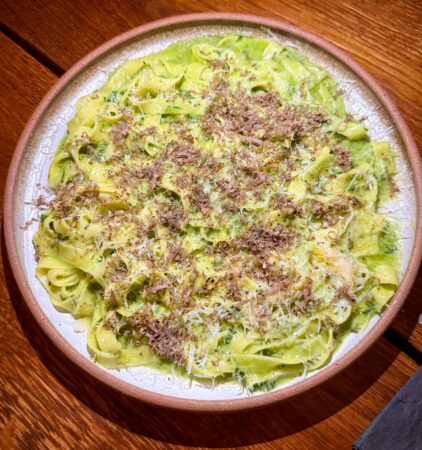
So much of the menu at Alice in the Italian Market showcases big, smoky flavors from the kitchen’s coal-fired oven. My favorite way to enjoy those dishes (don’t miss the oysters or roasted chicken!) is to punctuate them with the menu’s lighter and brighter options. Case in point is this tagliatelle with spigarello pesto, black truffle shavings, and pecorino. I had to Google “spigarello” and found that it’s an heirloom Italian green in the same family as broccoli. And that made sense: The pesto was earthy, with just the right amount of bitterness. It’s a perfect partner for fresh, bouncy pasta, which is an ideal counter to all of Alice’s smoke-kissed goodness. Alice, 901 Christian St., 215-798-6766, alicephiladelphia.com
— Evan S. Benn
The burrata toast at the Love in Rittenhouse.
Burrata toast at the Love
This cheesy and fruity brunch appetizer was a delightfully tasty surprise on a menu full of delicious classics. It was my first time brunching at the Love and this unexpectedly memorable dish still has me daydreaming. The combination of burrata, pears, fig jam, greens, and pine nuts worked so well on a slice of soft, luscious ciabatta that I found myself enjoying something salad-y at a meal when I typically opt for eggs or sweets. (Of course, I made sure to try the cranberry-orange scones and lemon-poppy seed pancakes, too, which didn’t disappoint.) The Love, 130 S. 18th St., 215-433-1555, theloverestaurant.com
— Rosa Cartagena
PopUp Bagels grew out of an experimenter’s backyard in Connecticut.
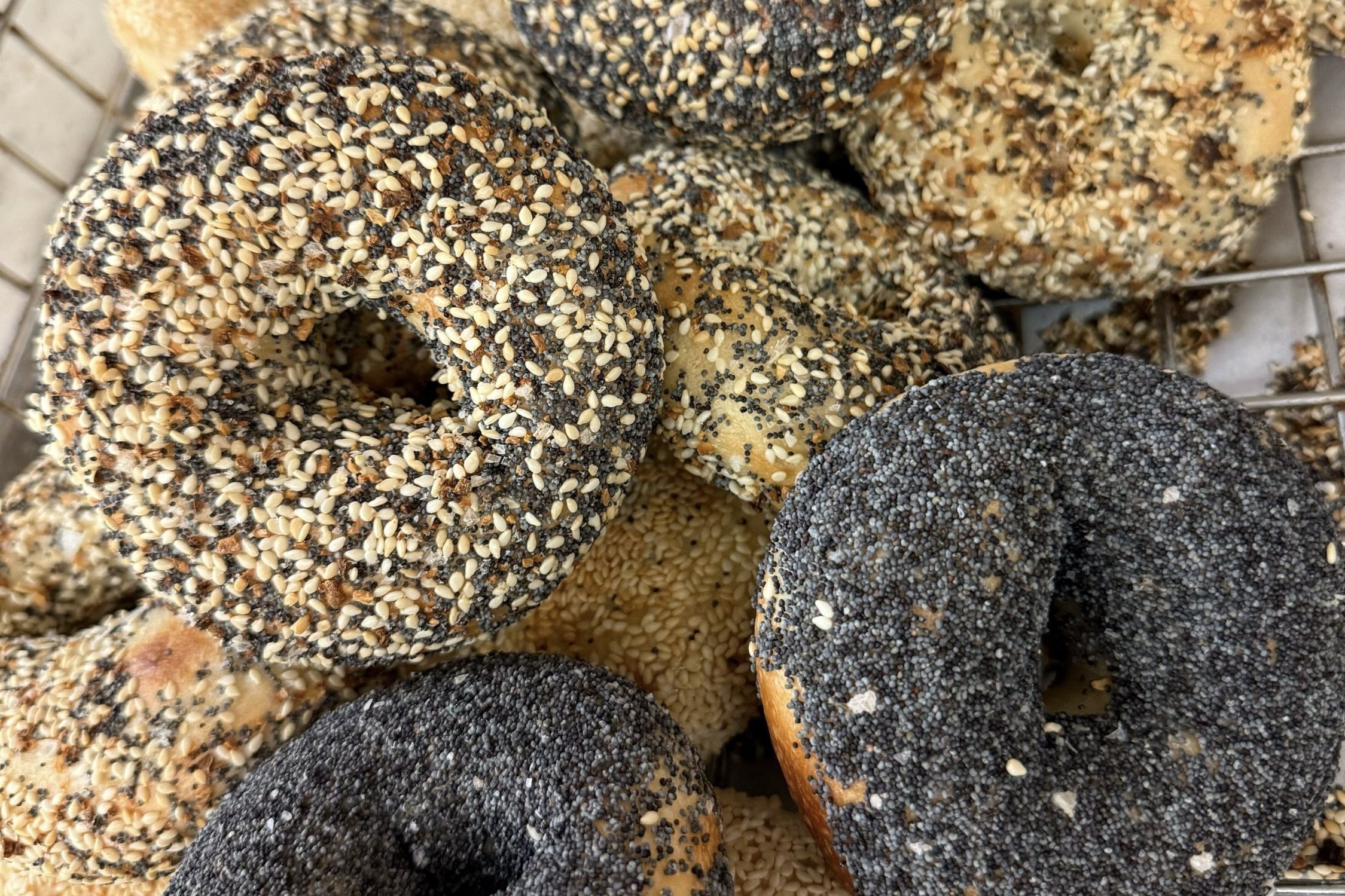
They’re good bagels! They were well-toasted on the outside and fluffy on the inside. The everything bagels were heartily seeded and seasoned. They came warm and fresh, and were thus easy to rip apart and dip in the schmear, as the brand encourages. I devoured one in its entirety within about a minute of leaving Di Bruno’s, then another at home, then another the next morning after a light spritz with water and 30 seconds in the microwave (it came out a little chewy, but it held up).
But listen — the city already has plenty of great bagels that do not come from a Connecticut-based startup. Take Knead Bagels, my Center City go-to, or Cleo Bagels, my West Philly fave, whose bagel sandwiches are so densely stuffed, you could eat them with a fork. At Cleo, you can even get a garlic za’atar bialy or a bagel topped with lavender seeds. Call it bagel maximalism.
PopUp’s first area storefront is set to open in Ardmore early next year. They’re not bagels you need to travel for, but they are the kind of simple, grab-and-go bagels you’d be excited to eat if a coworker brought a box to the office. PopUp Bagels, coming soon to 10 Coulter Ave., Ardmore, popupbagels.com
Kacii Hamer has no financial stress this holiday season.
In past years, “holidays were always ‘give, give, give,’ and that’s what I always felt like I had to do,” said Hamer, a 33-year-old pre-K teacher and wedding photographer. Back then, “I couldn’t imagine thrifting gifts or DIYing gifts. You have that fear of ‘Oh my god, are these people going to judge me?’ or ‘Is this good enough?’”
This year, however, Hamer is celebrating “Thriftmas,” a social-media trend where participants buy many of their holiday gifts secondhand.
Between a family Pollyanna, a gift for her boyfriend, and a present for her goddaughter, she plans to spend no more than $150 total. For her goddaughter, she is sanding and repainting a $14 rocking horse that she got at the 2nd Ave. Thrift store in South Philadelphia.
The thrift-focused holiday season will mark a fitting end to what Hamer calls her first “hardcore” low-buy year, one during which she cut out most nonessential spending.
Hamer, who splits her time between the Philadelphia region and Scranton, was one of several low- and no-buyers whom The Inquirer talked with in April.
The frugal challenge took off this year amid broader economic pressures, including continued inflation. Philly-area participants said they were trying to save money, pay off debt, reduce waste, and, in some cases, stop patronizing large retailers that don’t align with their values.
Now as the holidays approach, some low- and no-buyers are making exceptions for gifts, or using some of their recent savings to fund their festivities.
Others, however, are standing firm in their low-spending habits. They’re setting budgets, trimming their gift-recipient lists, or shopping secondhand.
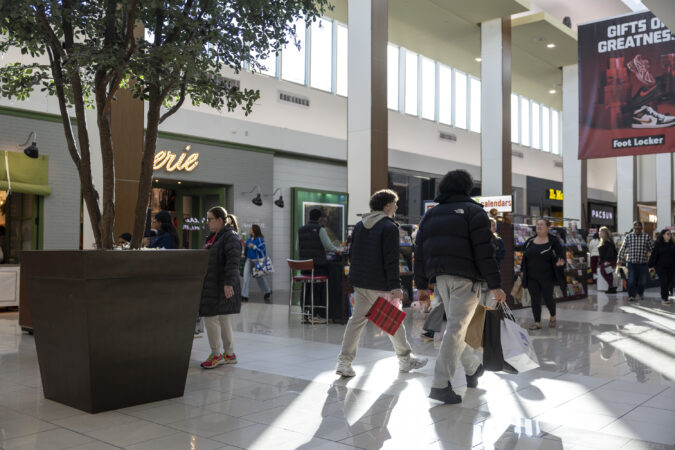
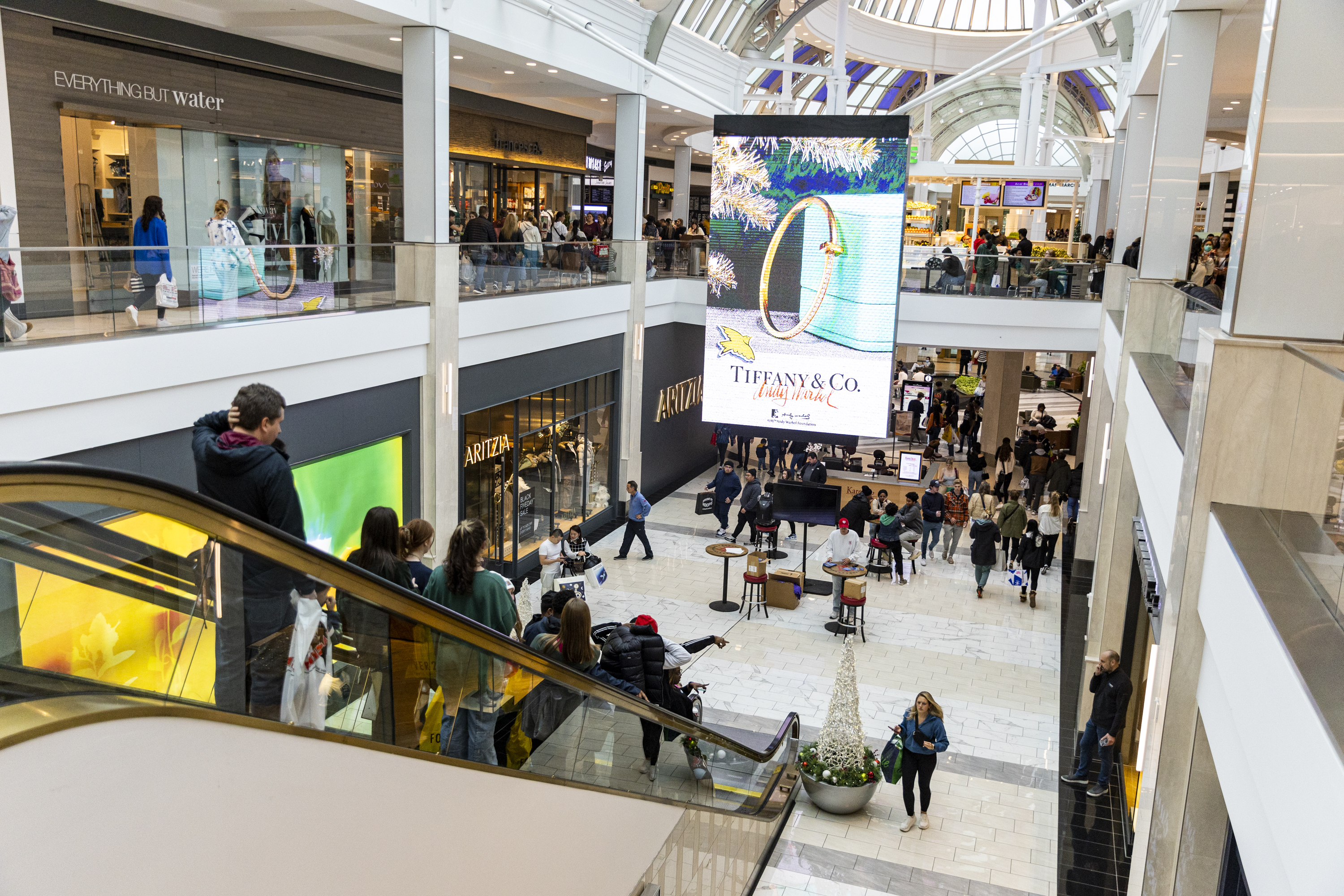
Shoppers descend on the King of Prussia Mall on Black Friday in this 2022 file photo.
This time of year, some local low-buyers said, it requires extra strength to resist consumerist pressures and go against the norm. Each U.S. adult is expected to spend about $628 on average on holiday gifts this year, according to the National Retail Federation, which anticipates overall holiday spending will surpass $1 trillion for the first time ever.
At the same time, others say economic uncertainty has made for easier conversations about gifting.
“I’m not under pressure to spend, and I think this year it’s actually easier to [cut back on gifts]than in years past,” said Mylena Sutton, 48, of Voorhees. “A lot of my friends are sensitive to what’s happening in the economy … you don’t have to explain.”
Parents buying less for Christmas
Some Philly-area parents have found that Santa can be thrifty, too.
Heather Fertig, 38, of Fishtown, said about 80% of her toddler’s Christmas gifts will be secondhand. They’ll include a marble run, which she bought this week from a local thrift store, and a wooden train table, for which she remains on the hunt.
Thanks to secondhand stores, Facebook marketplace, and neighborhood parent groups, Fertig, a stay-at-home mom, said she and her husband will likely spend about $150 in all.
Her motivation is as much environmental as it is financial.
After having her son, she realized, “Wow, there is so much waste,” Fertig said. “I kind of felt, previous to that, that there was a stigma around getting things secondhand.”
But “it was never there,” she added. “It was this made-up thing that everything had to be brand-new to you.”
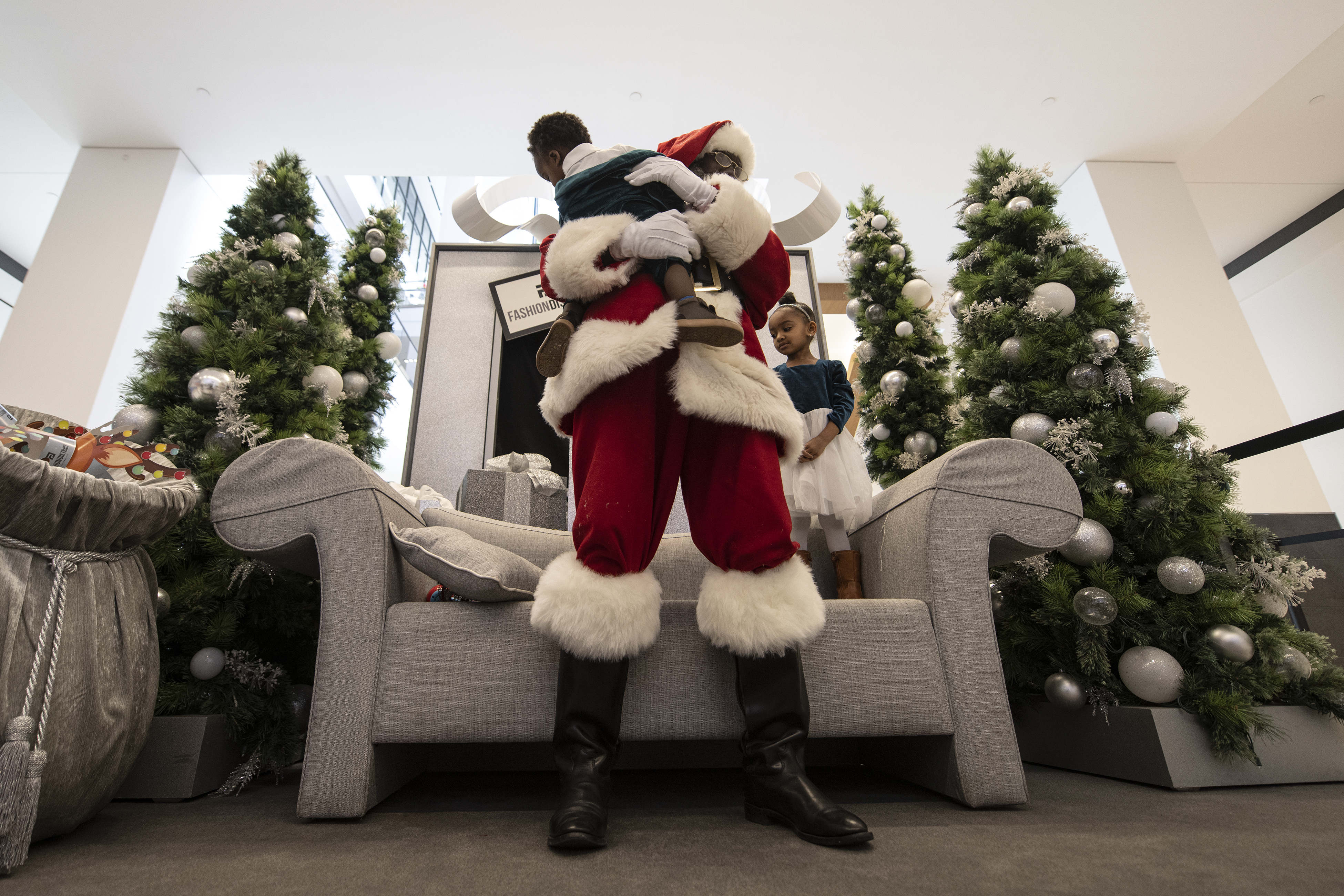
Santa James Claus greets children at the Fashion District in this 2022 file photo. Some local parents have found Santa can cut back on spending, too.
For young children, whose interests change so quickly, it makes even more sense to buy items secondhand, Fertig said. On Christmas morning, her 2-year-old doesn’t know the difference.
“He’s just as happy as if I bought it straight from Walmart,” she said.
In Montgomery County, Jenna Harris-Mosley said she takes a combo approach to gift-giving for her 5-year-old daughter, whose birthday is on New Year’s Eve.
The 41-year-old bought some smaller, new gifts, including Shrek snow globes and Squishmallow stuffed toys, throughout the year to spread out spending.
She plans to get other items secondhand, including one or two American Girl dolls for $20-$30 each. And she will set aside some money for experiences, such as an upcoming day trip to New York City for tea at the American Girl store — with the new-to-her doll, of course.
Harris-Mosley said she took an especially intentional approach to spending this year after getting laid off from her job in tech sales in October. It has helped that she had already bought many of her daughter’s Christmas and birthday gifts when she found deals earlier in the year, she said.
“I have things hidden in every corner of my house,” she said. And as for grown-ups “I don’t stress myself about holiday gifts,” figuring most adults in her life have the things they need — and can buy things they don’t.
In Port Richmond, Rachel Dwyer is making homemade felt ornaments for the adults on her list, and getting two books for each child. The 34-year-old nanny has learned that too many toys and trinkets can be overwhelming for kids and parents.
“It’s just a lot of clutter,” she said, “and a lot of junk.”
People walk through the Shops at Liberty Place in this 2021 file photo.
How to spend less on holiday gifts
Seasoned low-buyers say it’s hard to cut back on spending. But once you get over the initial hurdle, they say, it’s freeing.
“Push through the fear,” Hamer said. “It feels nice going into the holidays with such a positive attitude.”
In South Jersey, Sutton has never been a big holiday gift-giver, saying she prefers to buy loved ones presents intentionally throughout the year.
If others feel overwhelmed by their holiday gifts-to-buy list, she recommends they ask themselves: “Do you do these things because they have value for you? Or do you do these things because they are expected?”
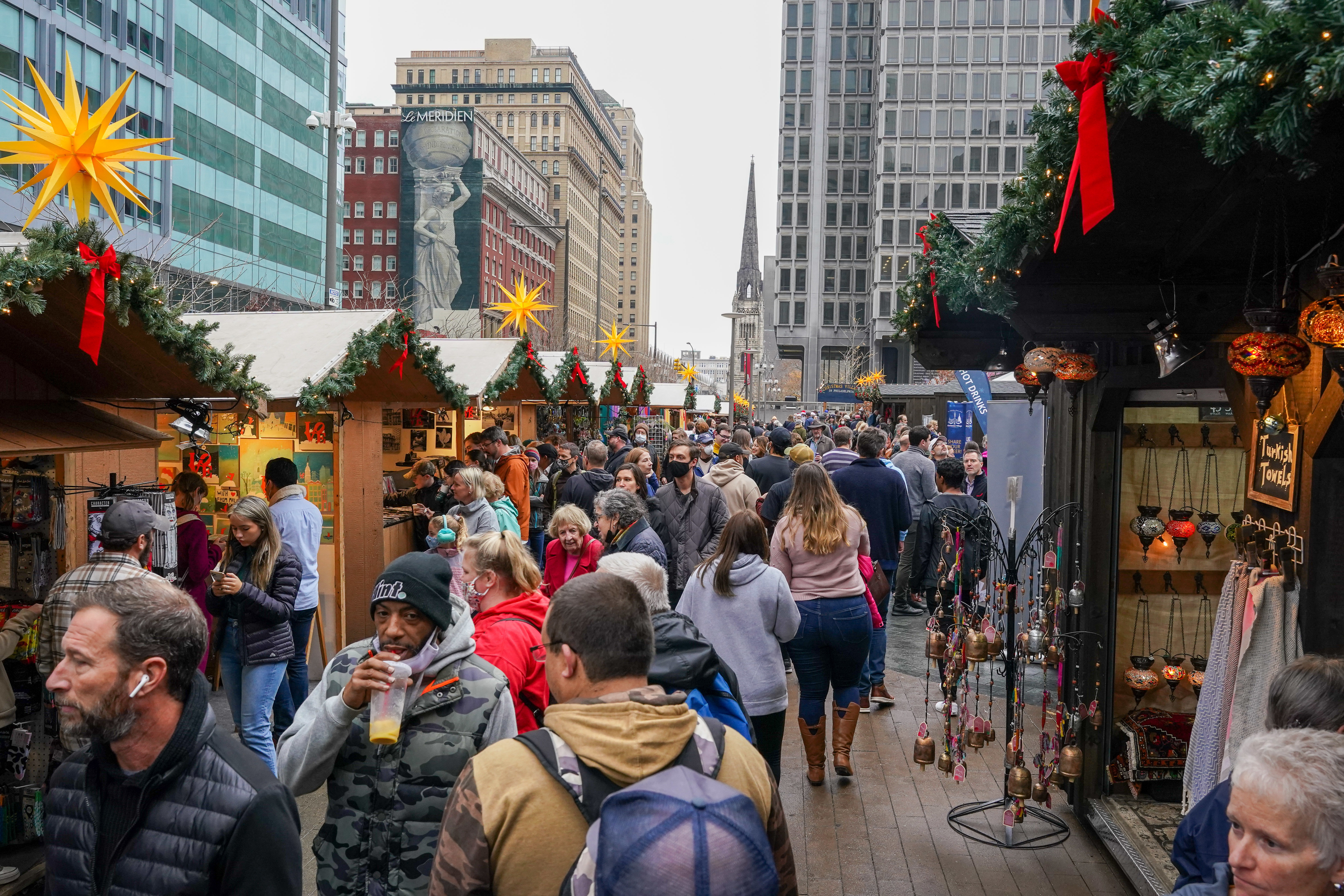
People browse the Christmas Village at LOVE Park in this 2021 file photo.
“Be brazen about it,” said Sutton, a consultant and leadership coach. That might mean telling people: “If you only get me a gift because you expect an exchange, don’t buy me one.”
“People who have stayed away from thrifting should get back into it,” said Jen Benner, 34, of Conshohocken. “The thrift stores are jam-packed with very good stuff.”
If you aren’t sure about buying secondhand, “start small. Start with a child’s gift or a truck or a train or something little,” Fertig said. “Work your way up to bigger items.”
Benner, a real estate agent, keeps a running list on her phone of gift ideas that her loved ones mention throughout the year. This can save time and anxiety around the holidays, and reduce the urge to overspend.
Remember, too, that the most meaningful gifts can be among the least expensive, Dwyer said. She recommends personalized, handmade gifts or framed photos, as well as gifts of time or skills, such as a babysitting session, a home-cooked meal, or a family-photo session.
This week I have asked two reporters to help answer a holiday question — is the asker reasonable or a Grinch?
Have your own thoughts or other questions? Fill in the box at the end!
.inno-chat__body {
border-radius: 12px;
}
Evan Weiss
Deputy Features Editor
The question is… My neighbor's rowhome Christmas lights shine directly into my bedroom. What should I do?
Jason Nark
Life & Culture Reporter
My first instinct, perhaps because it's Christmas, is to let it pass, to take one for the season.
Zoe Greenberg
Life & Culture Reporter
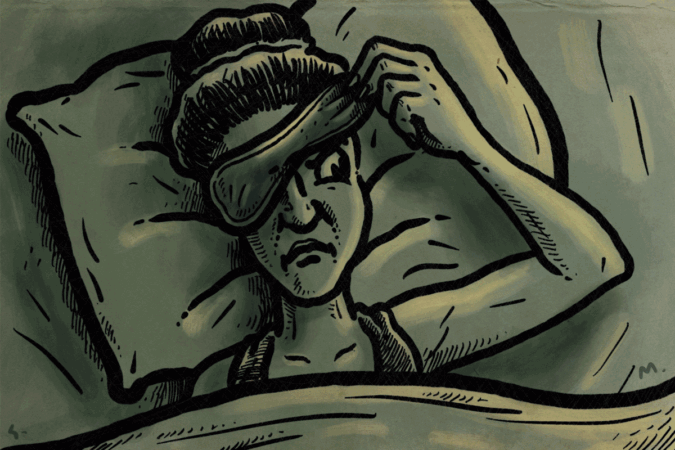
I say close the curtains? Put on your eye mask. It's the holidays.
Jason Nark
But, I do have strong feelings about light.
Jason Nark
Light pollution, for one. The new, pervasive, blinding white lights make the world look like a dental office. The amount of lights on in urban office/tall buildings at night, which contributes to bird deaths. I'm a light weirdo.
Zoe Greenberg
I'm also anti-bird death!!!
Zoe Greenberg
I will say that my partner is always trying to have the indoor lights match the outside night sky, which means that in the winter he wants it very dark inside our home. And I long for light.
Evan Weiss
So your lights are off around 4:30??
Zoe Greenberg
If he could choose, that's what would happen.
Jason Nark
My hometown recently installed new streetlamps that are too tall and far too bright. If I lived closer to one, and they didn't do anything about it, there might be sabotage.
Zoe Greenberg
The neighbor's lights are not going to last too long.
Zoe Greenberg
Should we be worried about your sabotaging your neighbor's beautiful Christmas lights?
Jason Nark
No, I give Christmas lights a pass because they're usually less intrusive and dimmer, and temporary.
Jason Nark
I will say that it's smart to invest in timers.
Evan Weiss
I think unless you really can't sleep, you have to deal with it.
Evan Weiss
Part of living in a city is accommodating your community. If you want no light, no noise, there are plenty of parts of Pennsylvania where the bears will welcome you.
Zoe Greenberg
Very true. Or rocks in the ocean.
Evan Weiss
You're exiling the neighbor to the sea?
Zoe Greenberg
I just mean if they don't want any lights! In the darkest season when light brings happiness and joy!!
Jason Nark
I wouldn't want my neighbor to have one of those Christmas "shows." I think that would be too much. Someone in Milford, Pa. was charged for cutting Christmas lights a few years back. She thought they were too much.
Evan Weiss
Any last advice for the question asker?
Zoe Greenberg
Maybe bake the neighbor some cookies and wish them a happy holidays.
Jason Nark
Or get blackout curtains.
This conversation has been edited for length.
What other Very Philly Questions should we address?
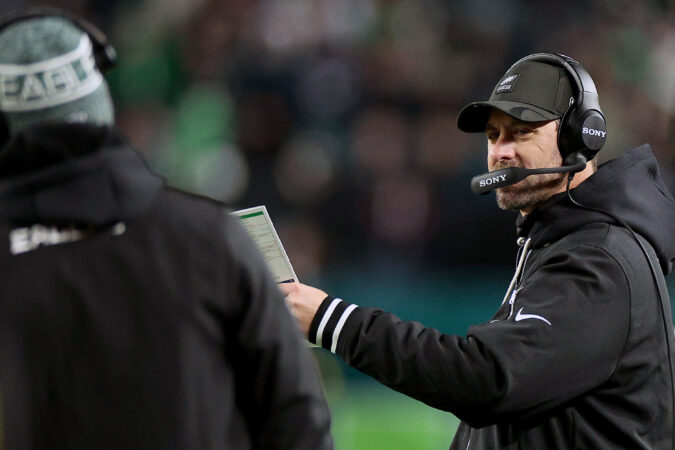
Listen — Philly has a reputation. We know this. We wear it like a badge. We boo Santa, we heckle refs, we meltdown on WIP like it’s an Olympic sport. But there’s passion, there’s unhinged, and then there’s driving to Moorestown at 3 a.m. to egg the offensive coordinator’s house because the Eagles lost to the Bears.
That’s not passion. That’s just loser behavior.
Patullo said all the right things this week. That criticism is part of the job, that he’s been here five years, that he loves the city and the fans. But he also made it clear: When it involves your family, the line isn’t just crossed… it’s obliterated. And he’s right. Yell at the TV, tweet about it, call WIP at 6 a.m. pretending to be “Bryce from Bridesburg.” But families are off-limits.
The good news? Neighbors rallied, the community reached out, and Patullo isn’t going anywhere — not from his home, and not from the sidelines (despite Nick Foles’ dream of him coaching from the booth like it’s Madden franchise mode).
Philly can take a joke, a hit, and a heartbreak season. What we can’t take is letting a few clowns make us look like we egg coaches every time the offense ranks 24th in yards.
Save the eggs for tailgates. Or better yet, breakfast.
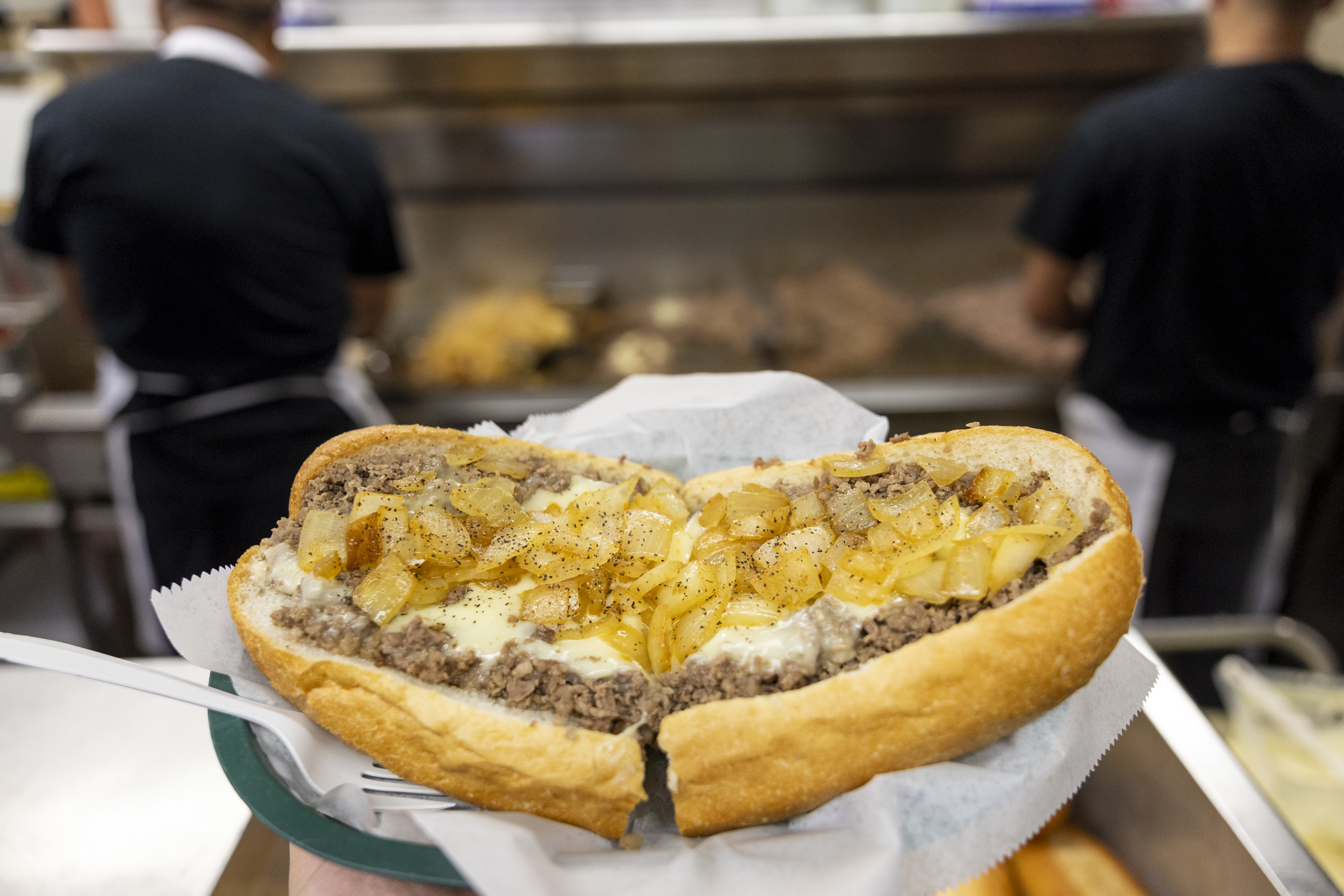
A cheesesteak from Dalessandro’s in Philadelphia, on Friday, Nov. 21, 2025. Michelin recently recognized the restaurant with a Bib Gourmand. Cheesesteak restaurants Angelo’s and Del Rossi’s were also recognized by Michelin.
Philly is America’s No. 1 foodcation destination: A (obviously)
All because of one thing: the cheesesteak, which topped the national list with 27% of Americans saying it’s their dream domestic “foodcation.” Translation: People are now booking vacations around a sandwich we buy at 1 a.m. like it’s no big deal.
Food & Wine says Americans spend about $910 on their typical food-focused trip and would nearly double that budget if the bite was bucket-list–worthy. So somewhere out there is a family justifying a $2,000 vacation to stand outside Angelo’s at 10 a.m. behind 70 locals who think they have “a system.”
Meanwhile, New York tied us at 27% for pizza — but let’s be serious. A cheesesteak beating out an entire city’s worth of pizza is so Philly-coded it should count as a parade.
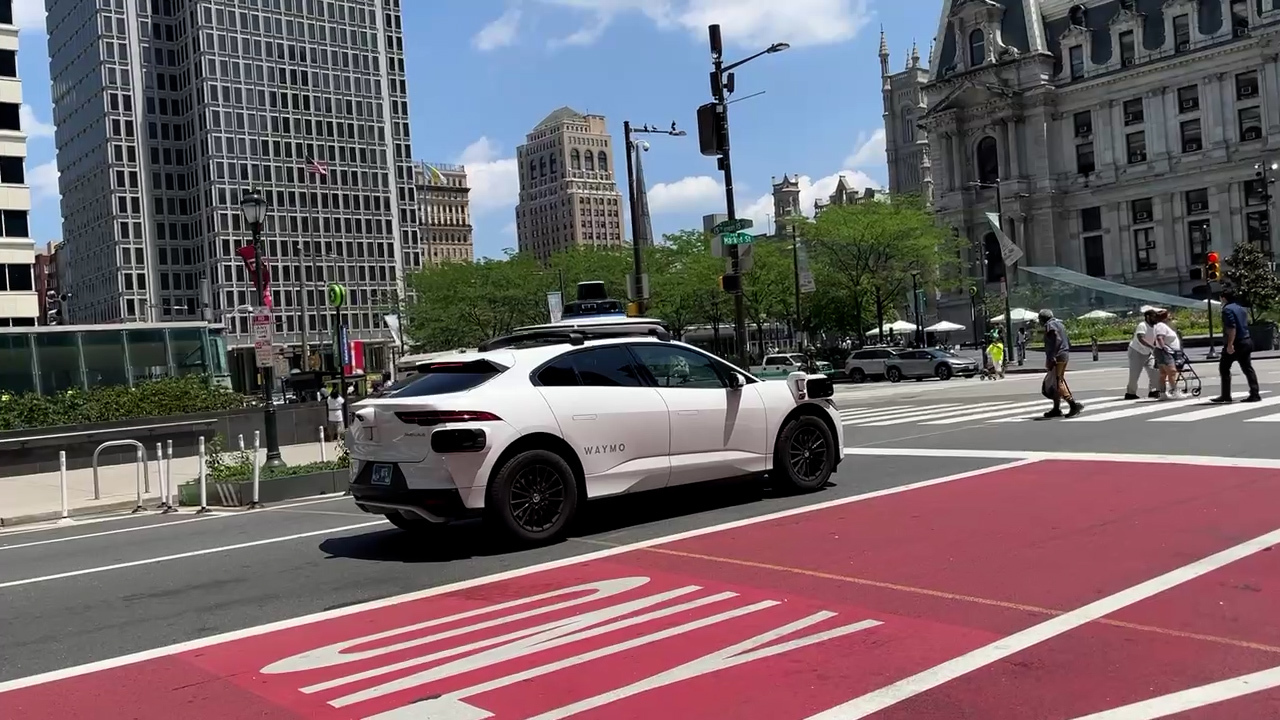
A Waymo car drives down Market Street Tuesday, July 8, 2025, in Philadelphia.
The company says its cars are now driving autonomously (with a human babysitter for now), mapping our neighborhoods and “laying the groundwork” to eventually chauffeur actual Philadelphians around.
Bold. Truly bold. Because sure, a driverless car can operate in Phoenix. But can it:
Identify a pothole before it becomes a crater?
Handle a double-parked Amazon van, a food truck, and a guy pushing a sofa on a hand truck… all in the same block?
Not get stolen? (It’s Philly. We have statistics.)
City officials say they’re “monitoring the situation,” which is Philly-speak for: If this thing blocks a SEPTA bus, there will be consequences. Meanwhile, Waymo has been chatting with local groups — the Bicycle Coalition, Best Buddies — which is smart, because they’ll need all the friends they can get once these cars try to merge on I-95.
Delco Donny turning Wawa parking lots into concert venues: A
Only in the Greater Philadelphia region could a man with a guitar, a thick Delco accent, and a dream turn random Wawa parking lots into 100-person pop-up concerts — and somehow it feels… correct.
“Delco Donny,” the alter ego of musician Jake Dillon, started as a joke for his girlfriend’s Delco mom, reported Philly Voice. Now he’s pulling six-figure TikTok views by belting out Oasis, the Killers, and “Creep” between parked Hyundais and people sprinting inside for Sizzlis. At his Boothwyn Wawa show, fans were literally acting like he was Noah Kahan, except with more vowels flattened and more hoodies with paint stains.
The shtick is simple: He shows up, leans into the Delco accent America learned during Mare of Easttown, and sings like he’s headlining the Spectrum in 1996. And people eat it up. Wawa corporate even started sending him merch, which is basically the Delco version of getting knighted.
There’s something kind of pure about it: a Northeast Philly native channeling a fictional Boothwyn legend who meditates in a cluttered van, reviews local pizza joints, and humbly accepts Marlboro Reds as offerings from the people. The man is doing character work in a gas-station parking lot, and somehow it feels like local folklore in the making.
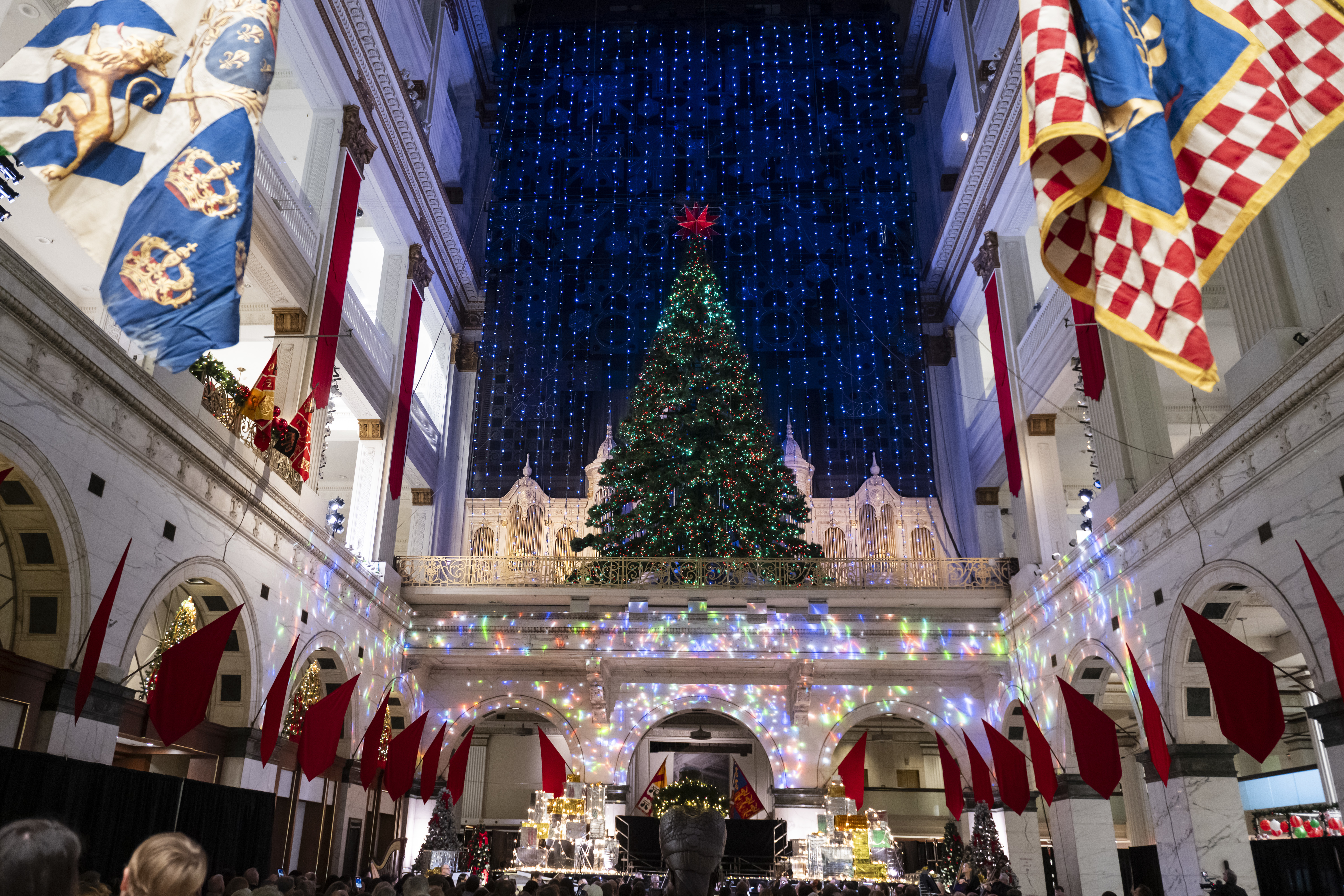
Opera Philadelphia hosted “Home for the Holidays” at the Wanamaker Building’s Grand Court on Tuesday, Dec. 2, 2025.
The Wanamaker Christmas comeback: A
In the most Philadelphia plot twist imaginable, the Wanamaker Grand Court took what could’ve been a gut punch — Macy’s closing, holiday traditions dangling by a thread — and turned it into a full-blown victory lap complete with a wreath-wearing Wanamaker Eagle, opera singers, dinosaur dancers, and an organ flex so powerful it could rattle the Market-Frankford Line.
“Home for the Holidays,” Opera Philadelphia’s one-night takeover, wasn’t just a concert, it was a statement. Philly looked at a soon-to-be shuttered space and said, Fine, then we’re going out in style. The whole night doubled as a nostalgia bomb: marching-toy projections for anyone who remembers buying Christmas presents in the old store, an audience gasping at the tree like it was 1978 again, and the ground-shaking Wanamaker Organ.
But the real Philly heart came from the subtext: This was also a campaign to keep the space public, alive, and musical long after renovations. You don’t raise $1 million for a Pipe Up! series unless you’re gearing up for a fight.
Philly is getting a cruise terminal again (!!): A-
PhilaPort struck a deal with Norwegian Cruise Line, building a new terminal in Tinicum Township with 41 voyages already on the books over the next two years, reported 6ABC. Norwegian’s locked in through 2033, sending thousands to Bermuda, the Bahamas, Canada, and New England, all sailing straight out of the airport’s backyard.
It’s a major comeback for a region that hasn’t had a real cruise hub in more than a decade, and the timing couldn’t be better with the 250th, the World Cup, and the All-Star Game all landing next year. Economic impact? Around $300 million annually. Jobs? More than 2,100.
And yes, it’s a six-hour ride down the Delaware before you hit the Atlantic. Philly’s response: New York isn’t much faster, Baltimore is way slower. So grab a drink and enjoy the shoreline.
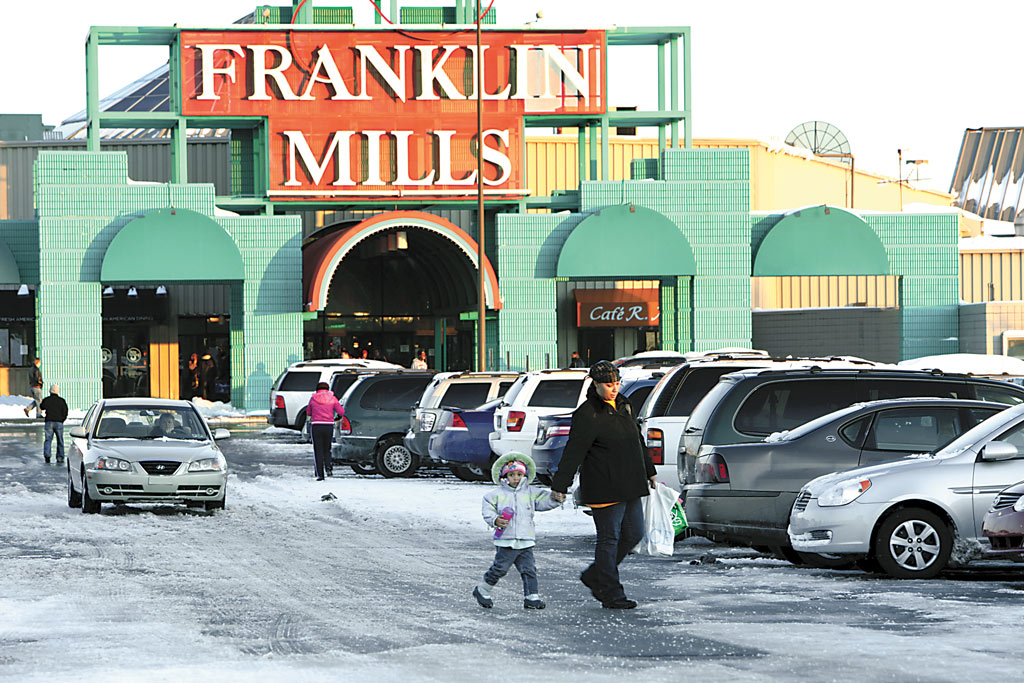
Franklin Mall, previously known as Franklin Mills, is for sale again.
Franklin Mills (sorry, “Franklin Mall”) is officially for sale: C
Franklin Mills, the place where Northeast Philly teens found Hot Topic, freedom, and an alarming amount of Orange Julius, is officially on the market. Again. After years of falling occupancy, collapsing value, and visitor counts dropping from 20 million a year in the ’90s to 5.6 million today, it’s basically being lilsted as: “137 acres… willing to become literally anything.”
Industrial redevelopment? Sure. Warehousing? Probably. Housing? Maybe, if City Council blesses it. A mall again? As one architect put it: “Unlikely.” (Philly translation: absolutely not.)
This place is 1.8 million square feet (second only to King of Prussia), but while KOP is still the superstar of malls, Franklin Mills slowly slid into its “legacy act” phase. The valuation dropped from $370 million in 2007 to $76 million last year. Even the name had to be changed back because Simon Property Group kept the Mills trademark, which feels like getting your hoodie taken in a breakup.
Real talk: The building is basically a demolition project waiting for a permit. But to its credit, 65% occupancy means it isn’t a ghost town yet — just a mall trying to remember who it used to be.
It might become warehouses, apartments, or over a million square feet of “don’t worry, it’ll create jobs.” But one thing’s for sure: If Northeast Philly wakes up to find a sea of Amazon vans where Franklin Mills once stood, people will still call it Franklin Mills.
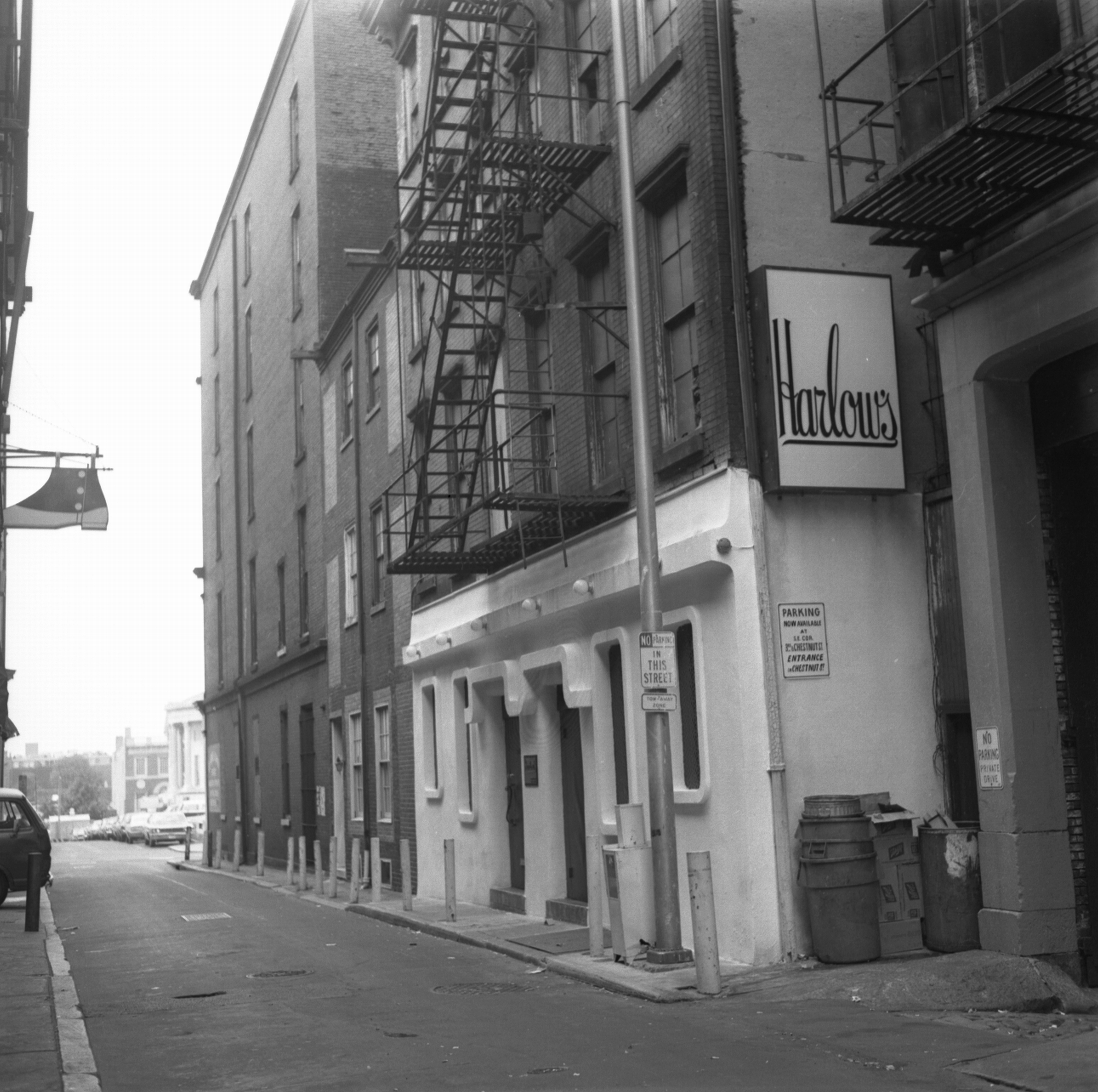
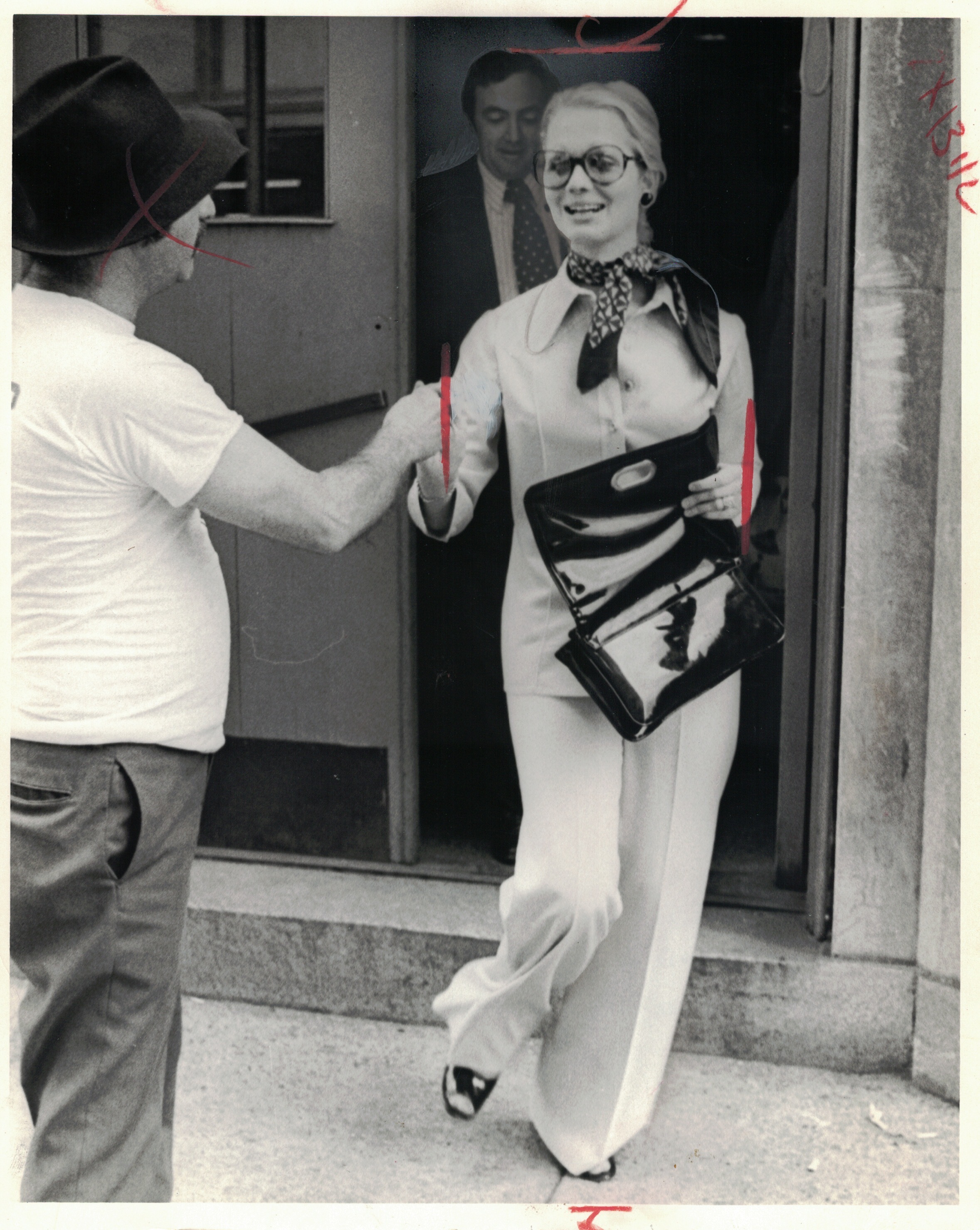
In the spring of 1972, an elegant woman wearing a white Halston jumpsuit and carrying a silver fox coat asked her driver to stop at the corner of Chestnut and Bank Streets in Old City.
A line of people extended around the corner and all the way up to the front door of the city’s hottest new nightclub. When they spotted her, they erupted into applause and started chanting her name.
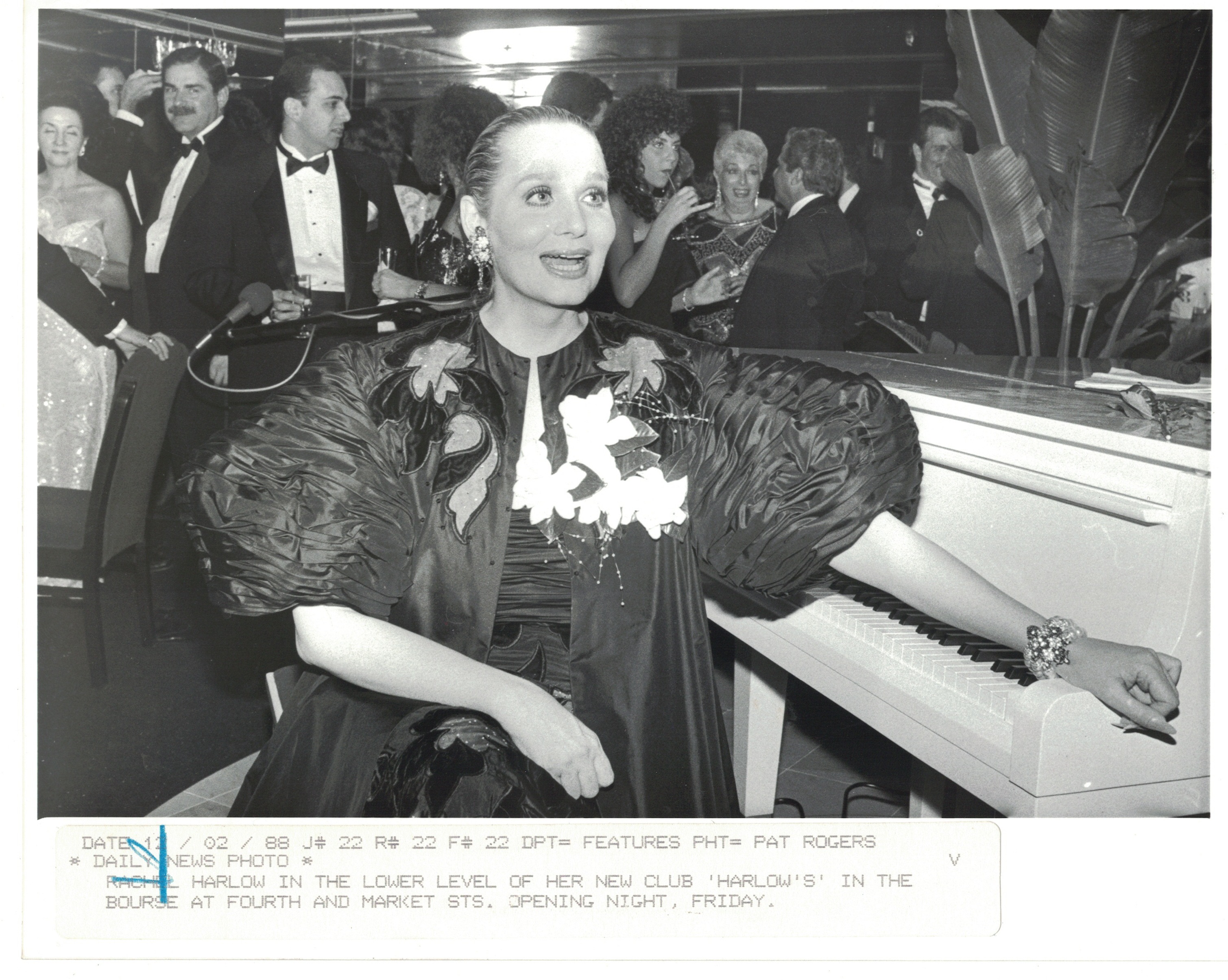
With the kind of theatrical instincts only a former model and onetime drag queen could have, she sashayed down the alley dragging her fur coat behind her, past all the cheering would-be patrons and into the club that bore her name: Harlow’s.
It’s a name that has been spelled out in lights, emblazoned in headlines, and even plastered on billboards, announcing, and in some cases, denouncing the woman who danced with Sharon Tate at the Cannes Film Festival, dazzled Truman Capote (who named her one of the most beautiful women of the 20th century in Answered Prayers), acted with Jack Nicholson, and turned down Warhol.
Harlow was a transgender woman and a glamour bomb the likes of which Philadelphia had never seen — but the city always understood her as one of our own; “Marlene Dietrich by way of Broad and Tasker,” as one Inquirer profile put it in 1972.
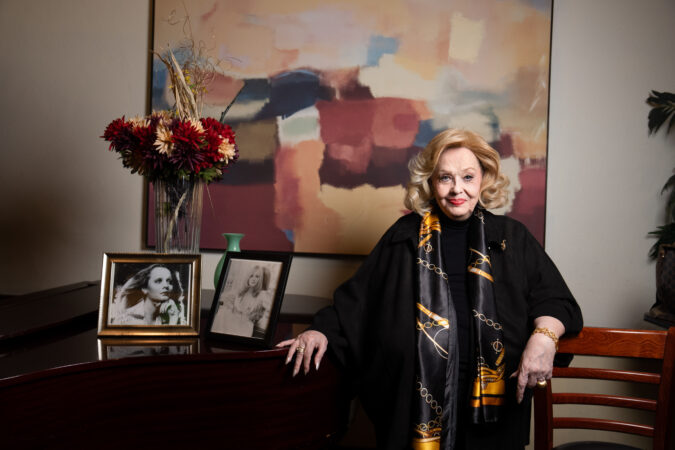
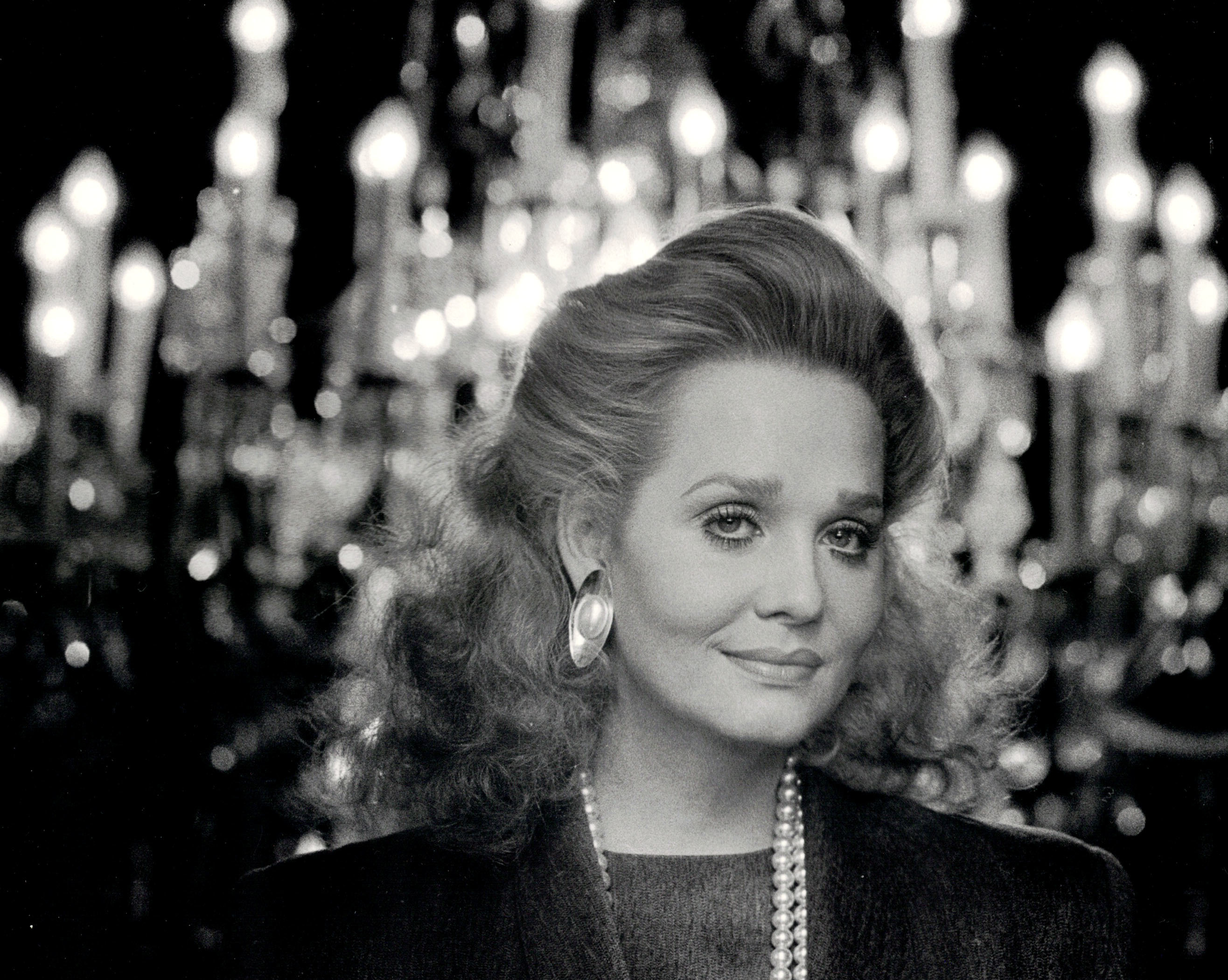
Now, after living in privacy for years, Rachel Billebault, once known around the world as Harlow, is finally ready to tell her story.
“I always said ‘no,’ whenever someone contacted me,” she says. But when we reached out to her two years ago, asking if we could work with her to write her memoirs, she changed her mind.
“Time was running out,” she says. “There were too many things left unsaid. If not me, then who else?”
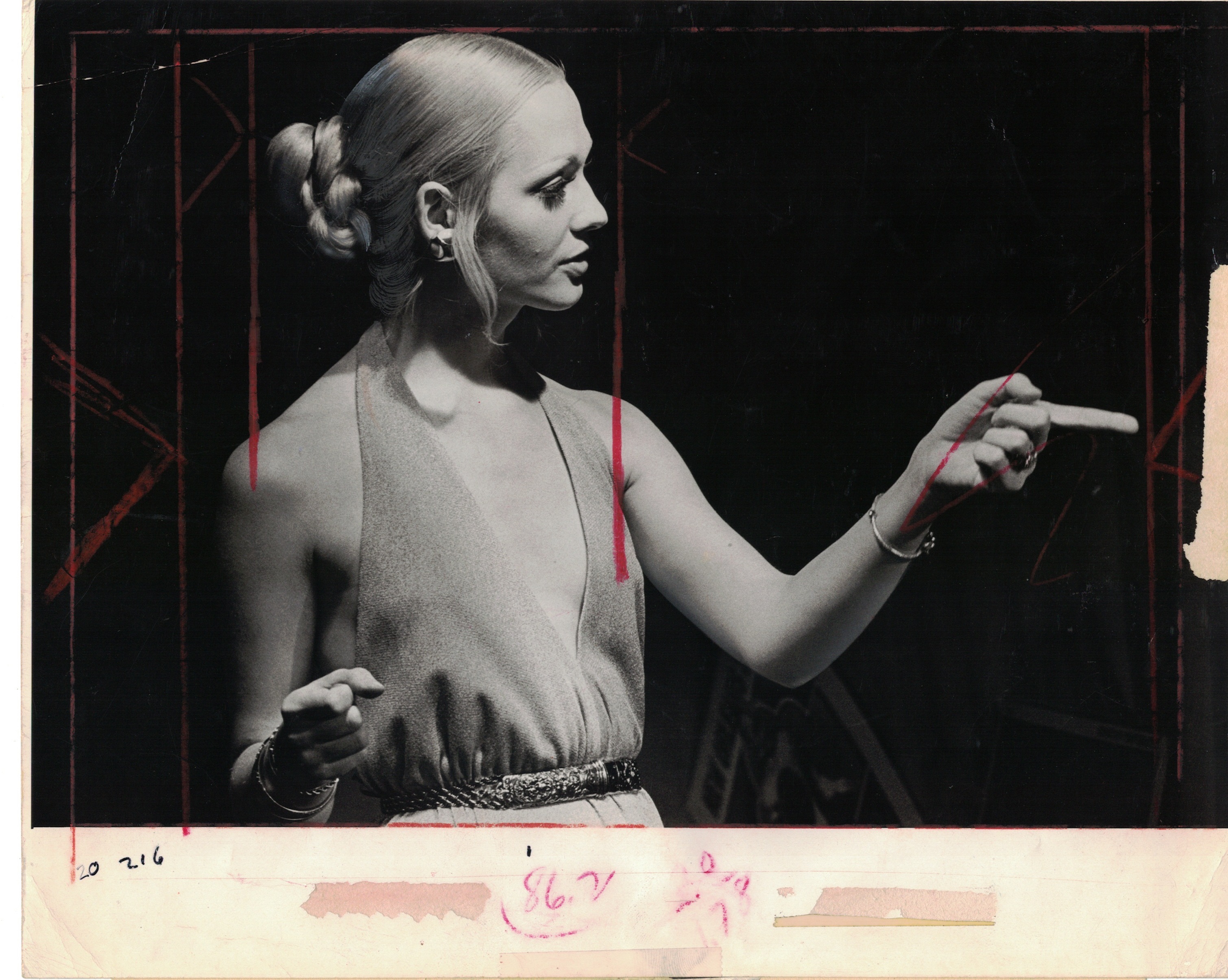
Rachel Harlow at Cannes in 1967.
From the streets of South Philly, an icon is born
These days, the former queen of nightlife is known by her neighbors in the Greater Northeast as a sweet — and still quite beautiful — senior lady who mostly keeps to herself.
The only thing to indicate her former high-style life is her insistence on maintaining it.
“I’m always the best-dressed woman at the Acme,” she says.
As a teenager growing up on Juniper Street between Tasker and Morris in South Philadelphia, however, she would slip out the back door with just a light touch of lipstick on her face, love beads around her neck, her platinum blond hair lightly teased and coiffed. Walking down the alley behind her house, she’d make her way to the Broad Street Line to travel “into town” to meet her friends in Rittenhouse Square.
It was better that way. The neighbors sitting on their front steps wouldn’t see her leave and her parents, Joe and Rose Finocchio, wouldn’t have to explain her appearance. To everyone in the neighborhood, she was known by the male name she was given at birth, recognized by the boy clothes she’d been forced to wear her whole life, even if they whispered about her high voice and winsome mannerisms.
“A South Philly unicorn,” is how she remembers herself then. “A little fawn on two legs, just trying to get my feet under me.”
Her parents were remarkably accepting, although they constantly worried what the neighbors would think. There was the occasional slur, which always instantly got slapped down by her family or some protective wiseguys, but for the most part, the close-knit Italian American community left her alone.
To hear her tell it, half the families on the block had someone who was “a little bit that way.”
Rittenhouse Square had been a late-night gathering spot for discreet gay men going back to at least the 1930s, but by the early ‘60s, it had also become a haven for LGBTQ+ kids and the counterculture, who were each decidedly less discreet. She made lifelong friends there.
“They were the first people in my life who never asked me why my voice was so high or why my eyelashes were so long,” she recalled years later, her voice cracking in gratitude.
She was 18 on Halloween night 1966 when her cousin Billy all but forced her into entering her first drag pageant at the L&M Ballroom at 69th and Market. She won, and Harlow (named after the ’30s screen siren) was born.
Soon, she was entering — and winning — every drag contest in the city. Eventually, she made her way to New York, where she won the Miss Camp All America pageant in 1967, and was sent to Cannes to promote Frank Simon’s groundbreaking documentary about the pageant, The Queen. There, she dined with Capote and Orson Welles and danced with Tate in matching silver minidresses.
She spent a year in Hollywood. Director Henry Jaglom cast her in his 1971 film A Safe Place, starring Nicholson and Welles, which would make Harlow one of the earliest out transgender women to play a cisgender woman on film.
But when her onetime dance partner Tate was murdered, Harlow knew it was time to go.
“If they were killing girls like her, imagine what they’d do to a girl like me,” she says now.
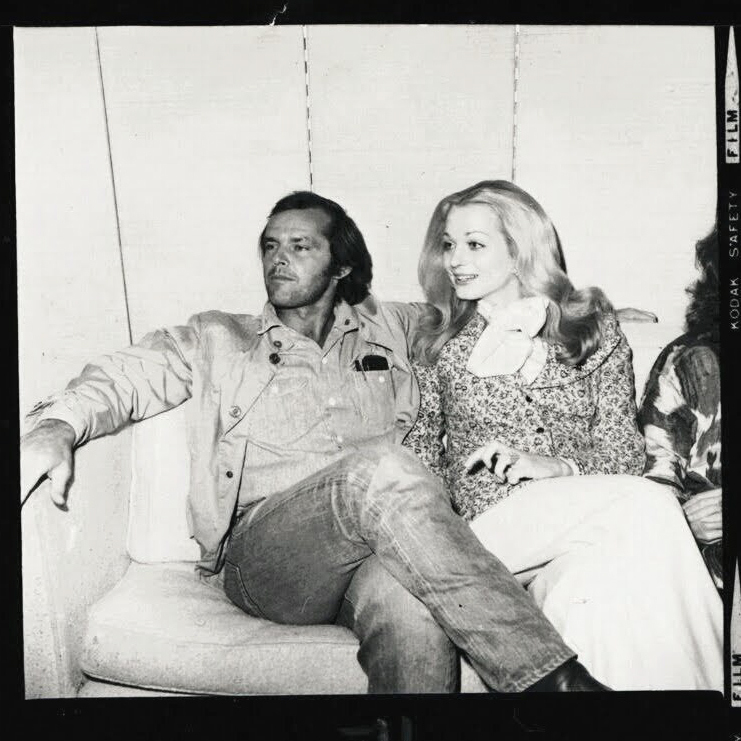
Jack Nicholson and Rachel Harlow at “A Safe Place” movie premier.
A hometown hero returns
In 1971, she returned to Philadelphia, a city that loves nothing more than a hometown hero who comes back after conquering the world. That year,Philadelphia magazine ran a piece on her titled “Local Boy Makes Good,” detailing her exploits in Hollywood and glamorous run-ins with celebrities, along with a seven-page spread of Harlow modeling the latest women’s fashions around town.
To be transgender in the 1970s for most was to be invisible or under constant threat, although attitudes were generally less aggressive about it than the politicized atmosphere of today.
Coverage of trans people tended to skew toward a smirking sense of wonder or fear at the marvels of modern medicine.
Harlow had two tools at her disposal that she discovered early in her life and utilized for the rest of it.
“I was beautiful, if you don’t mind my saying, and no one could argue that I wasn’t a woman.”
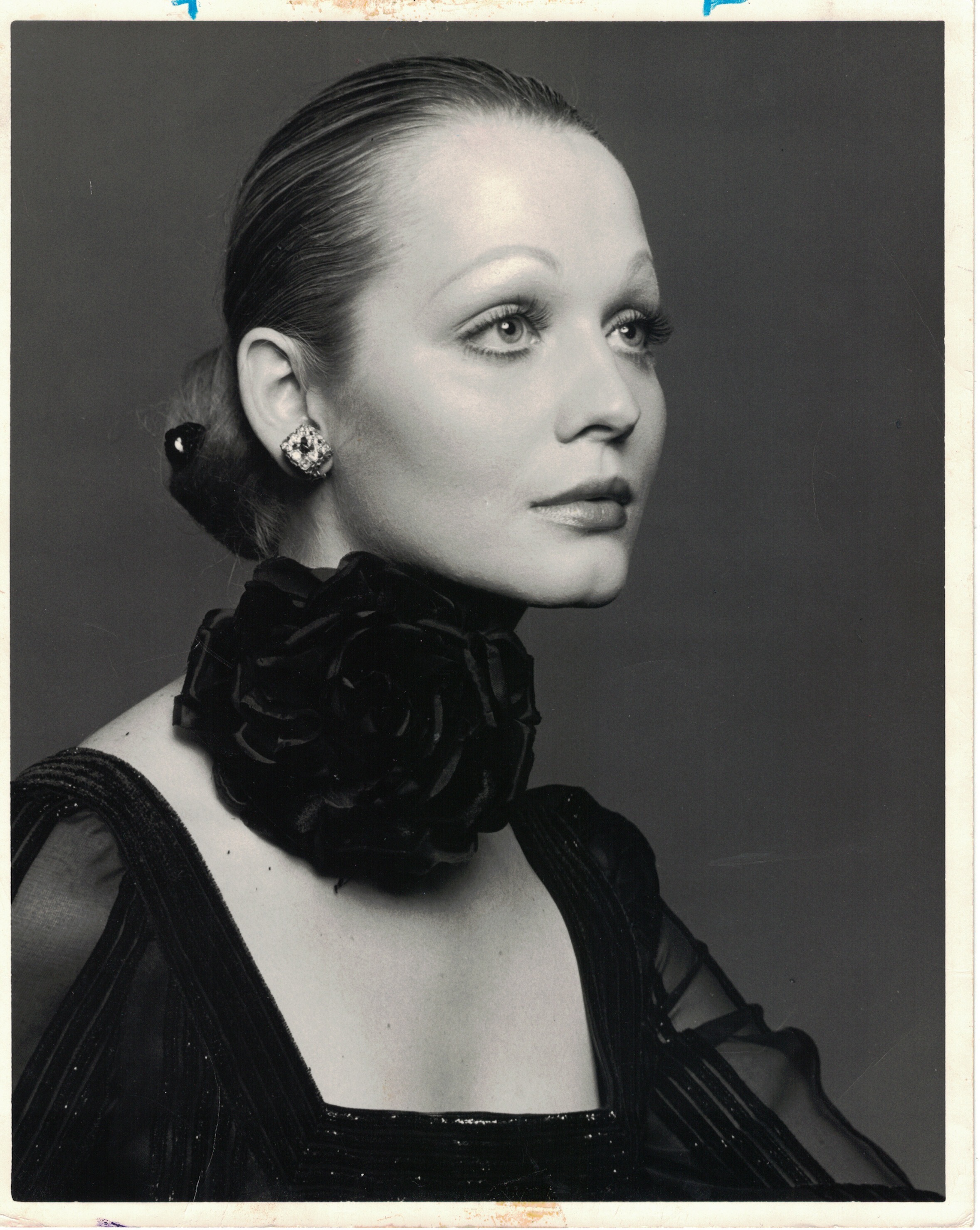
Rachel Harlow on Aug. 22, 1973, promoting a television appearance. “I always wore that gold bracelet around my wrist. I still have it to this day,” she says now. “It’s an 18 karat gold bracelet with diamond and ruby clasp. It’s like a horse bit. It was a gift and I’ve always loved it.”
She was thin, white, blond, and blue-eyed, which means she more or less embodied the beauty ideal of the early ‘70s, as seen in everything from Vogue covers to The Brady Bunch. And to be a trans woman perceived as naturally feminine in the traditional mode, to be able to live as a woman effortlessly without the fear of others’ reactions, lent her a privilege that made her path an easier one than many trans women were facing at the time.
“I could have gone anywhere and lived my life without anyone knowing my story,” she says. “But I stayed in Philadelphia and told it to anyone who would listen.”
That meant she suffered from being misgendered and deadnamed in the press, and being the target of headlines (some recounted in this article) that would seem jarring and offensive today — but it also meant she was elevated as a leading light of the city rather than as a curiosity or worse, a freak. For the rest of her time in the public eye, she would model for fashion spreads in local media like The Inquirer, alongside Main Line socialites, anchorwomen, and politicians’ wives.
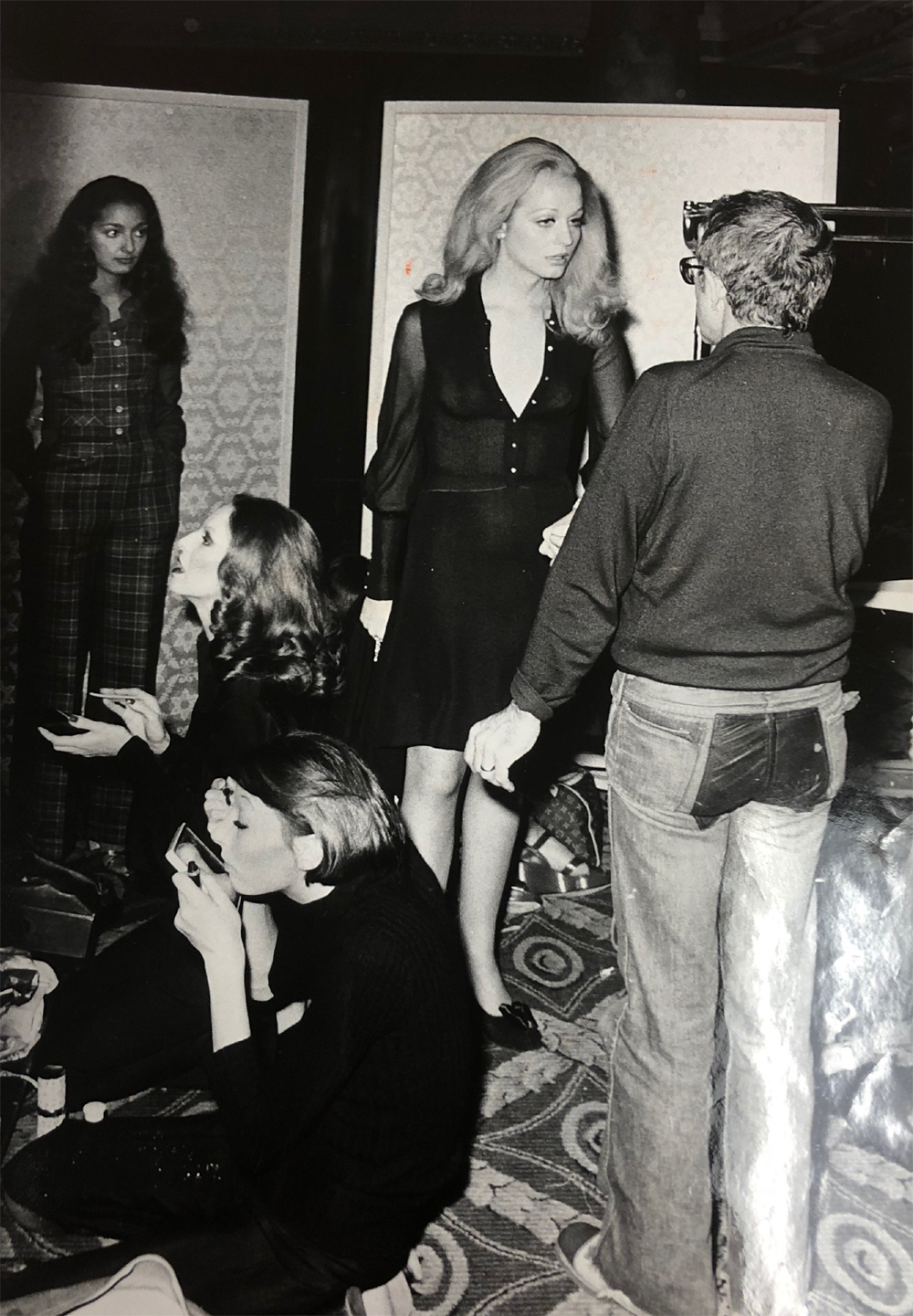
Rachel Harlow at the Halston fashion show at the Belleview Stratford Hotel.
At only 21, she became a fixture in the early ‘70s nightlife scene, bouncing back and forth between the bars and clubs of Center City and the inns and lounges of New Hope, causing a commotion everywhere she went.
“I can’t emphasize what it did for business, because when she would walk through that restaurant, conversations stopped,” said Ron Dubree, a friend from her Rittenhouse Square days, who owned the Mountainside Inn in New Hope. “I mean, people would turn and look. She was that stunning.”
Was it common for trans women to go out to mainstream establishments at the time?
“It wasn’t common for transsexuals to go anywhere at the time,” she asserts. “But I went into those places because I had no fear about being accepted.”
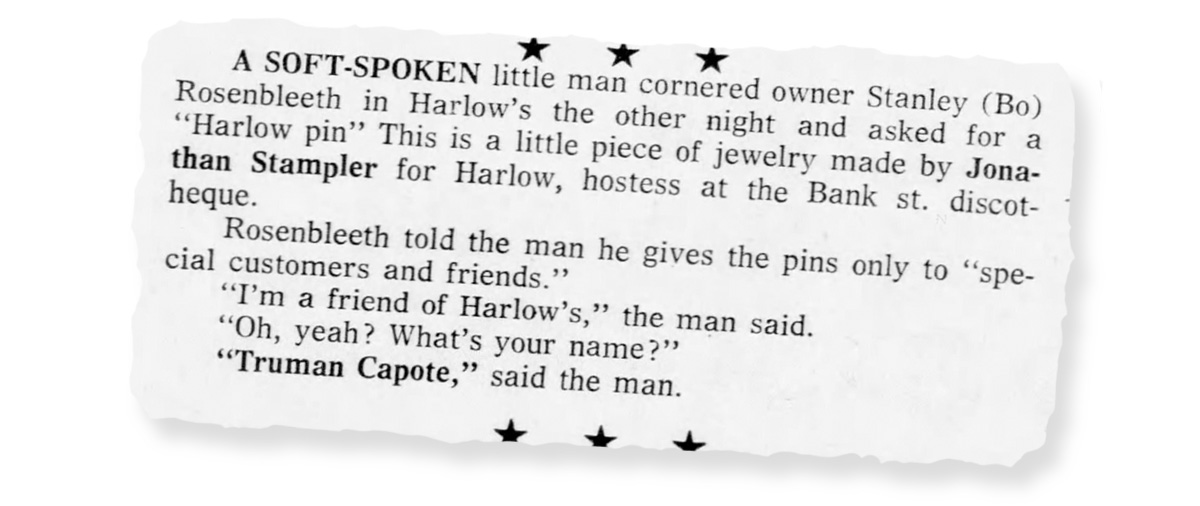
One night while standing in line with several girlfriends outside a club in Center City, she was approached by the club’s owner, a man named Stanley “Bo” Rosenbleeth.
“The first thing Bo said was, ‘You should never wait in line in your life,’” she recalls. When she left a couple of hours later, Rosenbleeth pressed his card into her hand: “Your name should be in lights,” she remembers him saying.
Rosenbleeth, who died in 2017, had opened a string of successful restaurants and clubs throughout Center City: everything from a banjo bar to a 1920s gangster-themed restaurant that staged fake shootouts. Sensing the coming trends, he was looking to open the best discotheque Philadelphia had ever seen.
He knew he could build a nightlife brand entirely around Harlow.
As he put it to The Inquirer in 1972, “I saw her as a person other people respond to.”
Harlow’s Nightclub in 1972.
The birth of Harlow’s
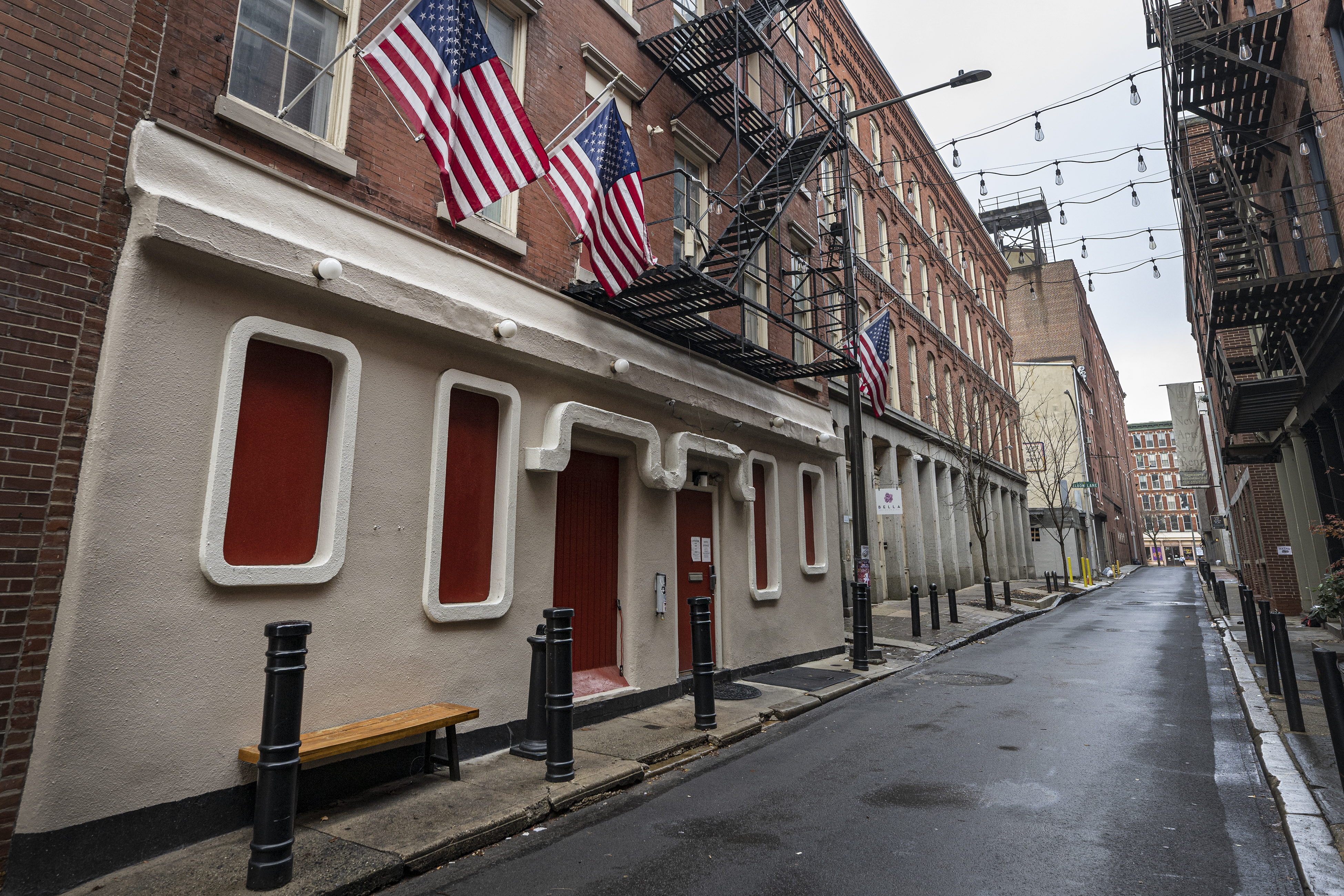
Rosenbleeth picked a spot on Bank Street in Old City, in the block between Second and Third and Market and Chestnut. It was a savvy choice for a lot of reasons, not least being the nascent restaurant renaissance that would come to define Philadelphia in the 1970s. The Middle East, La Truffe, H.A. Winston, and other highly popular restaurants had opened in the previous few years in the neighborhood.
It would also turn out to be a smart choice because of its proximity to what was then the KYW-TV studios at Fifth and Market Streets, where Mike Douglas was hosting a constant string of world-class celebrities five days a week.
“Harlow the Hollywood He-She is Coming!” is how The Inquirer first reported plans for the soon-to-be-opened club in January 1972. When Harlow’s opened in March, it was an instant hit, prompting breathless coverage in the city’s society and scene columns, at a time when Philadelphia had enough daily and weekly newspapers to support over a dozen full-time columnists, documenting the movements and drama of the city’s celebrity circuit.
Harlow’s suddenly became the place to be seen by all of the people most interested in being seen.
“We had city councilmen, news anchors, socialites, drag queens, and mafiosos all on the same dance floor and they were all there, goofing on me,” she remembers, using a ’60s slang term to convey that she was the center of attention.
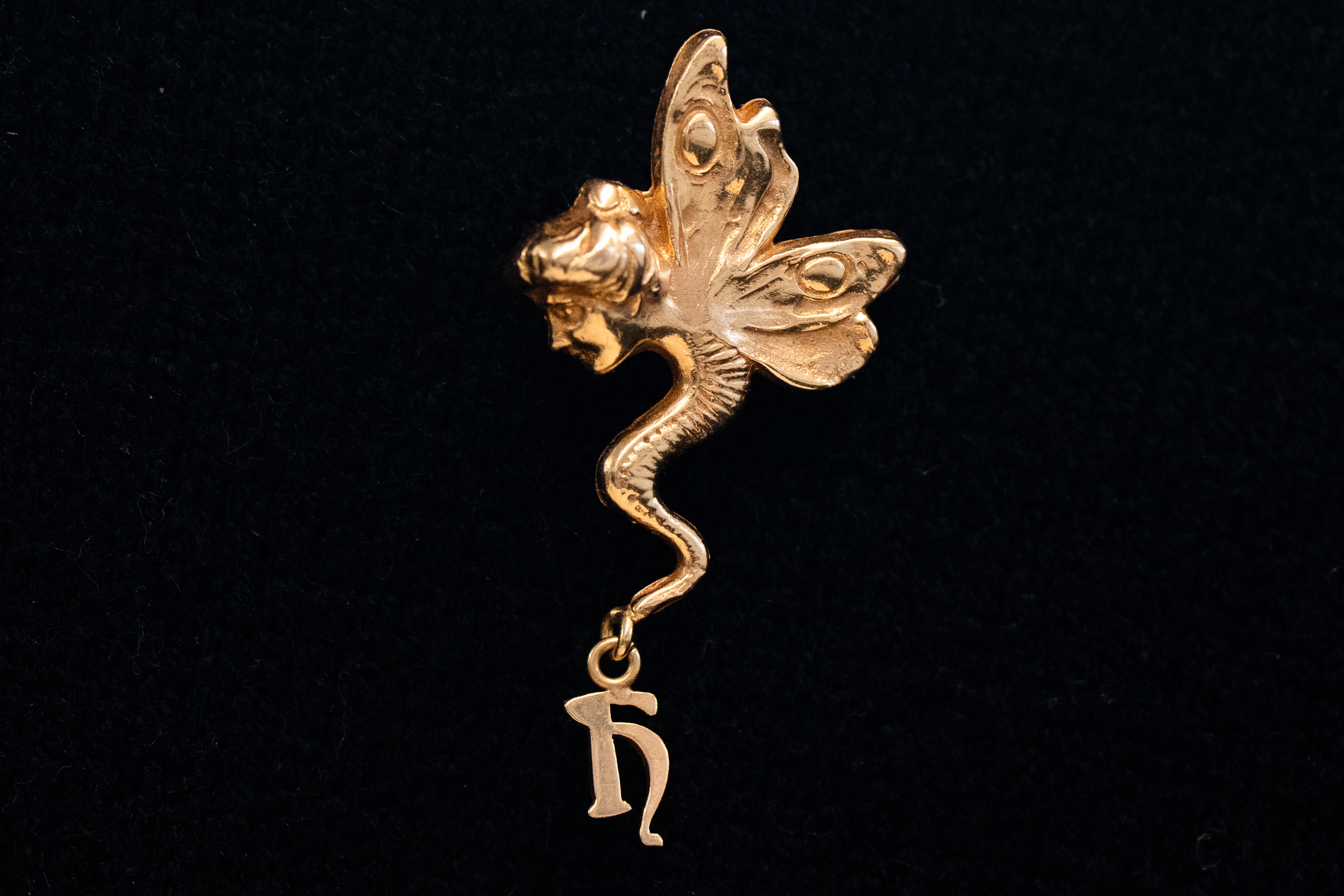
The pin for the Rachel Harlow Club.
The pin was used to designated VIPs at the club. It features Harlow’s face, butterfly wings, and a dangling “H” at the bottom.
The club was three stories of dancing, drinking, and mingling spaces done up in a mid-century futuristic style that took its inspiration from A Clockwork Orange, all mirrors and modular furniture.
The Sunday Bulletin made it sound deliciously like Sodom and Gomorrah with a cover charge. “The orange ceiling lights barely cut through the smoke. In their hot mists, the bodies twist and writhe as if on an invisible griddle. And the music — The Rolling Stones are blasting their ‘Sympathy for the Devil’ — crashes into your ears at 110 decibels.
“And there’s no doubt who’s the high priestess of this orgiastic bell-bottom cult. Harlow. A head like Queen Nefertiti, ashen mane tossing in the lights … half-mannequin and half-deer.”
Every night, Rachel would ascend the spiral staircase in front of the entire club, usually in her signature white, which stood out like a beacon in the club’s lighting.
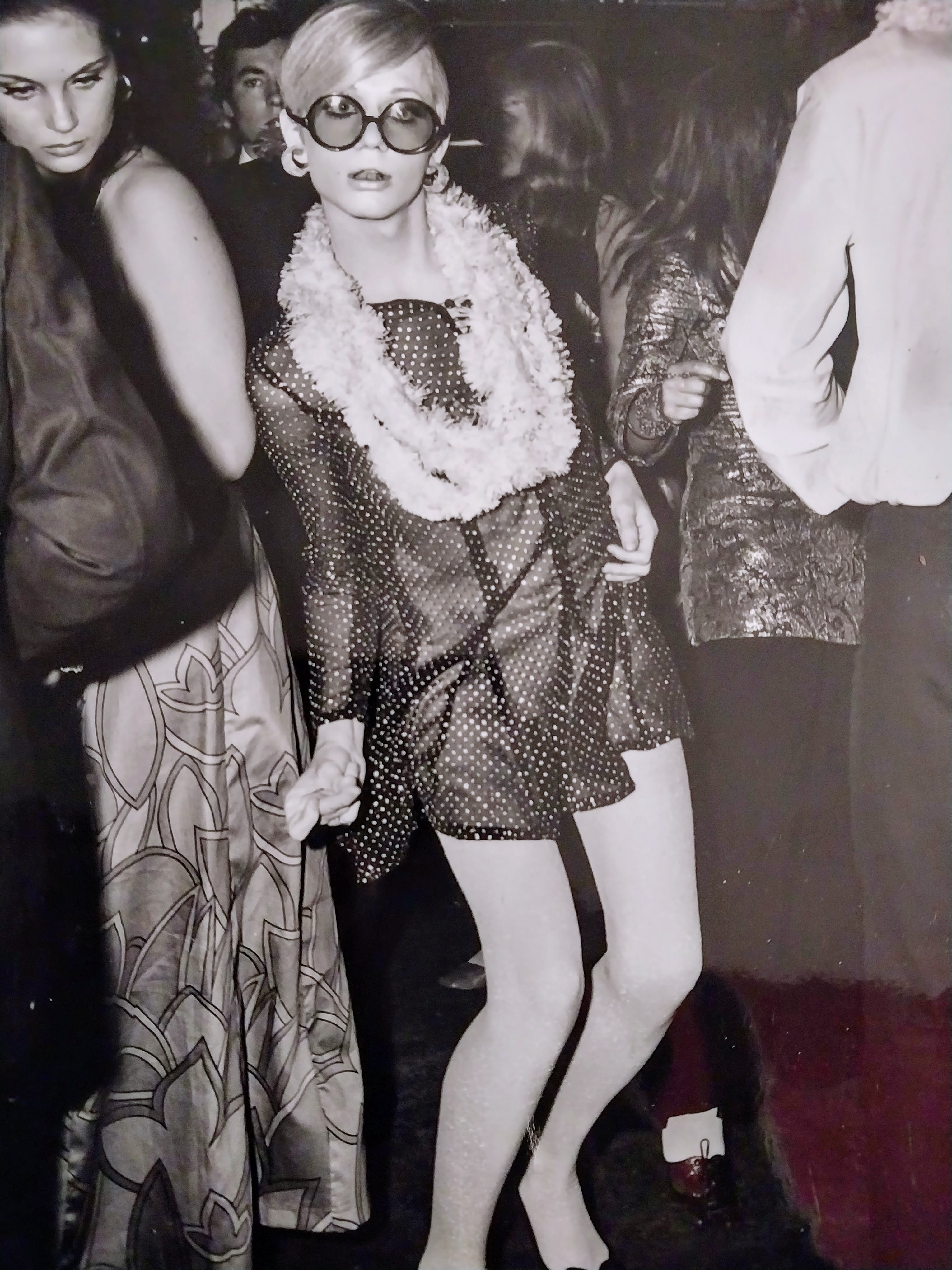
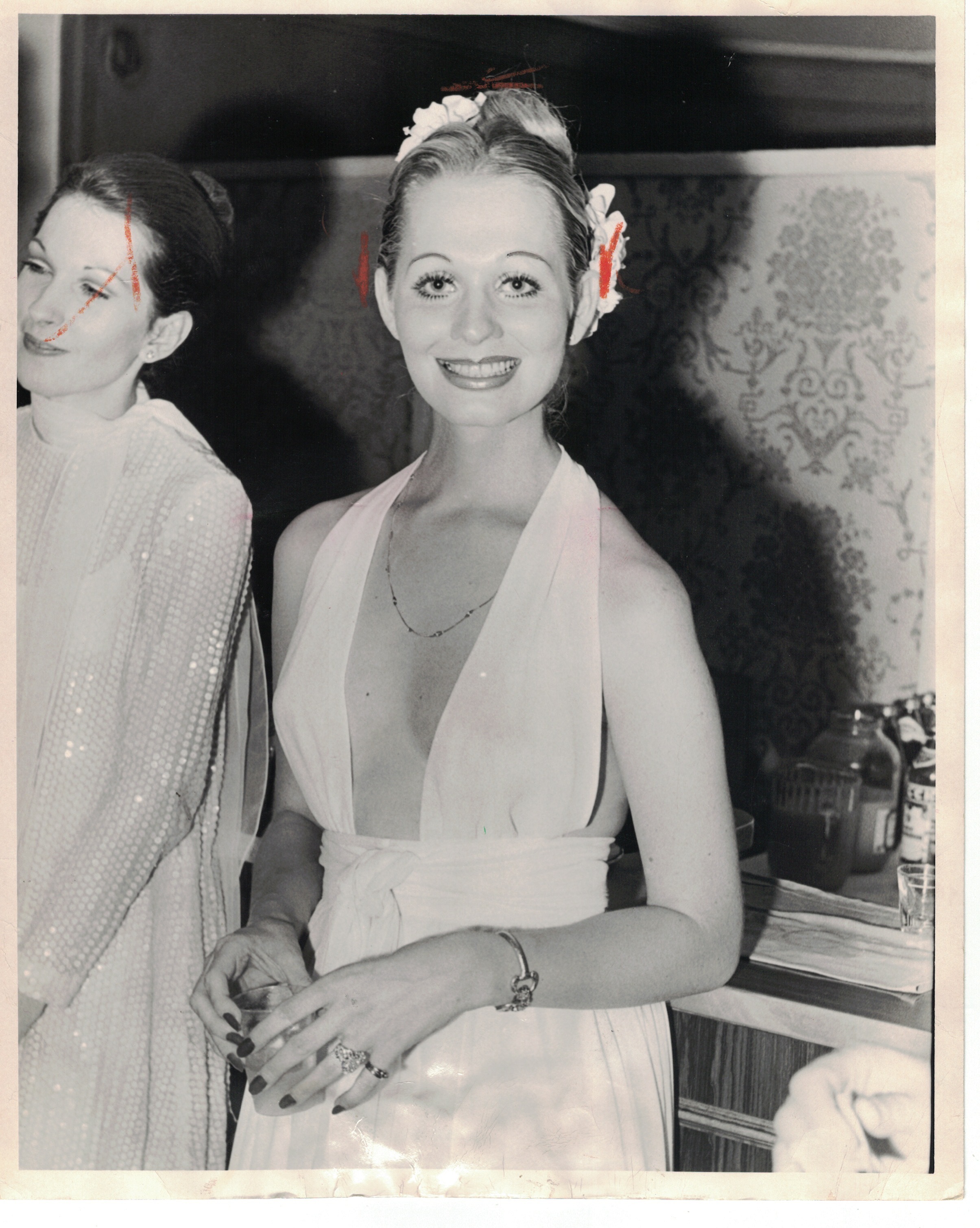
“In those days I wore my hair of my face a lot because my mother loved it,” Harlow says now. She suspects the photo was taken at a party at Carpenter Bacheholder’s Delancey Street home.
“Everybody wanted to have a drink with me. Everybody wanted to talk with me. Everybody wanted to dance with me. It was fabulous, but it was exhausting,” she remembers.
Philadelphia was going through a cultural renaissance in the 1970s. The Bicentennial was on the horizon and the city had star-spangled itself from one end to the next in preparation. Super producers Kenny Gamble and Leon Huff were defining R&B music through their Philadelphia International Records label, in the period between the dominance of Motown and the explosion of the disco era. Entertainment venues like the Latin Casino in Cherry Hill or the Valley Forge Music Fair brought a steady string of world-class celebrities through town, and Mike Douglas was more than happy to host them and any other superstars he could book.
Elton John would have a hit singing about “Philadelphia Freedom” and an obscure actor named Sylvester Stallone was about to make the steps of the Art Museum as iconic as the Eiffel Tower.
And every celebrity who ever spent a night in Philadelphia in the early ‘70s partied at Harlow’s.
“Truman [Capote] came to the club at least a half-dozen times. He and Halston would come in from New York just to see me and cause a little trouble,” she says now. “God only knows what they got up to after hours.”
Her duties as the hostess of the club that bore her name were only vaguely defined, but they all amounted to “Just be Harlow in the most public way possible.”
“Part of what Bo wanted me to do was be a woman around town. He believed in spreading the wealth, so people might see me at La Panetière or Jeanine et Janine having dinner and it made everybody want to go to Harlow’s. So I was out and about a lot. And then after leaving Harlow’s I would go to one of the after-hour gay bars. What can I say? I was living a life.”
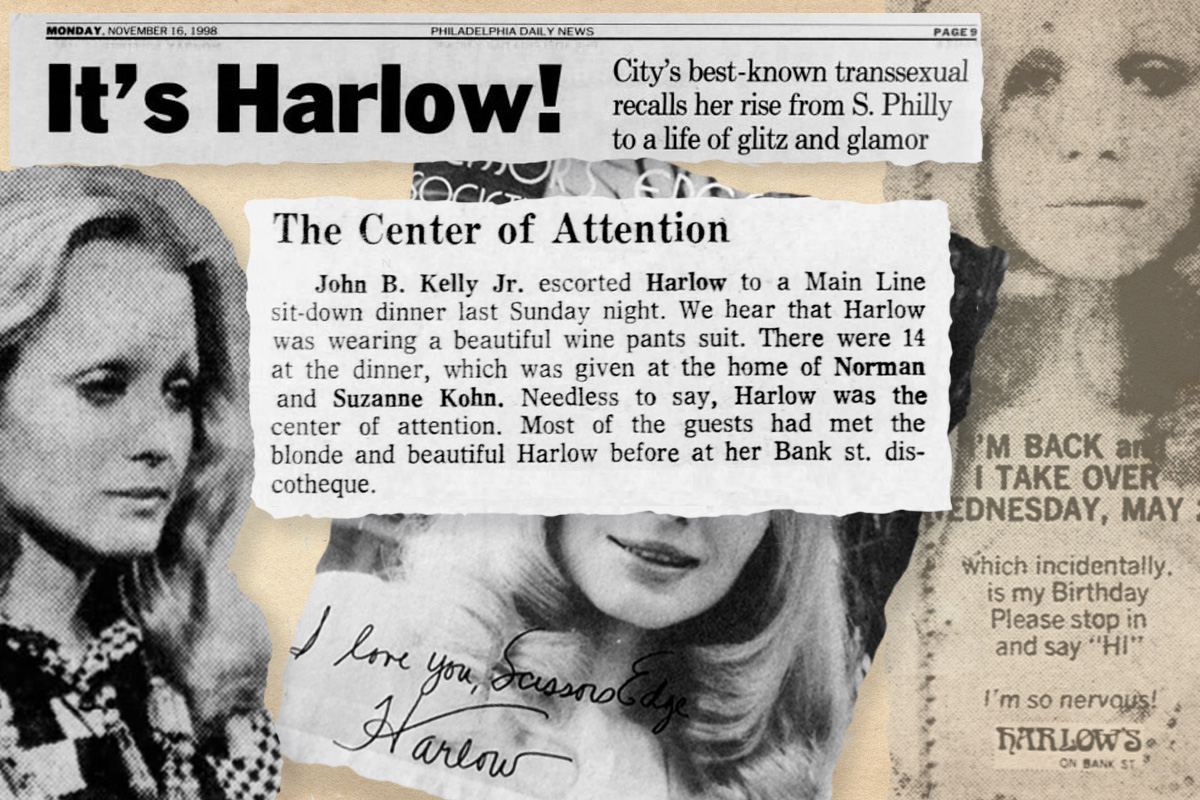
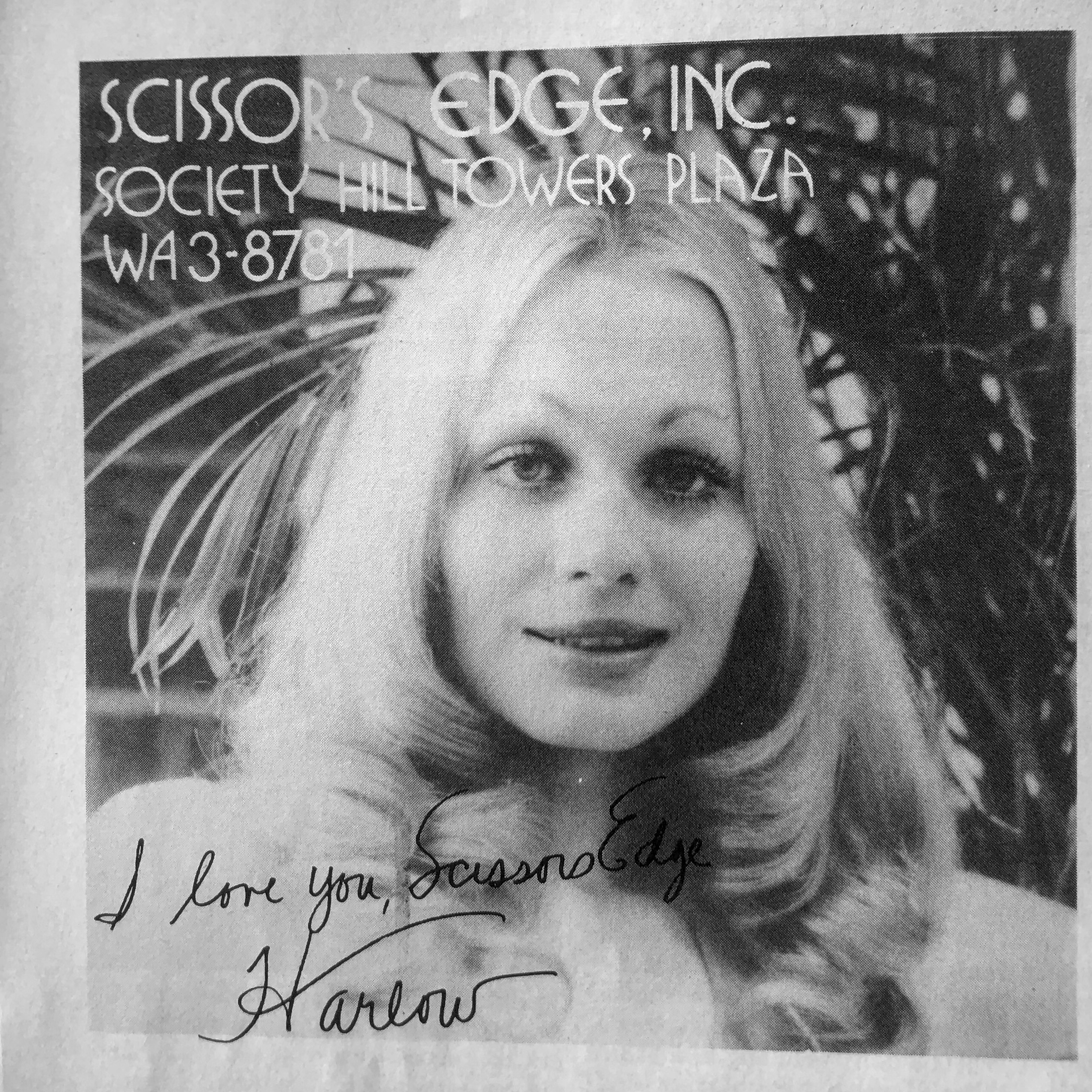
A Rachel Harlow hair ad in Philadelphia Magazine for Scissor’s Edge salon.
“These ran in Philadelphia Magazine once a month for a year and a half,” she remembers.
Joe Greco was an old Rittenhouse Square pal who featured her in ads for his Society Hill salon Scissors Edge. “Whenever she walked into my salon,” he recalled, “The whole place would go dead silent. Whenever she walked out, half the women asked for her cut.”
Her stylish wardrobe was supplied through an allowance from Rosenbleeth and old Rittenhouse Square connections with a phalanx of gay men who ran the city’s many chic boutiques and department stores. She modeled clothes on the main floor of Wanamakers, an influencer 40 years before the word was coined.
“I couldn’t even go into Bonwit Teller without lines forming in those days!” she says of the fervor. “People would wait outside to get a look at me in the light, wondering, ‘Could it be possible?’ Well it was — and I was.”
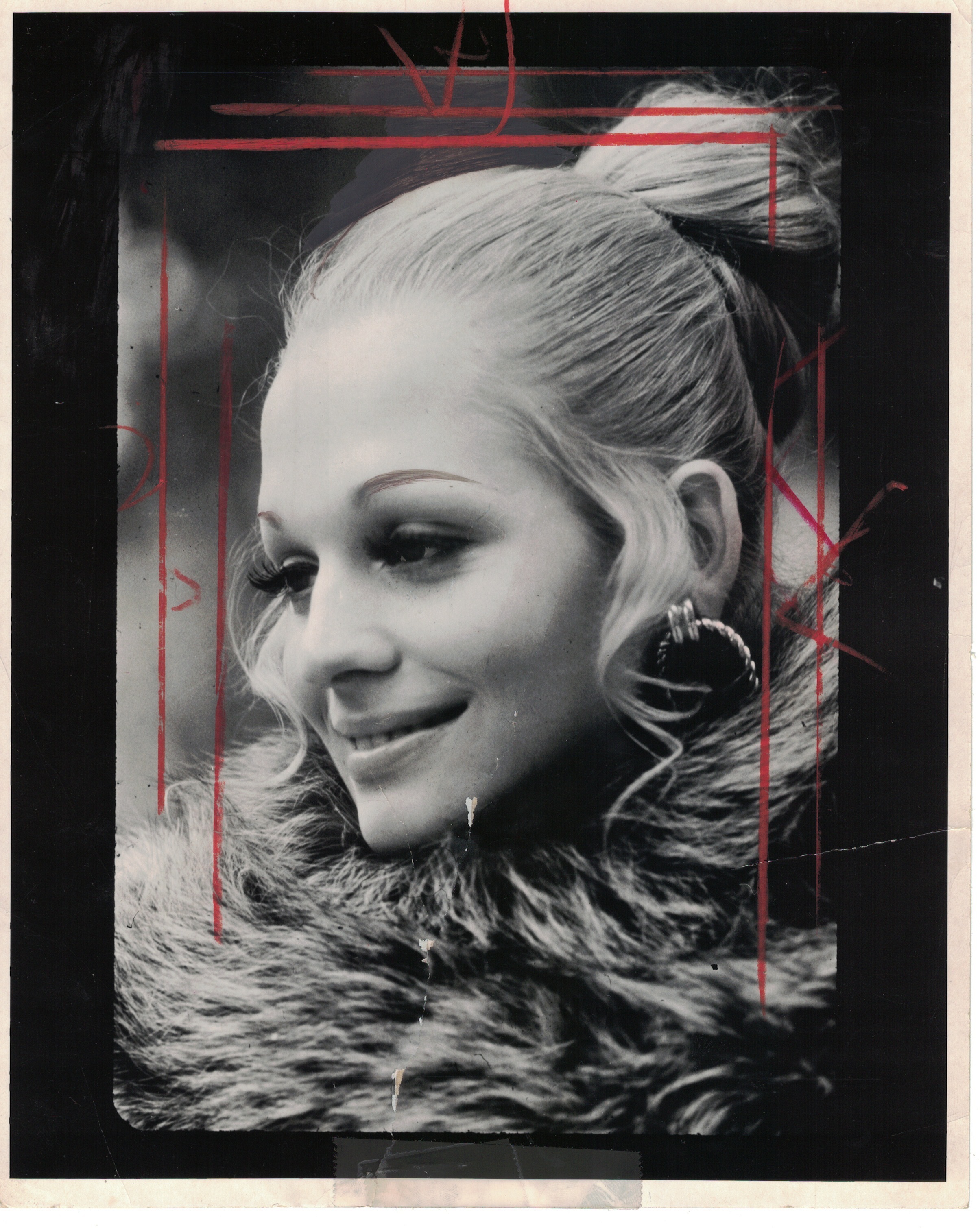
Rachel Harlow in this October 29, 1972 Inquirer photo.
“This was taken by one of your photographers — this wasn’t a planned thing,” Harlow remembers. “It was a winter day, and as you see I look the worse for wear because I probably had a long night before, it was very early in the morning, and it was blustery. It’s one of my favorite pictures. It’s so feminine, so beautiful and early morning — I was probably going to Day’s Deli on 18 and Spruce to have my coffee and croissant.”
A highly publicized procedure
One day, when they were still in the planning stages of the club, Rosenbleeth picked her up in his car and presented Harlow with a silver fox coat, a briefcase with $10,000 in cash inside, and a card with a stork on the front that read “Congratulations! It’s a girl!”
She finally had the money to complete her transition, something she’d been dreaming of since the day she was 16 and standing in her parents’ living room, clutching a copy of a magazine featuring 1950s transgender pioneer Christine Jorgensen and telling them “This is me.”
Harlow threw her arms around Bo and wept.
At a time when most transgender women were being forced into the margins of society, considered unemployable, and often had difficulty finding places to live, Harlow’s gender confirmation surgery was announced in the papers; not as something freakish but as the latest news about one of the city’s most prominent people.
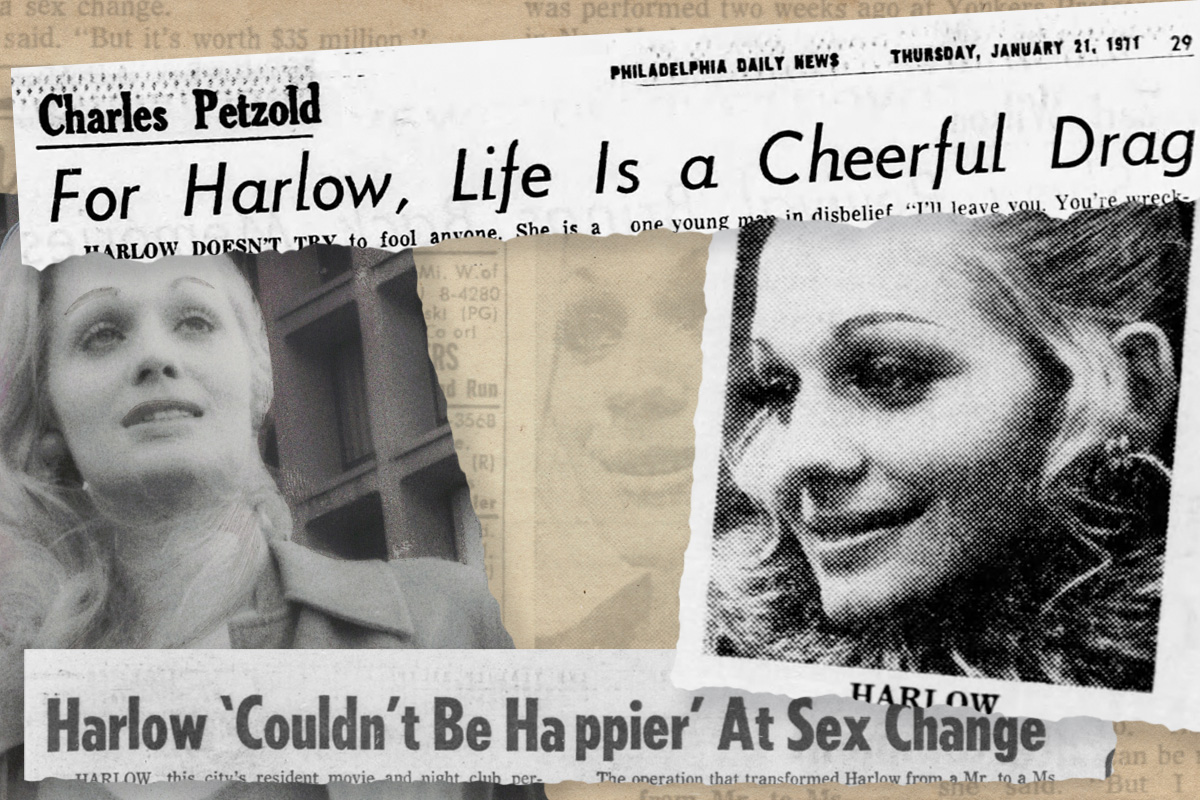
“Harlow, this city’s resident movie and nightclub personality, has undergone a sex change,” the Philadelphia Daily News reported in June of 1972. The article, titled “Harlow ‘Couldn’t Be Happier’ At Sex Change,” goes on.
“‘It costs $3500,’ she said, ‘But it’s worth $35 million.’ The operation that transformed Harlow from a Mr. to a Ms. was performed two weeks ago at Yonkers Professional Hospital in New York. ‘I went in on a Monday and they operated on Tuesday,’ said Harlow, who was in the hospital eight days. ‘I was a little frightened,” she admitted, ‘But it really wasn’t that painful. All I had was discomfort. I’m still a little sore,’ she said, ‘But I feel fine now. I’m just a little weak.’”
She was still legally known by her given name and put her South Philly connections to work. “My family had a friend in the neighborhood who was a judge and he took care of my name change and getting my birth certificate changed to reflect my gender,” she recalls.
To her friends, family, and the Commonwealth of Pennsylvania, she was now Rachel Finocchio. But the press never stopped referring to her as Harlow, and for two decades, Rachel said yes to any talk show, from national to local, that invited her on to explain her existence.
Within a city that prizes authenticity, she says, her frankness was rewarded.
“Never an unkind word. Never a problem. Never had anybody confronting me in my club or saying, ‘How dare you?’ or ‘You’re an abomination.’ Nothing,” she says now.
Still, she was frequently asked intrusive questions about her anatomy or dumb ones about whether her surgery hurt. In the club, she tried to avoid slow dances with patrons because it was obvious some of them were trying to determine whether they “believed” her.
She recalls that one of the club’s vendors demanded a dance on opening night and held her so tightly “he was practically behind me.” Afterward, he sat down and said loudly to his wife, “There’s no [expletive] way that’s a guy.”
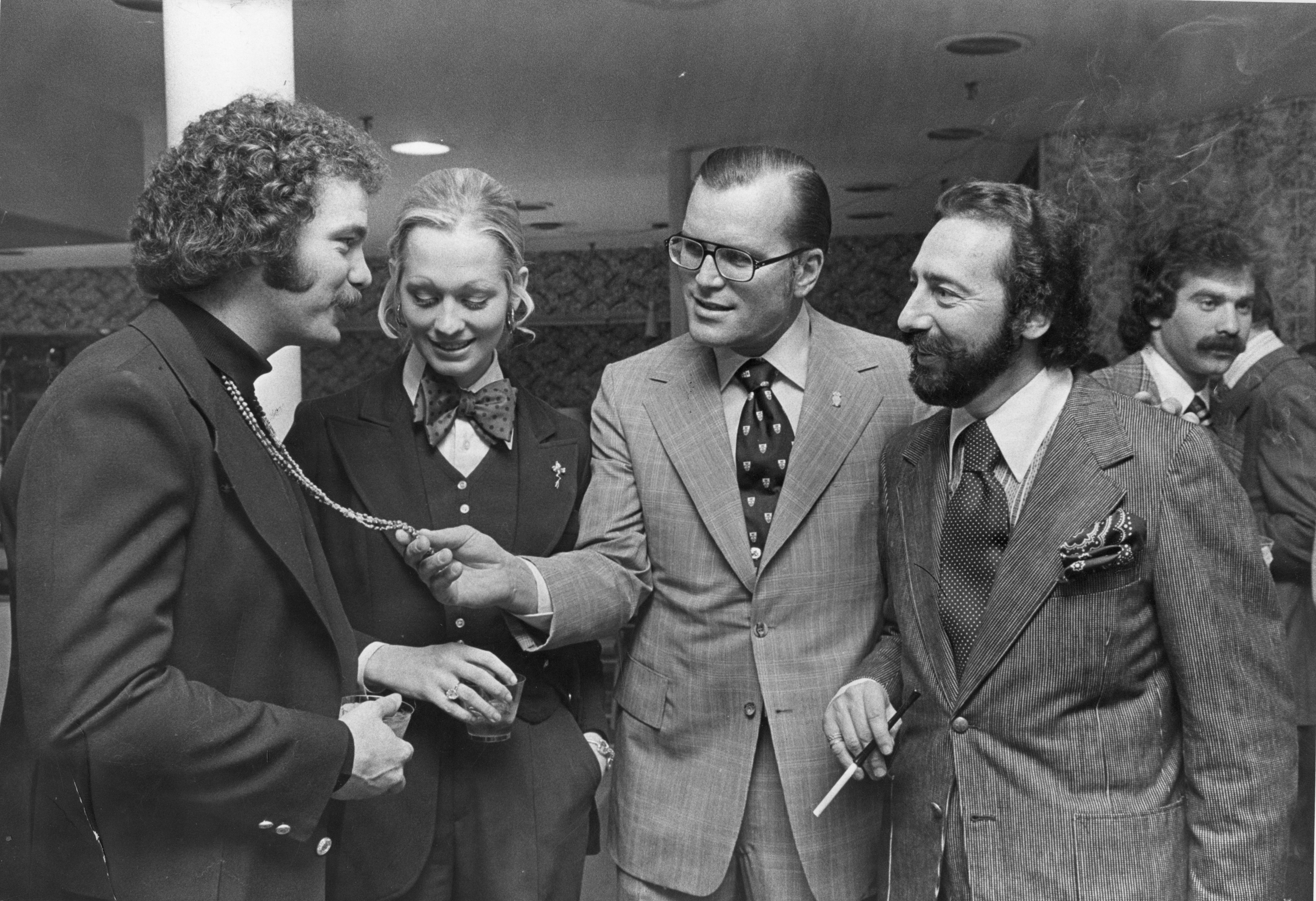
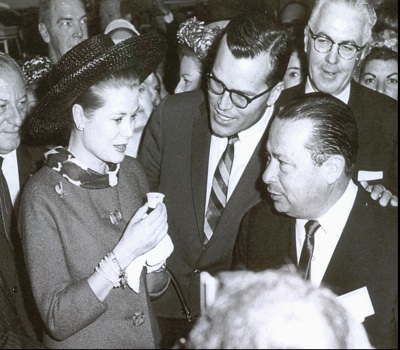
Rachel Harlow and Jack Kelly (second from right) at a charity event to benefit Cystic Fibrosis research on April 2, 1973.
“I think this was at Saks Fifth Avenue on the Main Line. All the football players were there. I loved the fact that I had a three piece suit on — I happen to like women in suits and ties. And Jack was always very well put together.”
When Harlow met Jack
One night, when Harlow was wearing a backless Halston gown, she felt someone touch the small of her back. It was Councilman-at-Large John B. Kelly Jr.
Jack Kelly was the city’s golden boy; the handsome scion of the Kelly family, an Olympic bronze medalist whose father was a gold medalist and the founder of Kelly For Brickwork, and whose sister Grace was a movie star and a bona fide princess. Kelly frequented Harlow’s semiregularly.
“I would see him there, but we never spoke to each other, just nodded from across the room. Believe me, I noticed him every time. Oh, God. That jawline?”
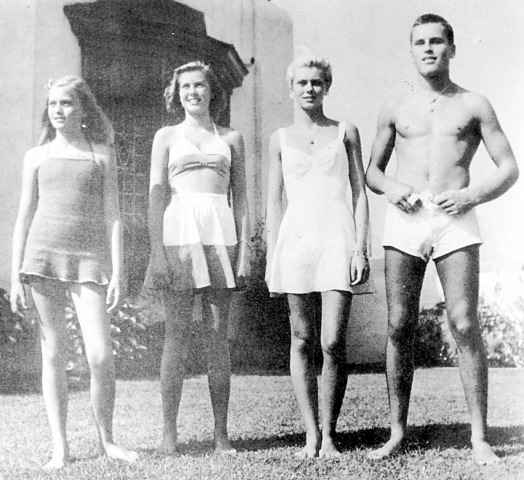
The Kelly family at home in Ocean City, NJ. From left, Lizanne, Grace, Margaret (Peggy) and Jack (John). Photo dates from the late 1940’s when Lizanne was in her early teens.
Their meeting remains vivid in her memory:
“Hello, Rachel,” she remembers Kelly saying. “Hello, Jack,” she responded, in the manner of two well-known people who don’t actually know each other. When he asked her to dance, she said, “Oh, no, Jack. I don’t think that’s a good idea at all. What will all these people think?”
But to hear Harlow tell it, Kelly didn’t care. He whisked her off to the dance floor in front of hundreds of people as an upbeat song played. “I never would have gone out there if it had been a slow song,” she recalls.
Rosenbleeth, looking out over a room full of attention-seekers, gossips, and media personalities, knew a good story when he saw one and immediately signaled to the DJ to play a slower song: “Me and Mrs. Jones” by Billy Paul. As the opening notes of the latest from the Gamble and Huff studio pealed out over the crowd, Rachel panicked, but Kelly took charge.
“He pulled me closer, and he was a very strong man, let me say. He held the small of my back. So firmly, not tight, not like a grasp, but … I had never felt anything like that in my life,” she says now, her breath catching.
“I can also tell you that when we slow-danced to that song, the dance floor cleared out. We had it all to ourselves. It was spectacular.”
She grows wistful when she speaks of him, sometimes unable to finish the thought because the emotions overwhelm. “His breath, on my neck … Unbelievable.”
They bonded over their identity struggles, hers as a trans woman and his as the son of a prominent father and the brother of the ultimate overachieving sister. For their first date, he took her to a popular restaurant in Narberth called Gatsby’s, where he had recently been crowned “Lord Chamberlain of the Gatsby Redcoats,” a sort of Main Line version of the Shriners. He made the rounds, eagerly introducing her to friends and colleagues while he worked the room.
“After we sat down, he held my hand, and said to me ‘Rachel, look how everyone loves you. Look at all you’ve done. Everybody respects you.’ And then he said something that told me everything about him: ‘I, on the other hand, have always been Grace Kelly’s brother or John Kelly’s son.’ He loved that I was a success in my own life; that I had done what I wanted instead of what people expected,” she says.
John M. Taxin, far right, greets actress Grace Kelly, left, and her brother Jack, center, at the Old Original Bookbinder’s restaurant in Philadelphia, Pa., in this undated photo.
Rachel had avoided sex for as long as she could, but she knew she’d finally met the man who was going to help her cross that threshold. She was only six months post surgery and had frantic visions of her hard-fought body reacting to the stress of sex like a windup clock in a cartoon. “It sounds silly, but I kept picturing springs and screws popping out!” She laughs now, but it was a genuine fear for the young woman; an unfounded one, as it turns out.
She recounts that Kelly was patient and so tender, she still cries softly talking about it decades later. “You can’t imagine what it meant to me,” she says through tears.
He squired her all over the city to fundraisers at the Union League, Eagles games at the Vet, and dinner parties with the city’s leading citizens. Her nervousness each time was met with the realization that they were all excited to meet her. “It was hard to escape the impression that he loved showing me off.”
On her 24th birthday, The Inquirer reported on a party at the club in her honor.
“Many came bearing gifts, but Harlow said her favorite present was a diamond ring from a guy whose identity she concealed.“
Today she reveals, “Everyone knew it was from Jack, but I didn’t think it was a good idea to brag about it.”
“When he gave me the ring, I said, ‘Jack … a ring box? What is this? I’m afraid to open it.’ And I opened it and, I mean, come on, the man’s giving you a diamond ring. I said, ‘Oh Jack, is this a brother and sister competition? She marries the prince and you want to marry a queen?’ And the smile that came on his face. He just hugged me, and I said, ‘Thank you very much for the gift’ and that was that.”
Harlow and Kelly were happy, and to hear her tell it, in love, but beauty, charm, and influence were shields for her for only so long. There were limits to how much certain people could accept.
Kelly had plans to challenge Mayor Frank Rizzo in the forthcoming election, and Rizzo wasn’t going down without a fight. “If Jack lands the official nod, the “Citizens to Re-Elect the Mayor” already have a billboard campaign planned. The signs will read: “Do We Really Need Rachel Harlow as a First Lady?” said the Philadelphia Daily News on Jan. 27, 1975.
At the same time, The Inquirer reported that Jack’s mother Margaret Kelly made inquiries about Rachel to friends and threatened to permanently withhold donations to the party if Democratic leaders showed her son any support. There were rumors that she threatened to disinherit her son if he continued on his present course.
“Jack called it the ultimate betrayal,” Rachel remembers.
Amid all that stress, the relationship ended. “It was lovely and then we just went our separate ways,” she sums up simply, even as she acknowledges him as one of her great loves.
When pressed, she simply says: “Listen, in this life, you have to learn to let go of things.”
Rachel Harlow in a promotional photo for the opening of Harlow’s Nighclub in 1972 in an Oscar de la Renta velvet and chiffon dress.
Out of the spotlight
In 1975, tired of all the feverish scrutiny, she walked out of Harlow’s for good. “There always comes a time with me where I have to retreat to my solitude, draw the curtains and just be with myself,” is how she explains it.
“Transsexuality is a solitary life. You have to come to the truth of who you are on your own, you have to stand up on your own and say it out loud, you have to go through that physical process, and you have to withstand the judgment of others. If you’re not right with yourself, you’ll never survive.”
There were other nightclubs that bore her name after that and there were other love stories, many of which continued to make the papers. She preferred to date men from the area because she never had to have an uncomfortable conversation with anyone about her story. “They all dated me knowing exactly who I was.”
In 1980, she met a courtly French pastry chef named Gerard Billebault; they married in 1981. For a decade she enjoyed a quiet home life hosting their friends and being a stepmother. She returned to the spotlight when she and her husband opened a million-dollar supper club, Harlow’s at The Bourse, in 1989.
That was the opening at Harlow’s at the Bourse Building,” Rachel says of this Dec. 1988 photo. “I invited 180 people. 1400 people came.”
But running it proved prohibitively expensive and the strain of a public life caused them to eventually separate. She withdrew from the spotlight permanently in the early ‘90s and returned to the Juniper Street house to take care of her ailing mother after a stroke.
“I got tired of answering the same questions over and over again,” she says now. “I don’t think anyone should be in the public eye forever.”
Rachel Harlow in this April 14, 1989 Inquirer photo.
Happily ever Harlow
Rachel now lives in a little house on a quiet street in Northeast Philadelphia, where she’s mostly kept to herself.
There is little left to indicate the dazzling life she once led. The Halston gowns, the silver fox fur, the hundreds of pairs of shoes, even the drag pageant crowns, they’ve all been given away. She gave the ring back to Kelly before they parted, despite his insistence that she keep it. Her old club is now a youth hostel, which delights her.
At 77, she is still beautiful and stylish; never stepping out without a fully made-up face and perfectly coiffed hair. She still gets dressed to the nines and goes out every now and then to Knock, the Gayborhood piano bar, owned by her dear friend Bill Wood and run by an attentive staff who dote on her. A Francesco Scavullo portrait of her remains permanently ensconced on the piano.
“Look, I have my friends, I see my remaining family members when I can, and I go out for a good time frequently. I enjoy the company of people when I want, on my terms,” she says. “I’m living exactly the life I want for myself at this time.”
Exterior of her former club at 32 S Bank street in Philadelphia on Nov. 26, 2025.
She loves to tell a story that gets to the heart of just how she’s survived for so long, from the period just before she went to Cannes and lived in New York. “I went to Max’s Kansas City one night, very much not my scene I should add, and I was told that Andy Warhol was in the back room and wanted me to join him,” she says.
Warhol had been one of the judges of the pageant in The Queen and had become intrigued by her. When she approached his table, she noted that most of his entourage seemed pretty strung out. “Candy Darling was face down, practically in her soup! I said, ‘No, thank you,’ and got out of there.” To this day, she’s proud to tell people that she’s “the girl who said no to Warhol.”
It’s that quality, that quintessentially Philly attitude of “Leave me out of this mess” that has kept her in good stead all these years.
She credits simple advice imparted to her in her mother’s South Philly kitchen. “She sat me down just as everything started happening for me and said, ‘OK, then. If you’re going to do this, do it right.’” She emphasizes the last three words with a vehemence that underlines their importance to her.
“‘Don’t spit in the air,’ she told me. ‘It will only wind up landing on you.’”
Harlow is eager to have her story told now, compiling her memoirs and working with Oscar-nominated executive producer Christine Vachon — who produced Carol and Boys Don’t Cry — along with producers Liz Levine and Adrian Salpeter, on a planned movie based on her relationship with Kelly.
Rachel Harlow in this June 26, 1974 Daily News photo. Harlow is presented with a flower by an admirer. “Philadelphia is a big part of my story,” Rachel says now. “This picture sort of encapsulates that for me. Had I been the pariah, that picture wouldn’t have taken place. There would be no smiles. I was so well accepted. That was Philadelphia! Penns Woods, Quaker Philadelphia! They saw me, they decided to listen to me because I wasn’t an affront to them, and then when they heard the story they understood it.”
“I’m drawn to stories of people who rewrite the rules of survival. Rachel did that with style and defiance,” says director Aitch Alberto, who is also attached to the project. “She proved that identity can be a weapon and a crown at the same time.”
She’s motivated to speak by a large and well-funded conservative movement that has currently placed the rights of transgender people under greater threat than they’ve been for well over half a century. “It’s so important now — more important than ever — to tell my story,” she says.
“My God, look where we are now, where this … regime keeps attacking us! Fifty years ago, people didn’t care! We need to remind them.”
Every time she goes out, a crowd of admirers eventually surrounds her, kissing her ring and serenading her — both quite literally. Sitting by her side at Knock like a couple of royal scribes while she held court, we’ve met fashion, jewelry, and costume designers, cabaret artists, playwrights, figure skaters, gallery owners, retired surgeons, and elderly socialites, all of whom vie for a moment of her attention.
“Sixty years later, to be remembered when everything in this world is a seven-day wonder, and they forget you and throw you out like so much trash,” she says with emotion and gratitude.
Harlow chose to put the glare of the spotlight behind her over 30 years ago, but her city never forgot her, and whenever she steps out, Philadelphians still line up just to tell her.
“People have always been so kind to me,” she marvels, adding with a pleased smile, “But then, one always is, to a unicorn.”
Tom Fitzgerald and Lorenzo Marquez are the authors of “Legendary Children: The First Decade of RuPaul’s Drag Race & The Last Century of Queer Life.” They are currently working with Rachel “Harlow” Billebault on her memoirs.