Following several years of major worker organizing efforts and high-profile strikes, 2025 brought a change in momentum for the labor movement. President Donald Trump’s administration sought to end federal workers’ union contracts and, through a firing, left the National Labor Relations Board without a quorum and unable to make decisions.
But the percentage of workers who are union members nationwide has stayed pretty steady in the last year, new data shows. And in Pennsylvania and New Jersey, union membership rates fell.
In 2025, 10% of the country’s total workforce was part of a union, compared to 9.9% in 2024, according to new data from the U.S. Bureau of Labor Statistics. It’s the first time since 2020 that the rate has inched up — albeit slightly — instead of down.
However, BLS noted, this year’s estimates are not fully comparable to past years because they are based on a BLS survey that is missing October figures due to the government being shut down in October and part of November.
In the past year, there have been “a lot of kind of anti-labor efforts coming out of the White House,” said Todd Vachon, assistant professor of labor studies and employment relations at Rutgers University.
Despite those efforts Vachon said, “labor has pretty much maintained the same at the national level. … The Trump attacks haven’t really had any effect yet, at least in the first year.”
window.addEventListener(“message”,function(a){if(void 0!==a.data[“datawrapper-height”]){var e=document.querySelectorAll(“iframe”);for(var t in a.data[“datawrapper-height”])for(var r,i=0;r=e[i];i++)if(r.contentWindow===a.source){var d=a.data[“datawrapper-height”][t]+”px”;r.style.height=d}}});
Union membership rates dropped to an all-time low nationwide in 2023 and remained pretty similar in 2024. During those years, roughly one in 10 U.S. workers was part of a union.
When BLS first started recording this data in 1983, about two in 10 U.S. workers were unionized. There were 17.7 million unionized workers in 1983 and 14.7 million last year.
Unionizing in N.J. and Pa.
In New Jersey, 14.7% of workers were unionized last year, and in Pennsylvania, it was 10.9%.
In both states, that was a decline of around one percentage point from 2024, but BLS noted that state-level data “should be interpreted with caution,” due to the shutdown-related incomplete data.
window.addEventListener(“message”,function(a){if(void 0!==a.data[“datawrapper-height”]){var e=document.querySelectorAll(“iframe”);for(var t in a.data[“datawrapper-height”])for(var r,i=0;r=e[i];i++)if(r.contentWindow===a.source){var d=a.data[“datawrapper-height”][t]+”px”;r.style.height=d}}});
Some local labor action highlights from this past year include:
- Whole Foods unionization: Workers at the Spring Garden location voted to form a union in January, becoming the first unionized Whole Foods staff. Whole Foods challenged the election, and the NLRB was without a quorum to decide the case last year.
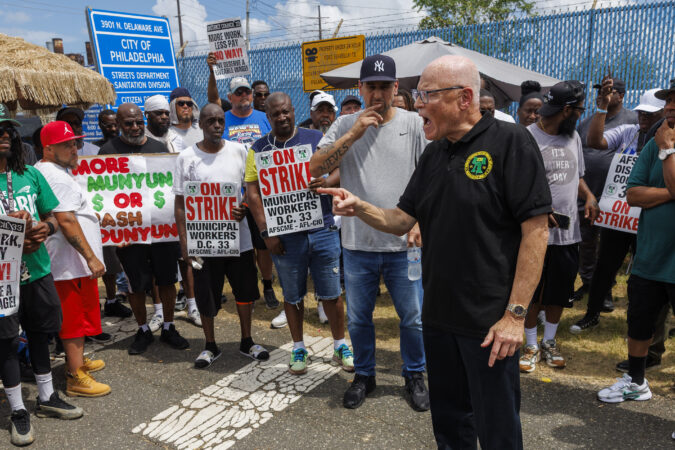
- Trash strike: AFSCME District Council 33, Philadelphia’s municipal workers union, went out on strike in July amid contract negotiations. The strike lasted eight days and cost the city $5.4 million.
- SEPTA strike threat: Unionized SEPTA employees reached a contract deal with the transit agency in December after threatening to strike, despite SEPTA’s challenging financial situation.
- Medical resident unionize: Over 1,500 resident physicians voted to unionize at area health systems including Jefferson Health, Temple University Hospital, and ChristianaCare.
- Graduate student workers at the University of Pennsylvania reached a tentative agreement on a first contract this month after threatening to strike, nearly two years after unionizing.
- Employees of several hotels went on strike in October and November as their union, Unite Here Local 274, sought new contracts for roughly 1,000 members at eight Philadelphia hotels.
- National Starbucks strike: Philadelphia Starbucks workers joined a nationwide strike in November amid contract negotiations. Some have returned to their jobs, but over 1,000 continued to strike as of early February.
- New teacher contract: The Philadelphia Federation of Teachers got a new contract for 14,000 teachers, nurses, counselors, secretaries, and paraprofessionals, averting a strike.
What happened in labor organizing last year?
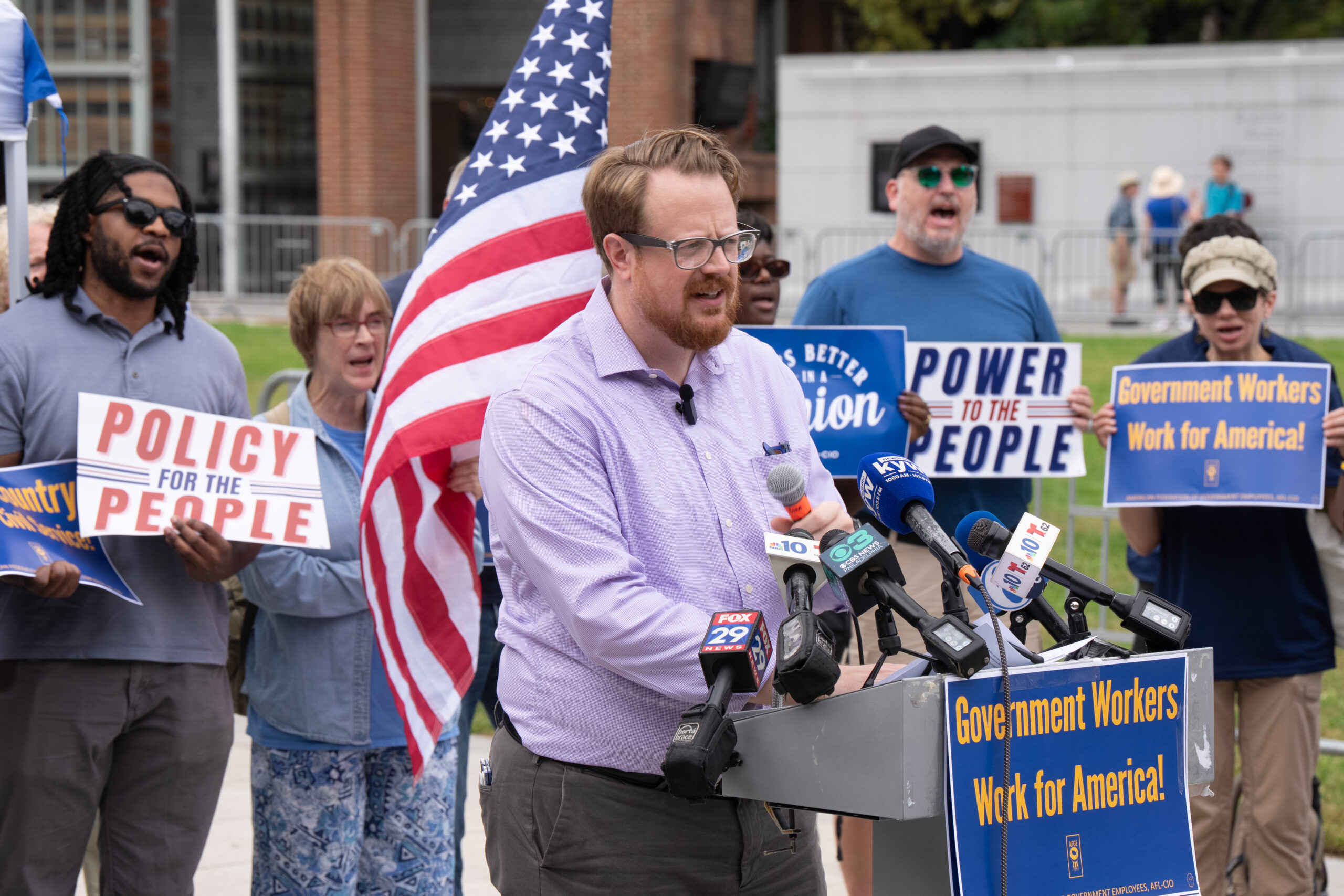
The Trump administration moved to end union contracts for government workers, amid a push to reshape the federal government.
Some 271,000 federal jobs were cut between January and November. Meanwhile, the union membership rate in the public sector increased by 0.7% nationally in the last year according to the new BLS data.
Vachon notes that the vast majority of public sector workers are at the municipal level, not federal.
“The hiring of police, and teachers, and sanitation workers across the thousands of cities around the U.S. more than compensated for [cuts at the federal level], because we see an increase in the public sector,” he said.
Trump also fired a member of the National Labor Relations Board (NLRB) early last year, which left it without a quorum to issue rulings. In some cases that can slow down the formation of a new union — at the Amazon-owned Whole Foods in Philadelphia, for example.
The number of union elections overseen by the NLRB declined last year and the overall number of workers involved in those elections dropped too, according to the nonpartisan Center for American Progress.
“A huge percentage of new union organizing is required every year just to maintain the same level of unionization, because of the churning and the growth of the overall labor force,” said Vachon. “If the labor force is not growing, then you can actually see increases in union density.”
And unions are being cautious of reaching out to the NLRB under the Trump administration, he notes.
“There’s a fear [that] if something gets sent up to the NLRB that the ruling is going to set a precedent that makes it even more difficult to organize,” said Vachon. “It’s kind of had a dampening effect in that way.”
Leave a Reply