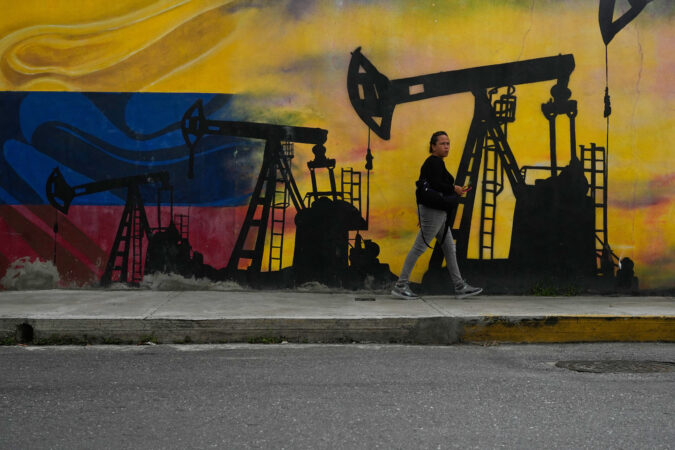
Energy Secretary Chris Wright announced Wednesday that the Trump administration will take control of all existing flows of oil from Venezuela for the foreseeable future as it struggles to persuade U.S. firms to invest in expansive drilling operations there.
Speaking at a Goldman Sachs energy industry event in Miami, Wright said the United States will allow Venezuelan oil under U.S. sanctions to flow again, but only to U.S. refineries. He said the sales will be “done by the U.S. government and deposited into accounts controlled by the U.S. government.”
“From there, those funds can flow back into Venezuela to benefit the Venezuelan people,” Wright said. “We need to leverage and control those oil sales to drive the changes that must happen in Venezuela.”
Wright’s comments followed an announcement from President Donald Trump on Tuesday night that tens of millions of barrels of Venezuelan oil currently blocked by a U.S. embargo will be shipped to refineries in the U.S. The directive enables revenue to start flowing to Venezuela, but even that arrangement could be complicated because those refineries get abundant oil from North America.
On Wednesday, Wright framed the effort as crucial to re-establishing a viable oil industry in Venezuela. He said the revenue generated could be used to help rebuild the badly rotting oil infrastructure in that country and to help lure U.S. firms to invest there. He said the U.S. will control Venezuelan oil flows “indefinitely.”
The unorthodox arrangement puzzled some analysts. The reason oil had not been flowing to the U.S. refineries was that U.S. sanctions prohibit it. If the sanctions were lifted, they say, market forces would already guide most of the Venezuelan oil to the U.S., which has refineries specially equipped to handle the heavy type of crude pumped there.
“So much Venezuelan oil is exported to China, India, and other markets because of sanctions,” said Ben Cahill, an energy markets scholar at the University of Texas at Austin. “If the goal is to redirect it to U.S. refiners, sanctions relief could do that on its own.”
The Venezuelan oil will be flowing at a time forecasts project the U.S. refining market will have more than enough oil.
“I don’t see how this benefits the American people,” said Amos Hochstein, managing partner at the investment holding company TWG Global, who was a senior economic and national security adviser in the Biden White House. “If anything, we may have an oversupply, which is why oil prices are in multiyear lows and declining. Nor do I see how this helps the people of Venezuela.”
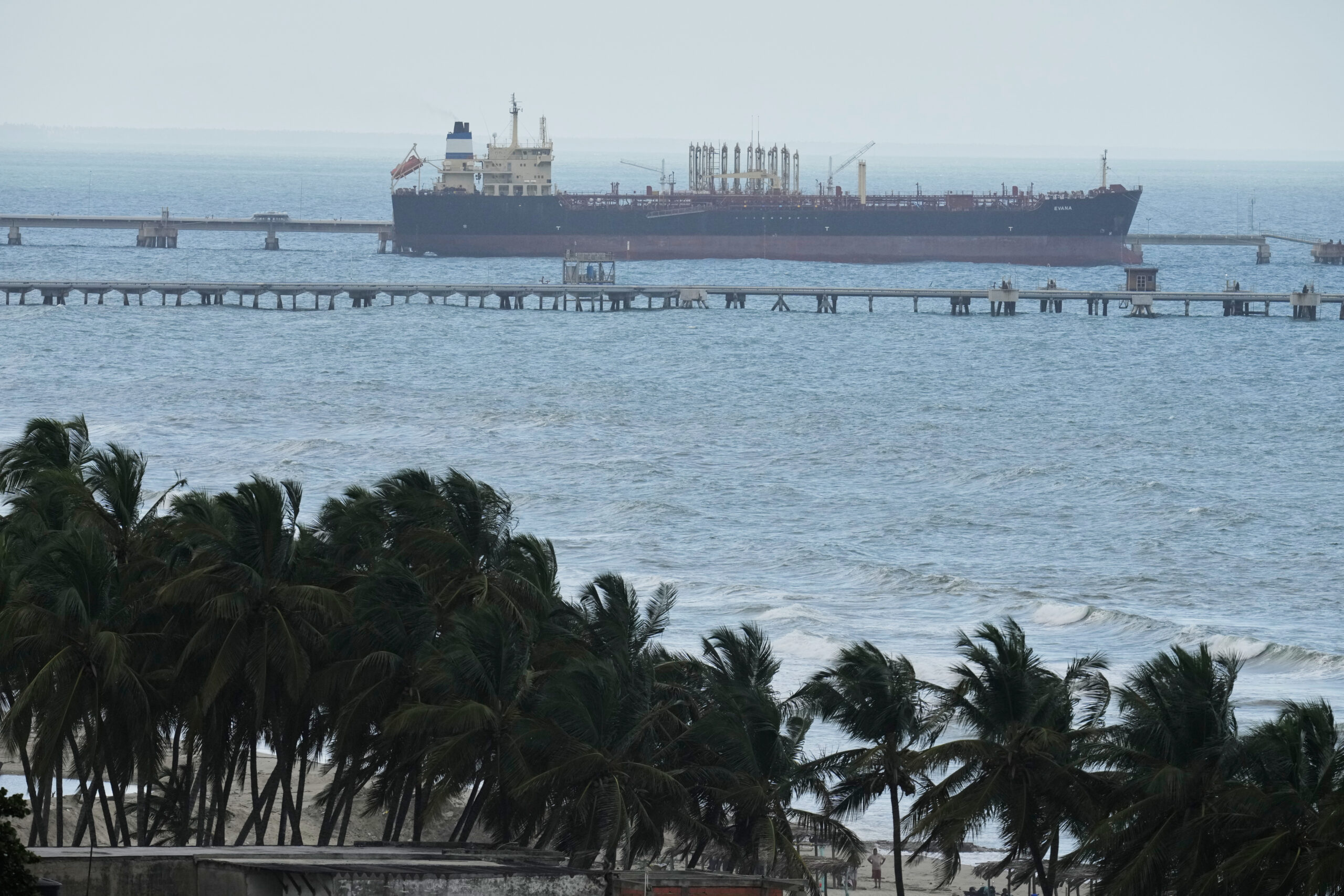
The effort is underway as Wright also runs point on the White House effort to coax U.S. oil companies to invest in Venezuela, according to industry officials. As the companies express reticence, the White House is working aggressively to try to lure them.
Trump has started telling reluctant oil company leaders that he might make it worth their while.
Within days after sending Special Operations forces into Venezuela to arrest Nicolás Maduro, Trump suggested that U.S. taxpayers could help foot the bill to drill the vast reserves of the Latin American nation.
“A tremendous amount of money will have to be spent, and the oil companies will spend it, and then they’ll get reimbursed by us or through revenue,” he told NBC on Monday.
Using taxpayer-funded cash subsidies to incentivize oil companies to pump abroad would be unprecedented, industry analysts say. But the White House faces a steep challenge persuading firms to drill in a politically and economically unstable country that has burned them in the past by expropriating assets worth billions and then leaving U.S.-built oil infrastructure to rot.
The firms themselves are still working out what they want to request from the White House, according to a half-dozen individuals close to the companies who spoke on the condition of anonymity to talk speak frankly.
Since Monday, Wright has talked with the CEOs of the three major oil companies that would be positioned to drill there: Chevron, the sole remaining U.S. firm that has operations in Venezuela; ConocoPhillips, which is still owed some $8 billion after its assets were taken when it exited nearly two decades ago; and ExxonMobil, which also previously operated in Venezuela and is owed about $1 billion. The Energy Department said in an email that Wright would meet privately with executives from the firms at the Goldman Sachs event Wednesday.
ConocoPhillips said in a statement that “it would be premature to speculate on any future business activities or investments.” The other companies did not respond to requests for comment.
The White House declined to answer detailed questions.
According to one lobbyist close to the conversations, some company officials have been pondering the possibility of proposing a joint venture with the U.S. government, in which American taxpayers would invest in drilling in return for a stake in any profits.
The conversations are focused on how to make it viable to invest tens of billions of dollars in such a high-risk country at a time when oil prices are low and there are many other safer, more attractive places for them to drill, such as nearby Guyana.
“The companies are scrambling right now,” said a senior oil industry executive who has been involved in conversations with the administration. “I don’t think this was on anybody’s bingo card when they were making their [corporate] budgets for 2026.”
“I have talked to all of the CEOs at companies that could be in a position to engage there,” said the executive. “There were no conversations between the industry and the White House or the president about what would happen. Maybe the president said something to somebody, like ‘be ready’ at some casual conversation. If it happened, it happened months and months ago.”
The executive was also skeptical that companies would want subsidies, because partnering with the U.S. government carries its own risks. The next administration could be hostile to fossil fuels, and the companies would find themselves tied to it financially, as these agreements would pencil out only if they were in place for at least a decade or two. “We are a free-market industry,” the executive said. “We have benefited from not having state control of oil companies.”
Still, the firms, indebted to a White House that has been a relentless booster of the industry, are under considerable pressure to deliver in Venezuela, even as company officials warn privately that Trump’s vows that expanded pumping will begin in as soon as 18 months are out of touch with reality.
Despite other corporate partnerships undertaken by the administration around the world, it’s unclear how serious officials are about providing financial help for oil producers. Involving U.S. taxpayers is politically fraught and would probably confront opposition in Congress, industry analysts said.
“These companies being asked by the Trump administration to dive into Venezuela are confronting enormous risks,” said Bob McNally, president of Rapidan Energy Group, a research firm that serves the industry. “It is like walking into a factory left to rot for 2 1/2 decades, or like asking yourself, ‘How bad is this house we just bought?’ I imagine they would want to mitigate those risks however they can.”
The administration has offered financial incentives elsewhere around the world to entice companies and countries to align with the White House. In Ukraine, it struck a deal to create a Reconstruction Investment Fund, through which companies that invest in that country can tap into a fund generated with the help of natural-resource revenue from Ukraine.
Ted Posner, a partner at Baker Botts, a global law firm that advises major oil companies, said the Trump administration could do something similar for U.S. corporations investing in Venezuela “as a way of demonstrating that the U.S. government has skin in the game. It’s here by your side.”
But the levels of industry investment the White House wants to see in Venezuela — estimated at as much as $100 billion — dwarf what is being considered in Ukraine, and it is unclear if such partnerships would help sway oil company executives and their reluctant shareholders.
“There are carrots available” to entice companies to drill, Posner said. “What I don’t know is if there are enough.”
One oil company executive who has firsthand experience with the challenges in Venezuela warned that the administration’s rosy projections ignore realities on the ground.
Even the firms that are owed billions of dollars, the executive said, will be reluctant to return, because recouping their investments would almost certainly require them to spend billions more.
The reimbursement for seized assets would be the obligation of the Venezuelan state oil company, and it won’t have the funds if Venezuela does not restore its production capacity, which has collapsed after decades of neglect.
“The only way to recoup that funding is through [pumping] crude oil,” the executive said. “But that will not happen overnight. Will you be fully compensated at the end of the day? Maybe. Maybe not.”
“The U.S. government is going to have a hard time making this sales pitch,” this individual said. “Some companies are going to say, ‘We appreciate this, but we have our shareholders to think about and just cannot do it.’ Other companies will make demands to the U.S. that they want to be made whole if something happens. … How can you commit the U.S. Treasury to backstop these issues in Venezuela? Think about all the geopolitics around that. That alone could be tied up with lawyers for a year.”
As oil executives grapple with all of this uncertainty, Trump continues to indicate that he expects all of them to align with his plans.
On Tuesday he told reporters that he will personally be meeting with companies. “You know what that’s about,” he said, alluding to Venezuela. “We got a lot of oil to drill, which is going to bring down oil prices even further.”
Leave a Reply